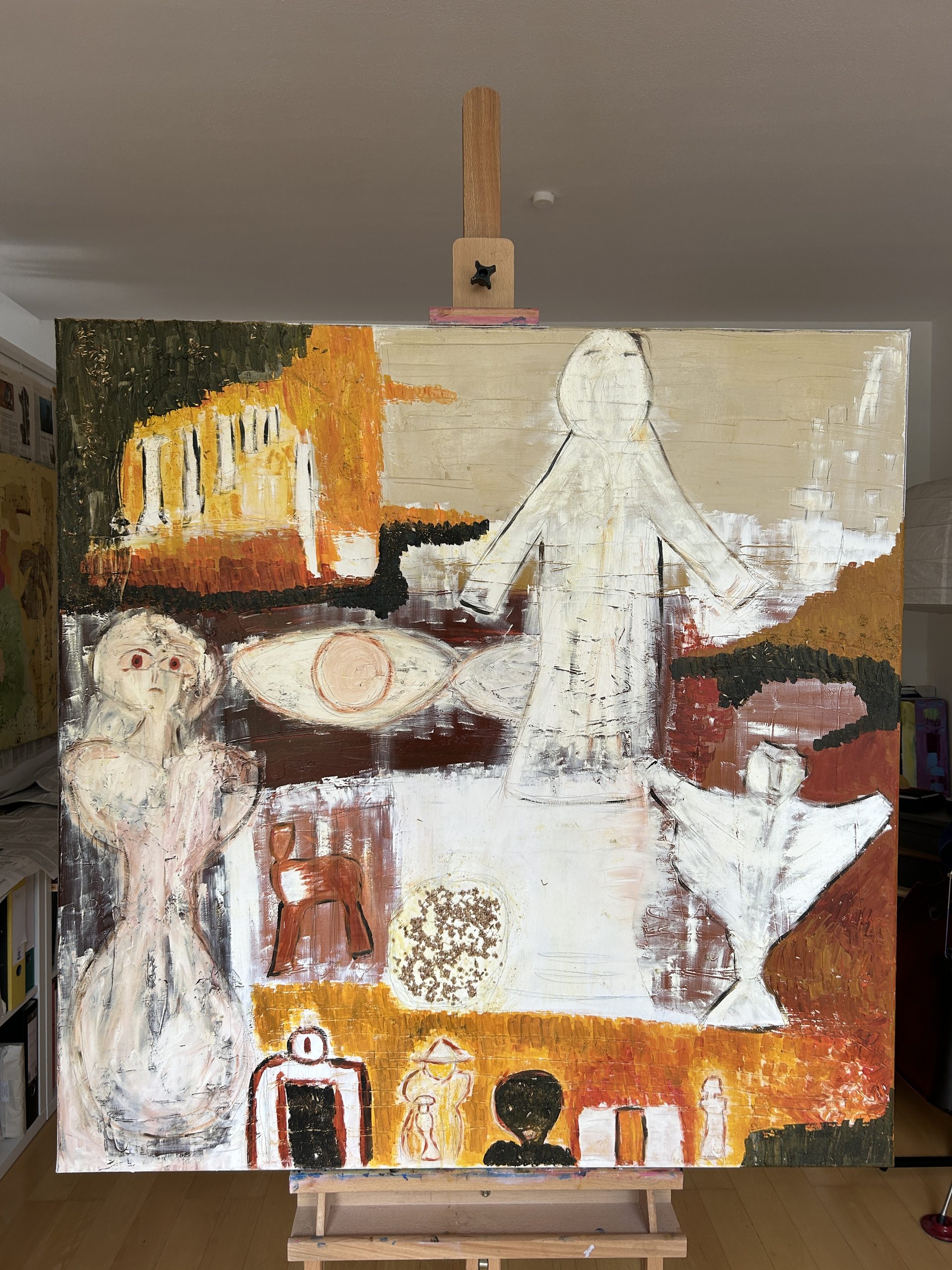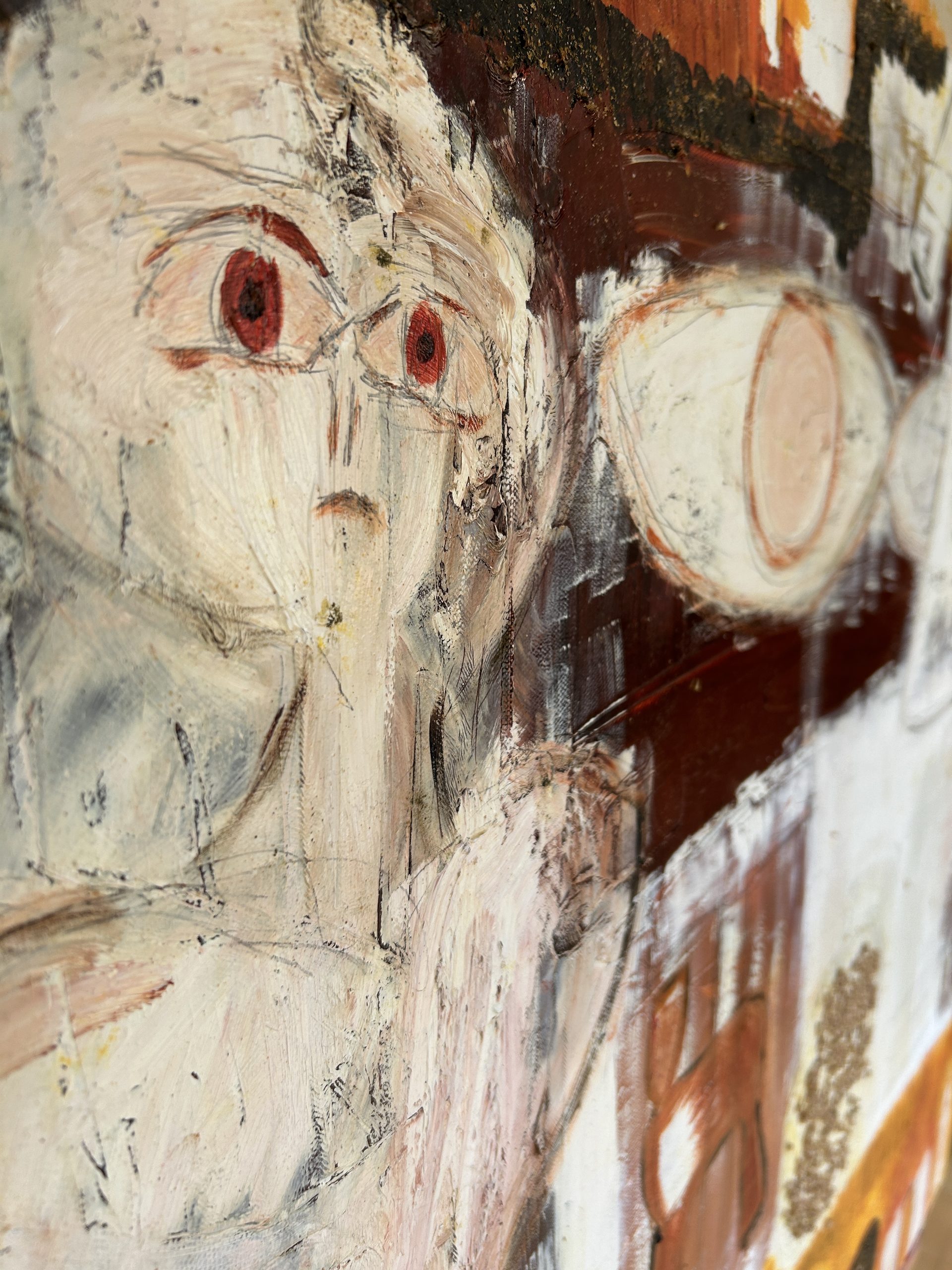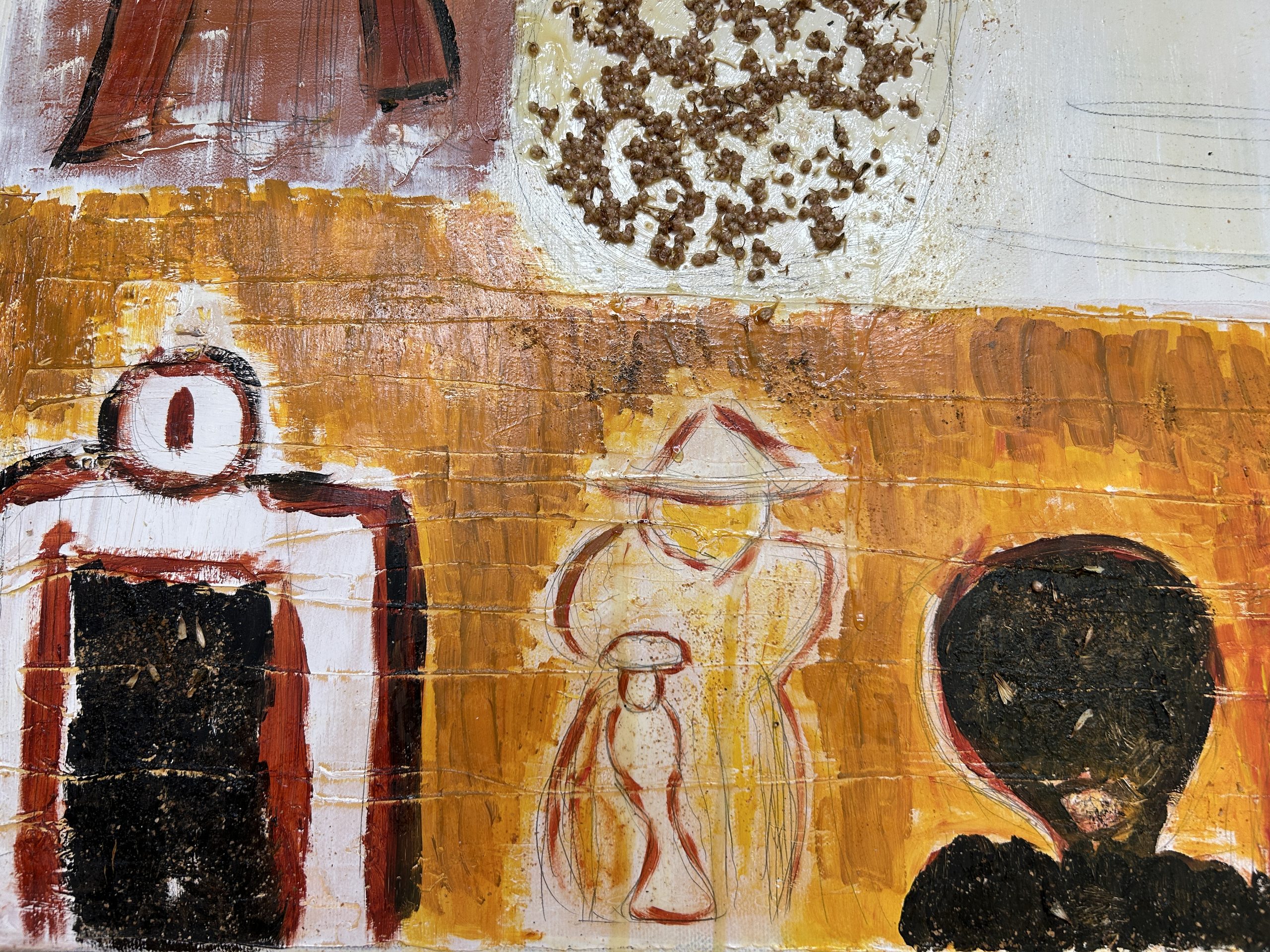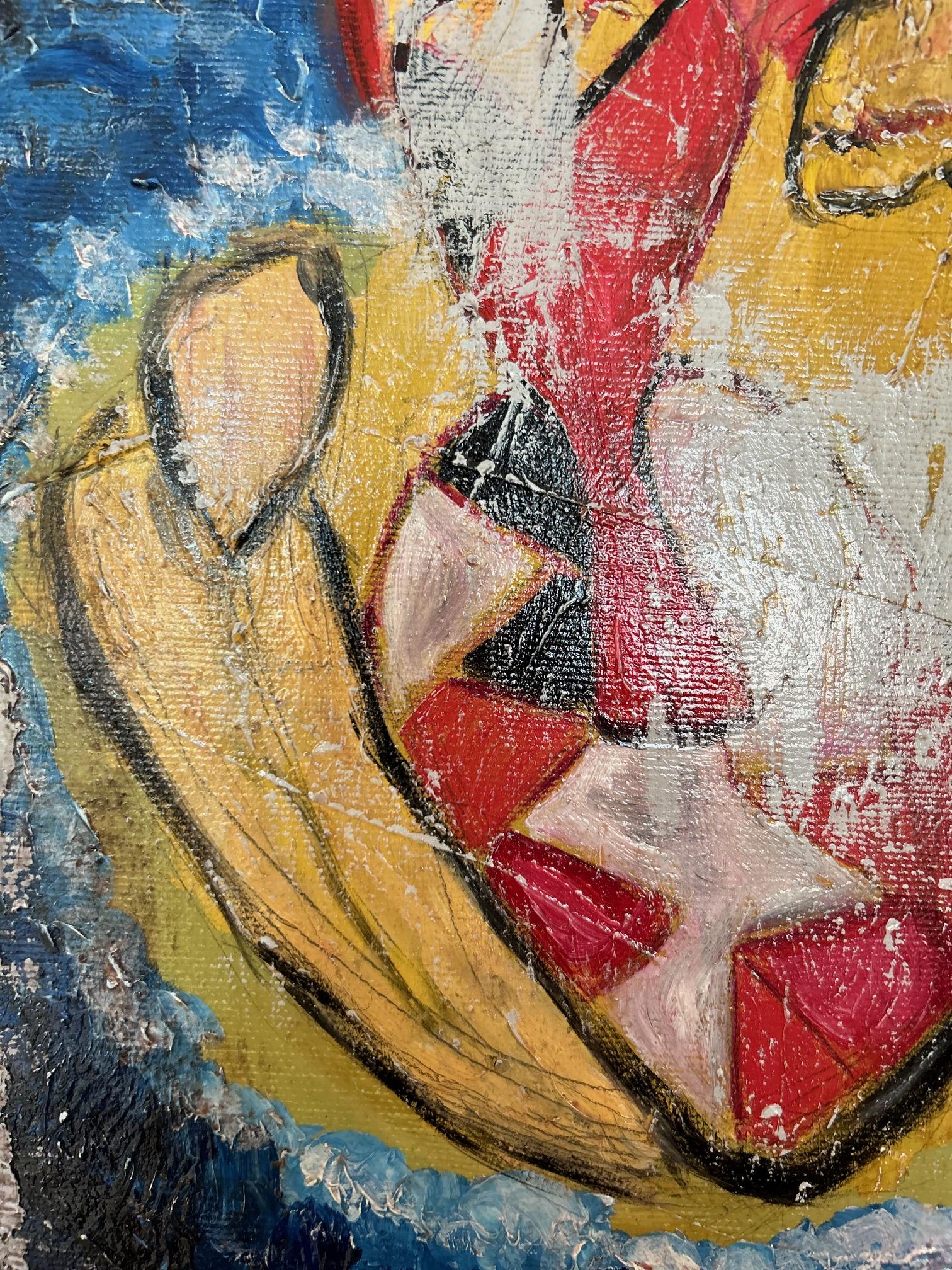
Kategorie: Painting | Malerei

  • Memory | Gedächtnis

    Memory | Gedächtnis

    Memory | Gedächtnis

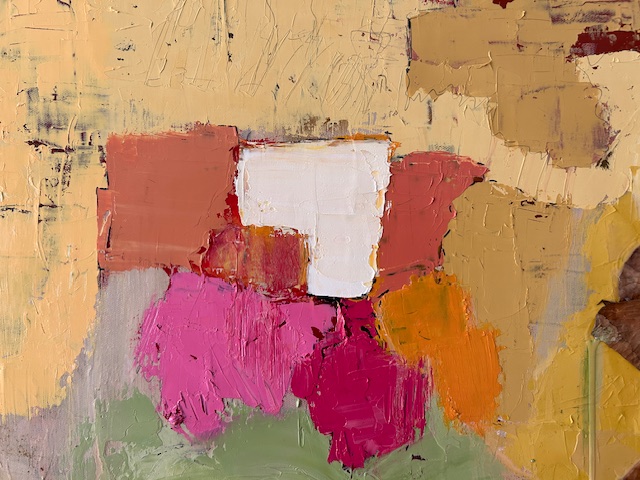
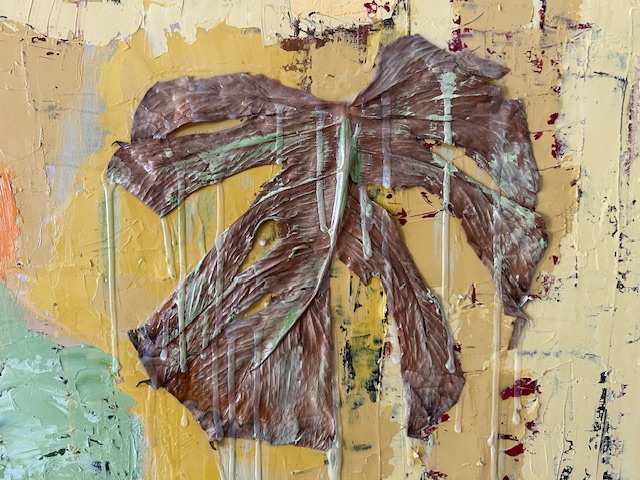
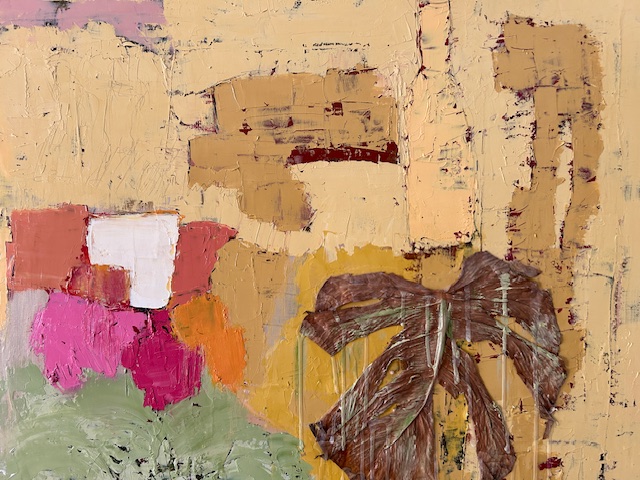
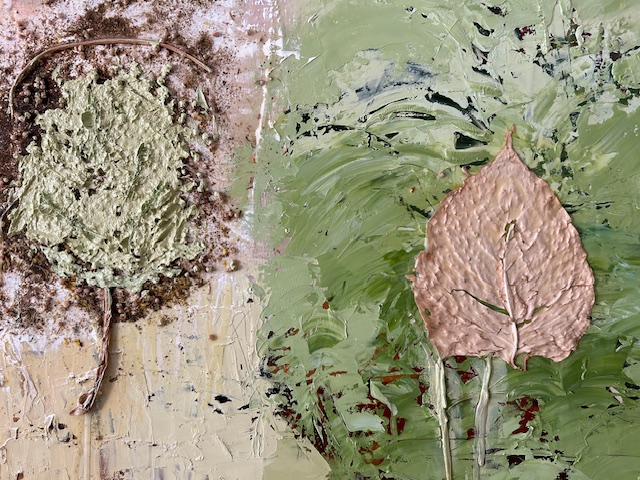
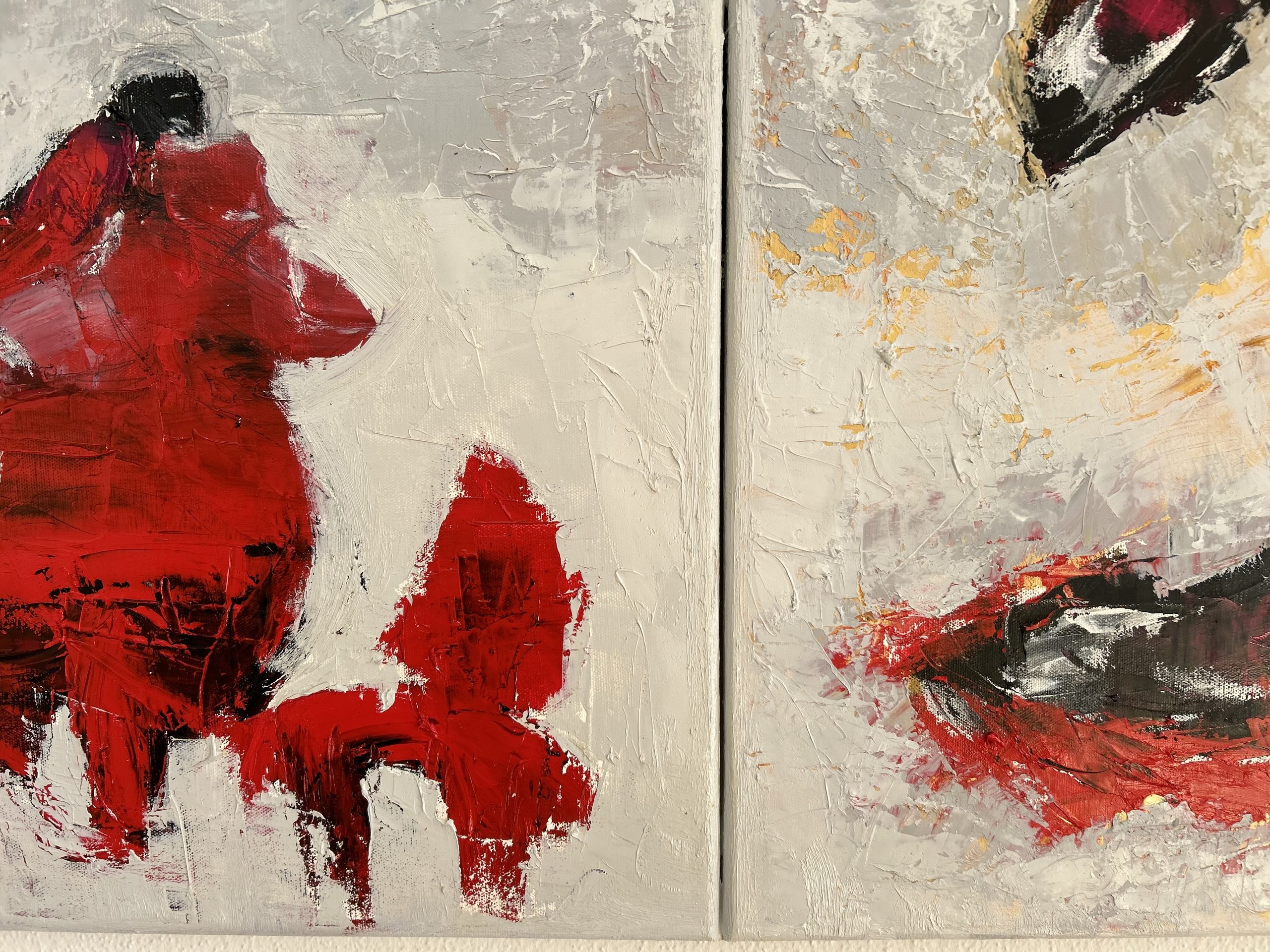
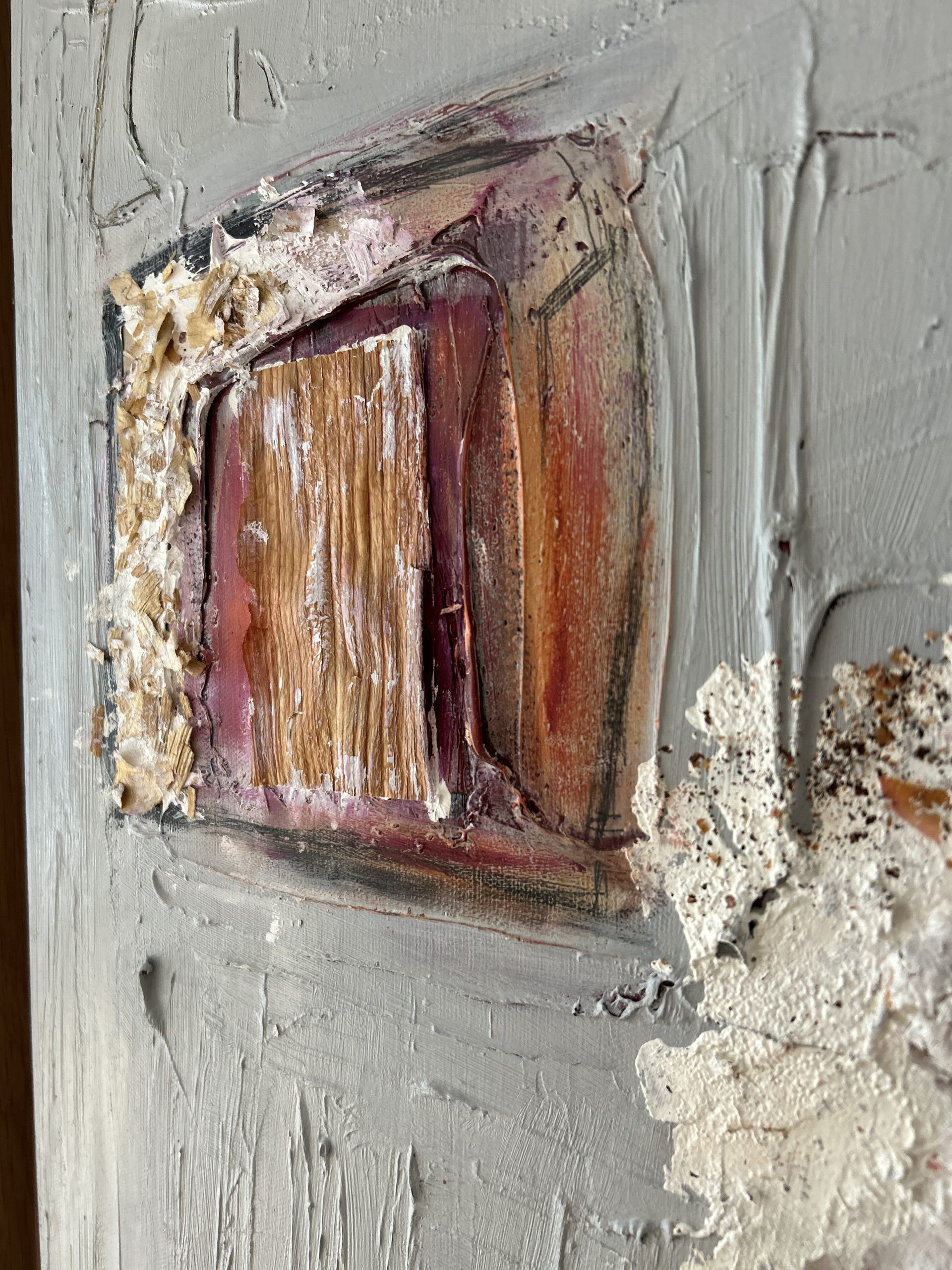
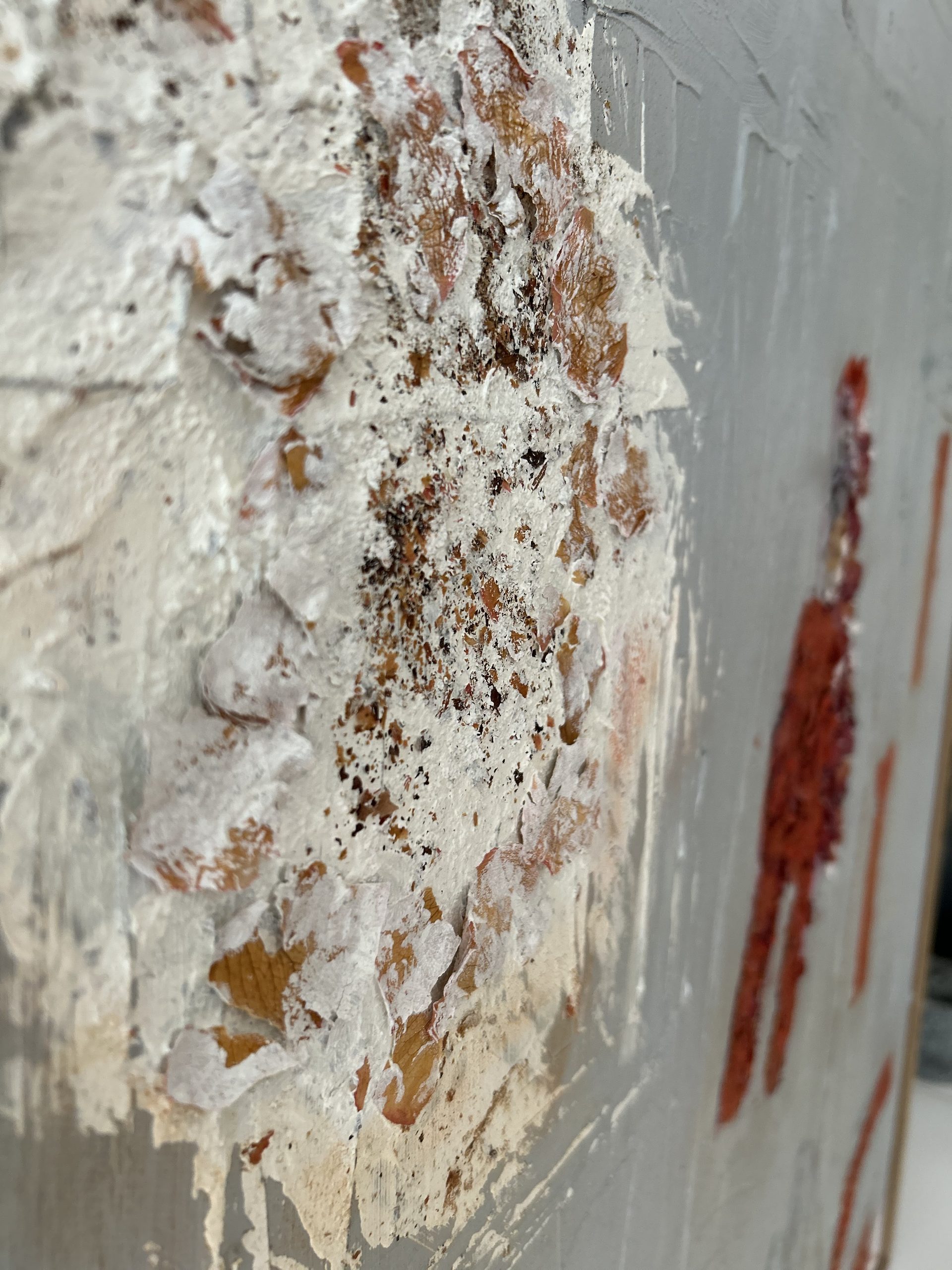
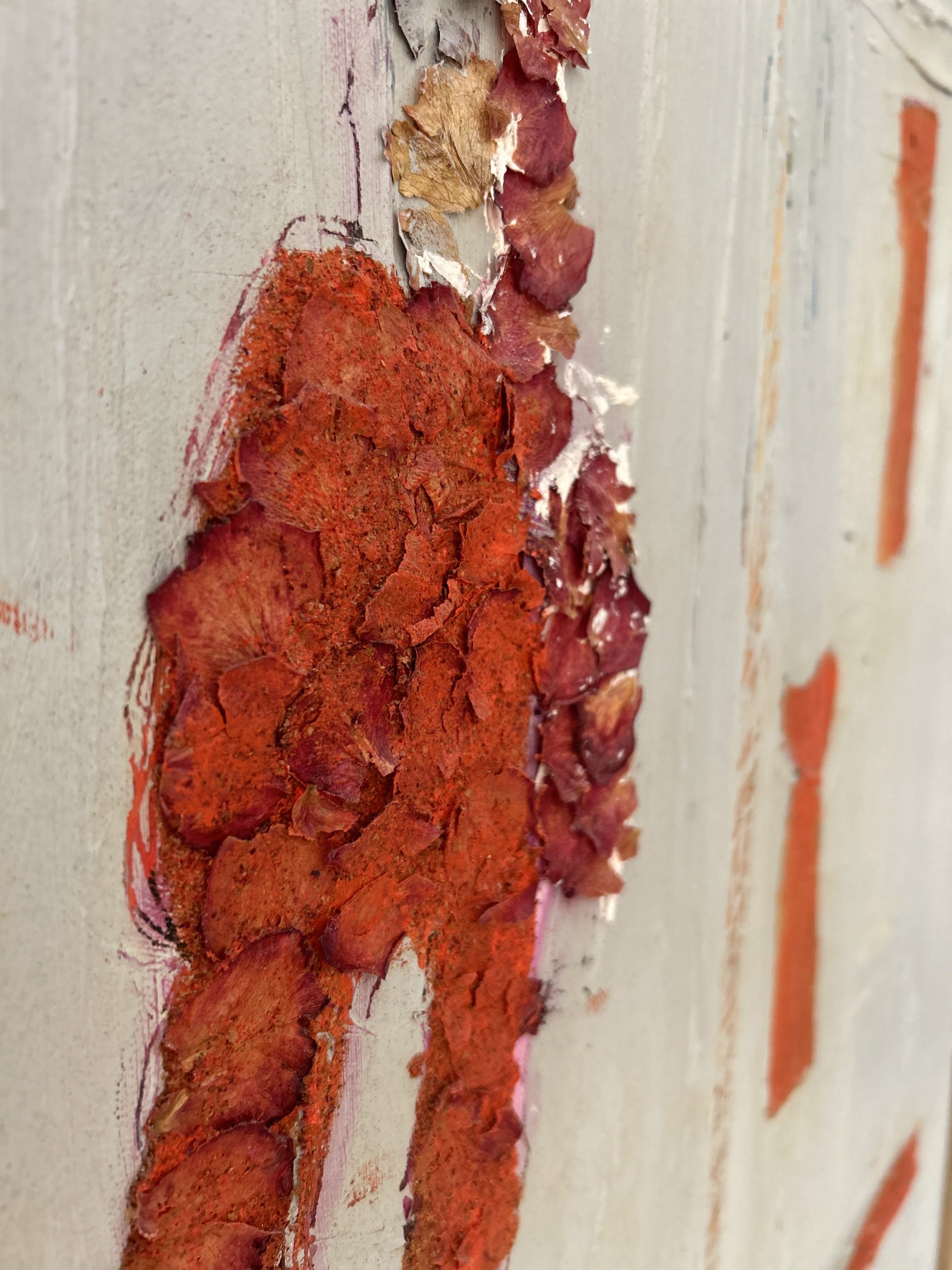
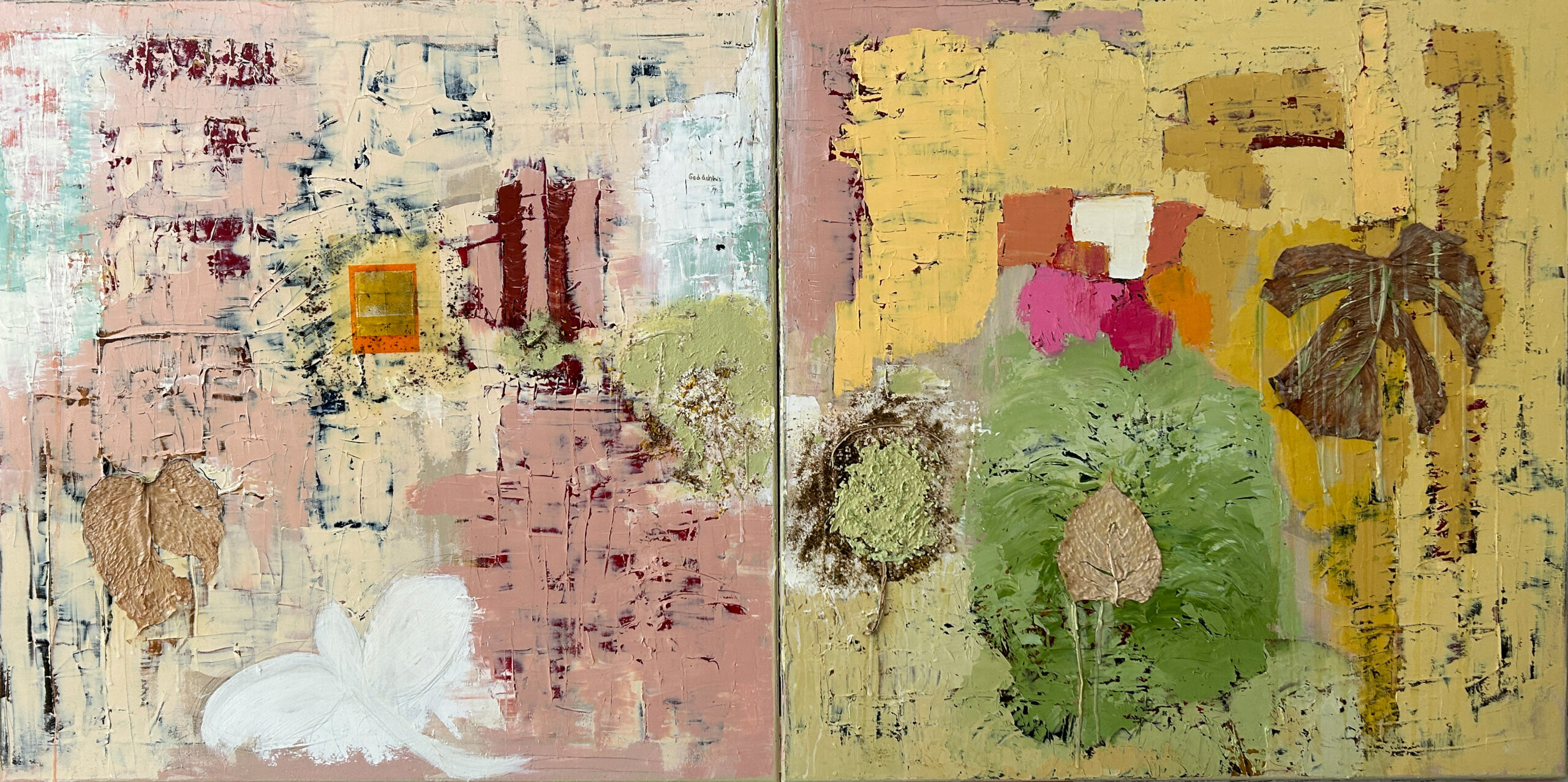
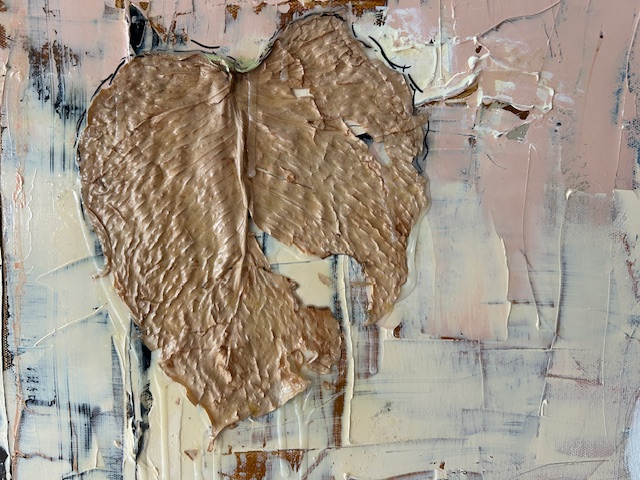
    Burri’s mixed-media painting titled “Gedächtnis” presents an abstract, tactile diptych composed of two adjoining square canvases. The composition is divided into two distinct color zones: the left panel is dominated by muted, pale pink, cream, and off-white tones punctuated by maroon marks and a small orange square, while the right panel transitions into ochre yellow, vibrant green, pink, and earthy brown fields. Organic material is integrated directly onto the surface, including real leaf elements attached to both panels—one coated in gold paint on the left, alongside gold-leaf and dried botanical forms on the right.

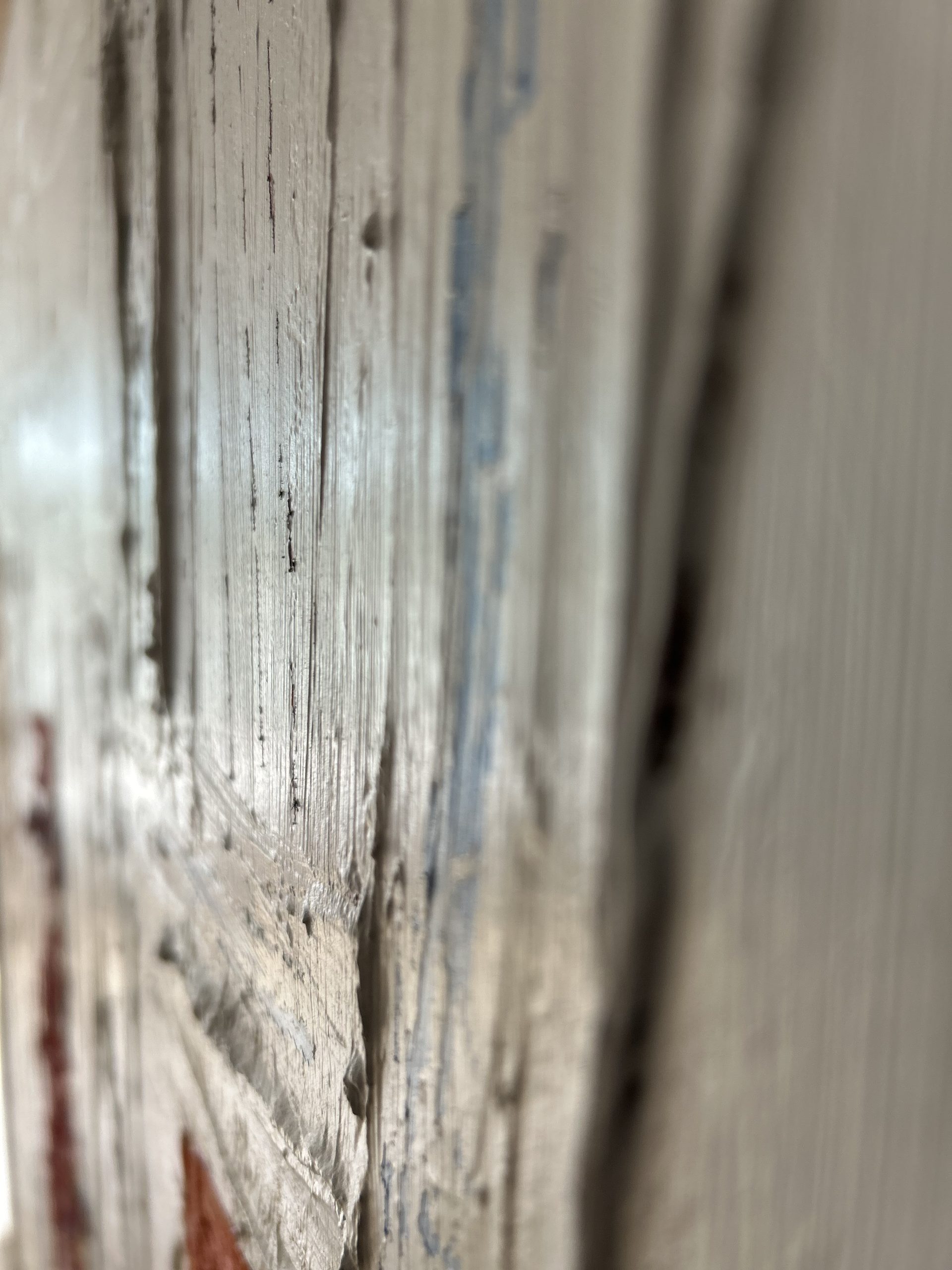
    Compositionally, the work contrasts the open, grid-like scraped textures of the left canvas with the denser, layered color blocks and organic shapes on the right. The paint surface displays heavy impasto, visible palette-knife applications, and exposed lower layers, emphasizing material stratification and decay. Stylistically aligned with Art Informel and Material Art (Materialkunst), the focus rests on surface texture, natural erosion, and spatial segmentation. Materially, the work expands traditional painting through the integration of organic plant matter—specifically leaves and dried foliage—alongside gold-leaf accents directly into the paint layer. The diptych is executed in oil and mixed media on a pure cotton canvas, stretched over two pine wood support frames with overall dimensions of 200 x 100 x 2 cm.

    Deutsche Version

    Burris Mixed-Media-Gemälde mit dem Titel „Gedächtnis“ zeigt ein abstraktes, haptisches Diptychon, das aus zwei nebeneinander gefügten quadratischen Leinwänden besteht. Die Komposition gliedert sich in zwei prägnante Farbzonen: Das linke Panel wird von gedämpften Altrosa-, Creme- und gebrochenen Weißtönen beherrscht, die von weinroten Spachtelspuren und einem kleinen orangefarbenen Quadrat akzentuiert werden. Das rechte Panel wechselt zu Ockergelb, moosigen Grüntönen, Pink und Erdnuancen. Auf beiden Tafeln sind reale organische Pflanzenteile verarbeitet – darunter ein goldfarben gefasstes Blatt im linken unteren Bereich sowie getrocknete Blätter und Blattgold-Elemente auf der rechten Seite.

    Kompositorisch stellt das Werk die rasterartig freigelegten Strukturen der linken Hälfte den dicht gelagerten Farbfeldern und organischen Formen der rechten Seite gegenüber. Die Oberfläche weist einen vielschichtigen, gespachtelten Farbauftrag mit offenliegenden Untergründen auf, was Prozesse des Überlagerns und Freilegens betont. In formaler Anlehnung an das Informel und die Materialkunst liegt der Schwerpunkt auf materieller Textur, organischer Vergänglichkeit und struktureller Segmentierung. Materialtechnisch erweitert das Werk den malerischen Farbauftrag durch die direkte Einarbeitung organischer Substanzen wie Blätter, getrockneter Pflanzenteile sowie Blattgold in die Farbschicht. Das zweiteilige Unikat ist in Öl und Mischtechnik auf reiner Baumwollleinwand ausgeführt, die auf zwei Kiefernholz-Keilrahmen gespannt ist (Gesamtmaß: 200 × 100 × 2 cm).

    Title / Titel: Memory / Gedächtnis
    Year / Jahr: 2024
    Medium / Technik: Oil and mixed media on canvas (Diptych) / Öl und Mischtechnik auf Leinwand (Diptychon)
    Dimensions / Maße: 200 × 100 × 2 cm (2 pcs. 100 × 100 cm)
    Status: In Privatbesitz | Privately Held
    Art prints available upon request | Kunstdrucke auf Anfrage bei mirandolo.de

  • Man, War, Suffering, and Death | Mensch, Krieg, Leiden und Tod

    Man, War, Suffering, and Death | Mensch, Krieg, Leiden und Tod

    Man, War, Suffering, and Death | Mensch, Krieg, Leiden und Tod
    Man, War, Suffering, and Death | Mensch, Krieg, Leiden und Tod

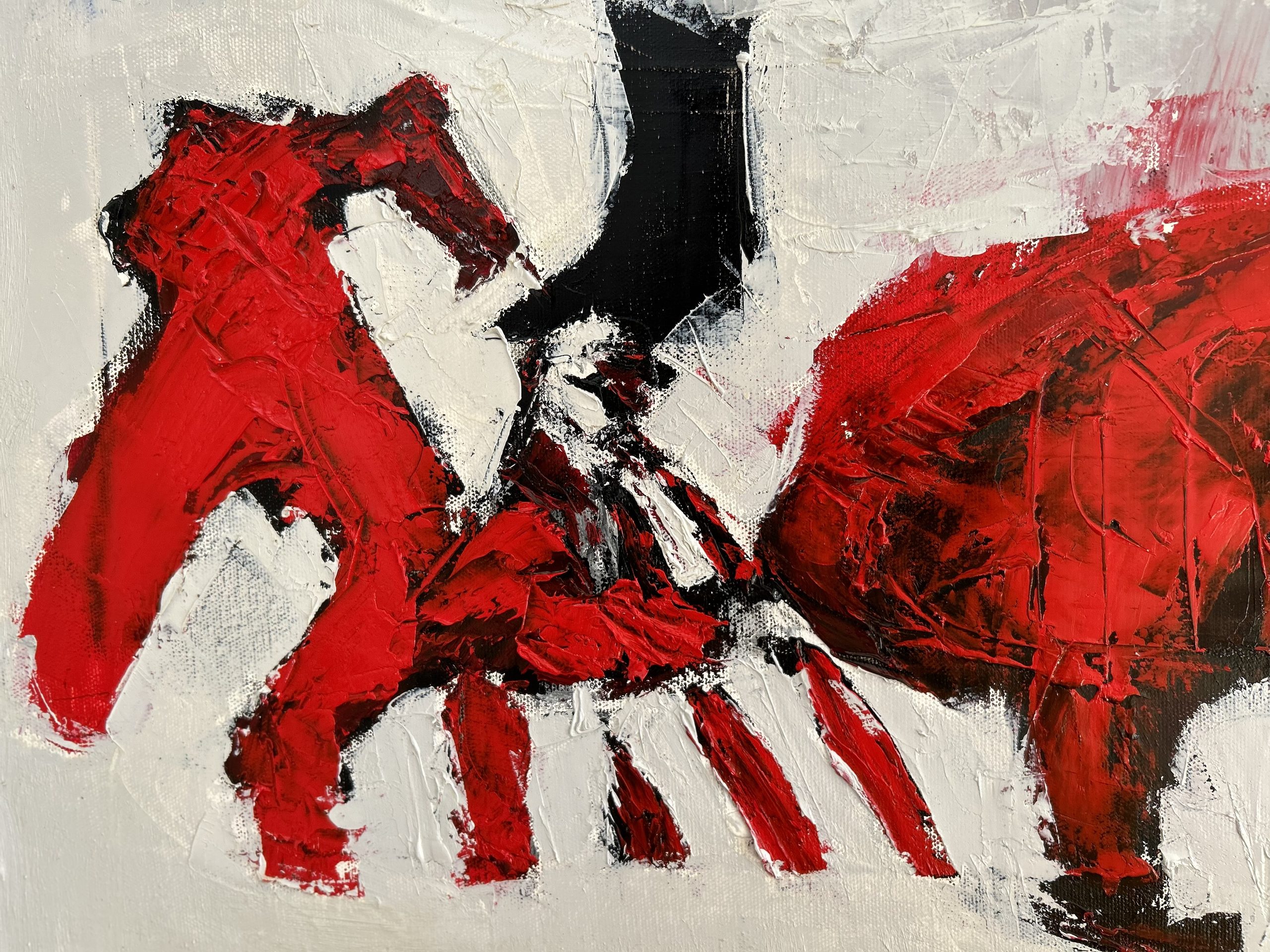
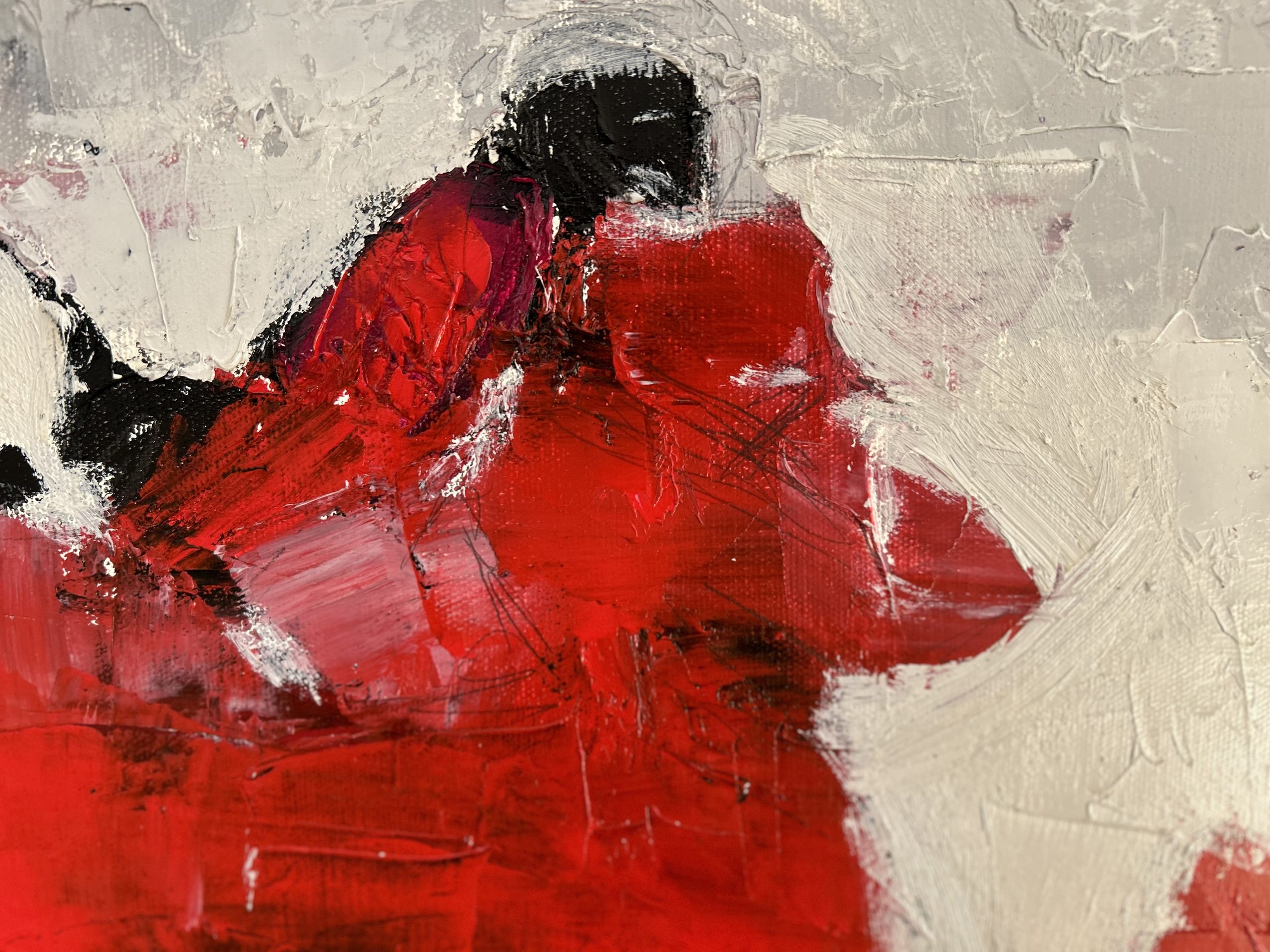
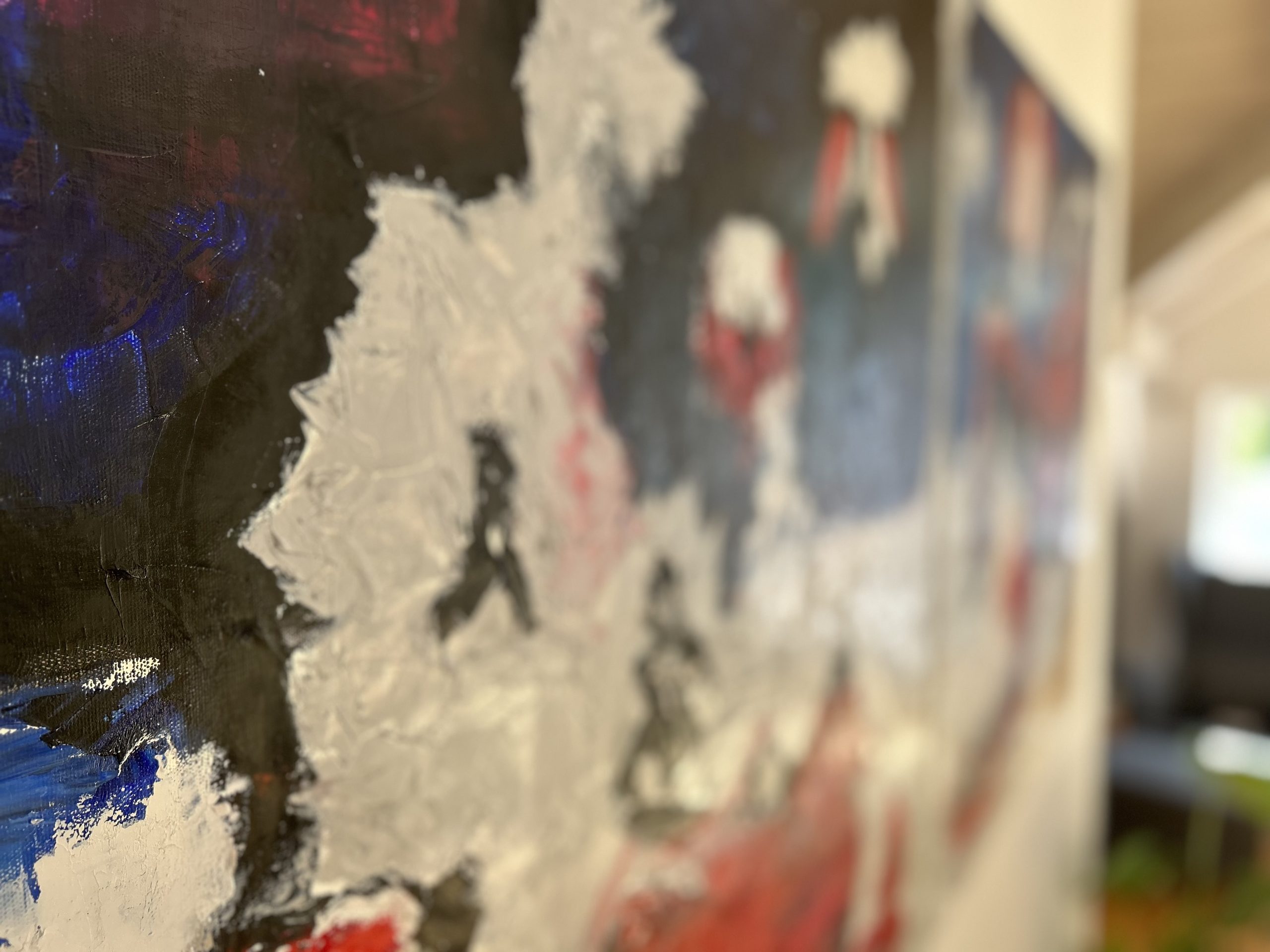
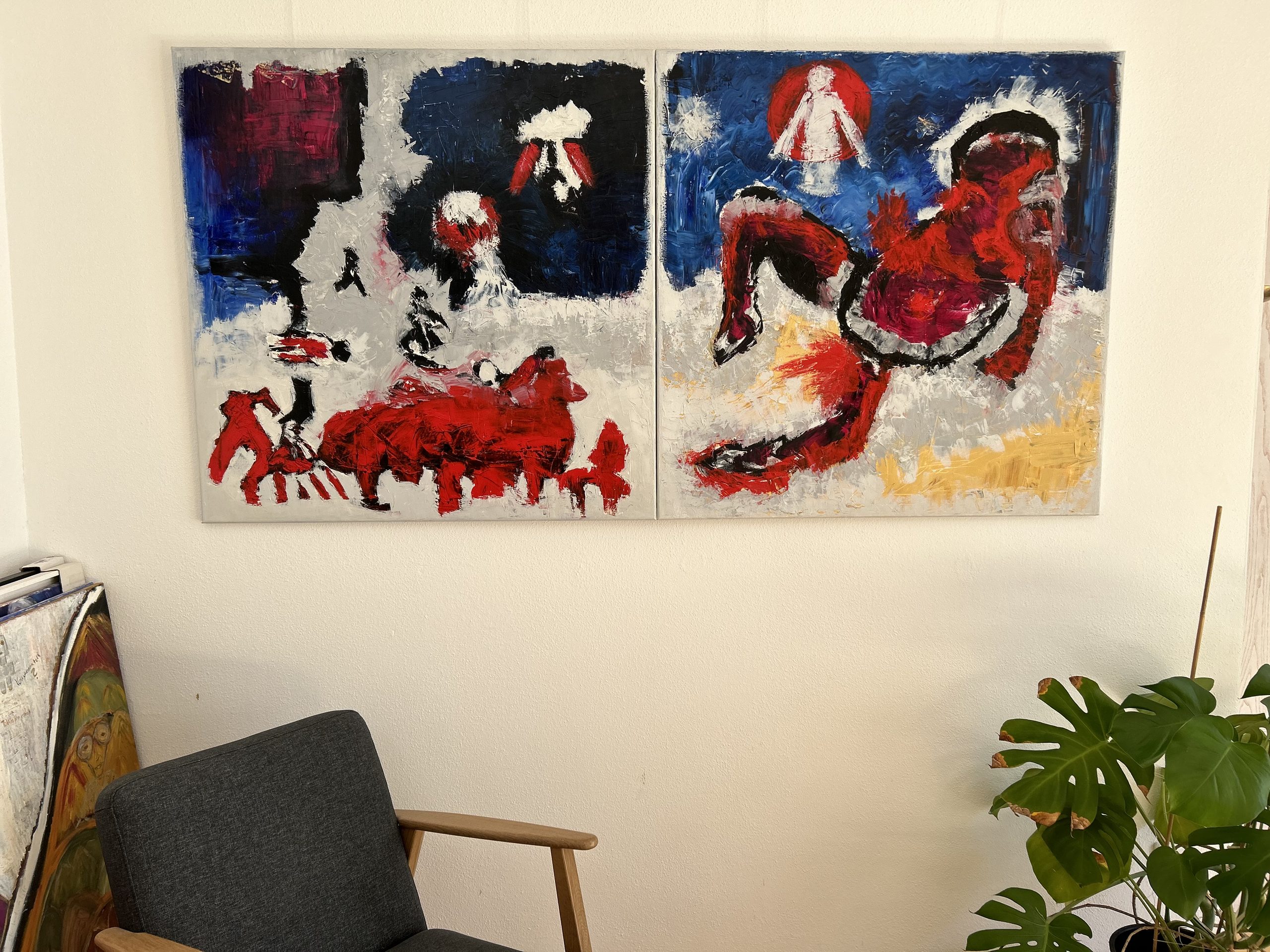
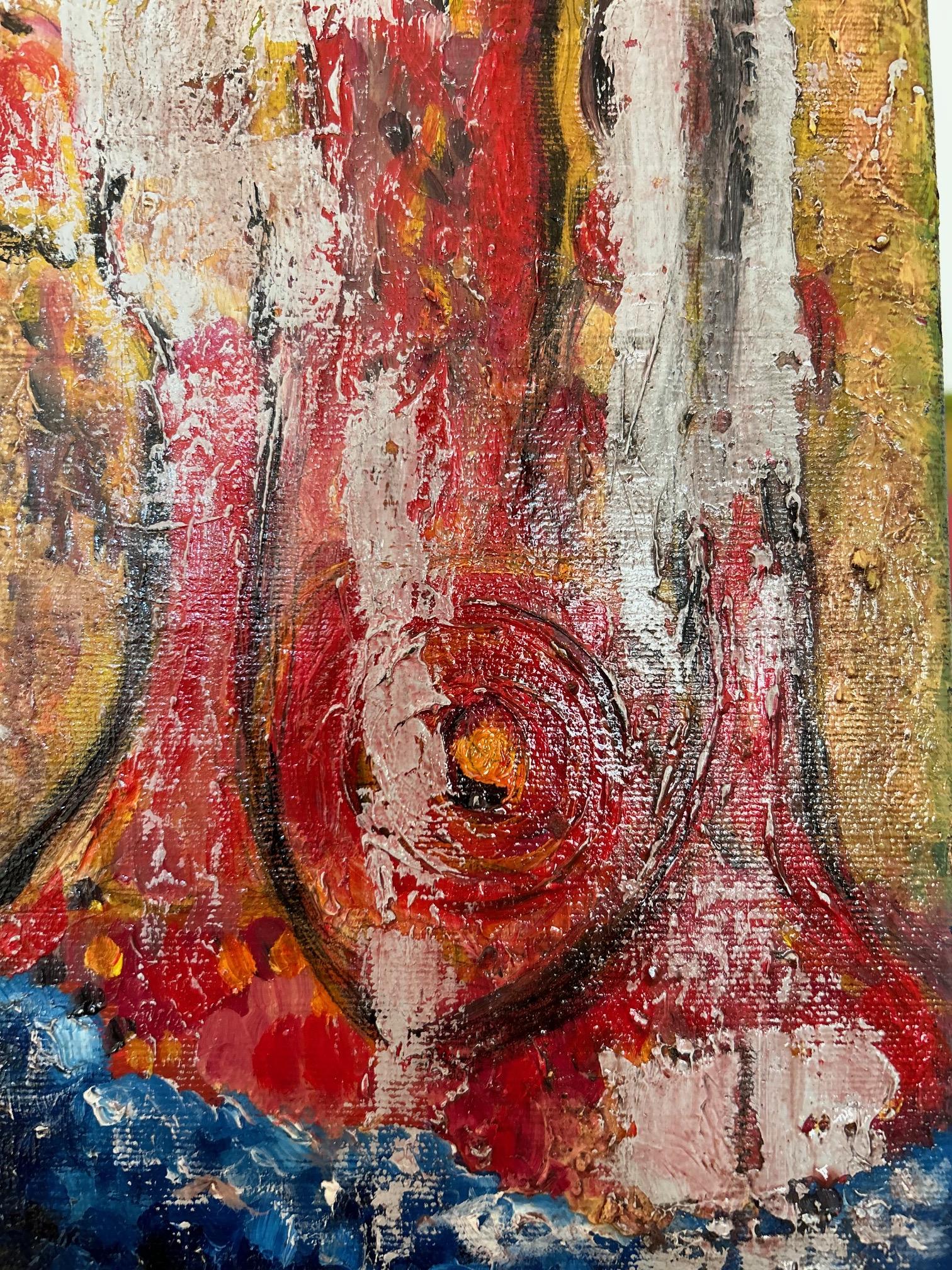
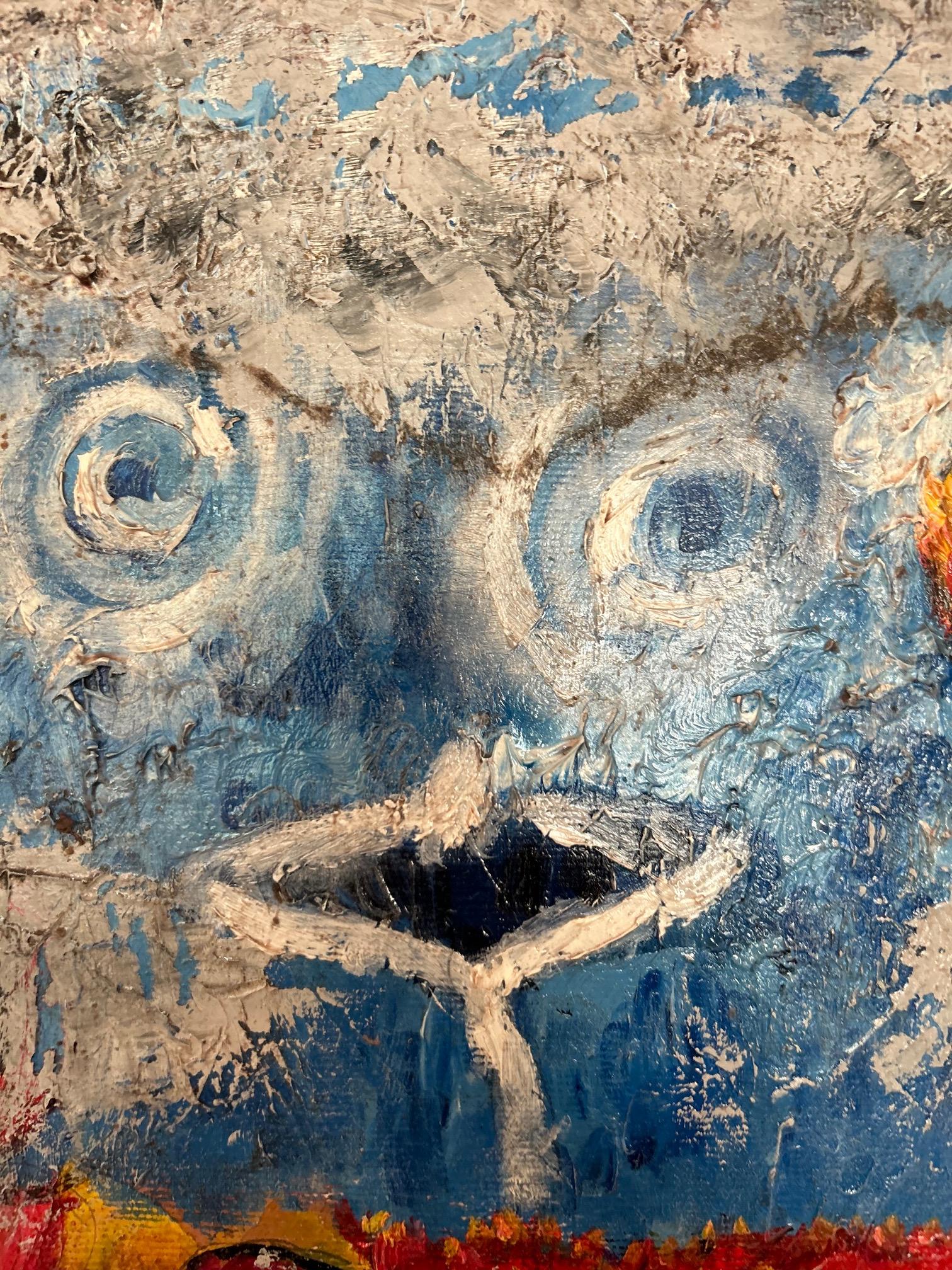
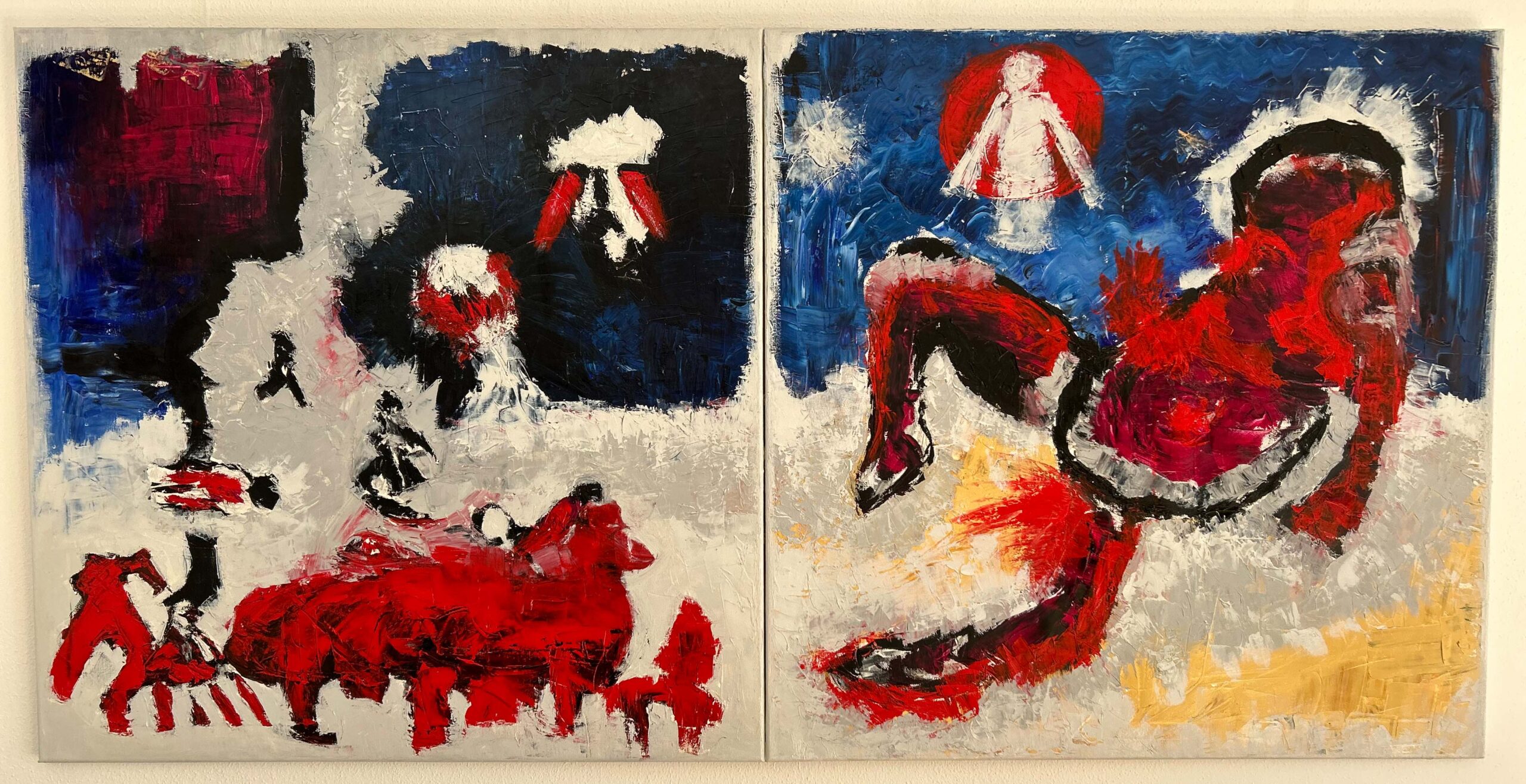
    Burri’s oil painting titled “Mensch, Krieg, Leiden und Tod” presents a large-scale diptych composed of two adjoining square canvases. The narrative composition features highly stylized, distorted human and animalistic figures distributed across both panels against a background of cool grays, deep blues, and stark blacks. Saturated crimson red dominates the principal figures, establishing an immediate visual emphasis on the lower left structures and the reclining, contorted figure on the right panel.

    Compositionally, the work establishes a dual-panel dialogue. The left canvas combines dark rectangular structures at the top with grounded, reddish forms and fragmented white silhouettes in a central dark field. The right canvas depicts a prominent, sprawling red figure set against a blue upper zone, which contains a smaller white icon framed by a red disc. The paint application is dense and tactile, utilizing thick impasto and expressive brushwork alongside dark outlines. Stylistically referencing Neo-Expressionism and mid-century figurative drama, the work focuses on structural narrative, color contrast, and physical surface texture. Materially, the work is executed in oil on a pure cotton canvas, stretched over a pine wood support frame with overall dimensions of 200 x 100 x 2 cm.

    Deutsche Version

    Burris Ölgemälde mit dem Titel „Mensch, Krieg, Leiden und Tod“ zeigt ein großformatiges Diptychon, das aus zwei nebeneinander gefügten quadratischen Leinwänden besteht. Die narrative Komposition verteilt stark stilisierte, verzerrte menschliche und tierähnliche Figuren über beide Bildhälften vor einem Hintergrund aus kühlem Grau, tiefem Blau und dichtem Schwarz. Ein hochgesättigtes Karminrot dominiert die Hauptfiguren und setzt prägnante optische Schwerpunkte auf den liegenden Formen der linken Tafel sowie der verdrehten, gestreckten Figur auf dem rechten Panel.

    Kompositorisch baut das Werk einen zweiteiligen Dialog auf. Die linke Leinwand kombiniert dunkle rechtwinklige Blöcke im oberen Bereich mit bodennahen roten Formen und schemenhaften weißen Silhouetten vor dunklem Grund. Die rechte Bildseite zeigt eine ausladende, dynamisch gelagerte rote Figur unter einer blauen Himmelszone, in der eine kleine weiße Schemenfigur vor einer roten Sonnenscheibe steht. Der Farbauftrag ist pastos und haptisch, geprägt von dichtem Pinselduktus und kräftigen Konturen. In formaler Anlehnung an den Neoexpressionismus liegt der Schwerpunkt auf narrativer Struktur, starkem Farbkontrast und materieller Oberflächenpräsenz. Materialtechnisch ist das zweiteilige Werk in Öl auf reiner Baumwollleinwand ausgeführt, die auf zwei Kiefernholz-Keilrahmen gespannt ist (Gesamtmaß: 200 × 100 × 2 cm).

    Title / Titel: Man, War, Suffering, and Death / Mensch, Krieg, Leiden und Tod
    Year / Jahr: 2023
    Medium / Technik: Oil on canvas (Diptych) / Öl auf Leinwand (Diptychon)
    Dimensions / Maße: 200 × 100 × 2 cm (2 pcs. 100 × 100 cm)
    Status: Available / Verfügbar
    Sammler in Deutschland: Im Shop mirandolo.de erwerben
    International Collectors: Available via saatchiart

  • The World on My Pillow | Die Welt auf meinem Kopfkissen

    The World on My Pillow | Die Welt auf meinem Kopfkissen

    The World on My Pillow | Die Welt auf meinem Kopfkissen

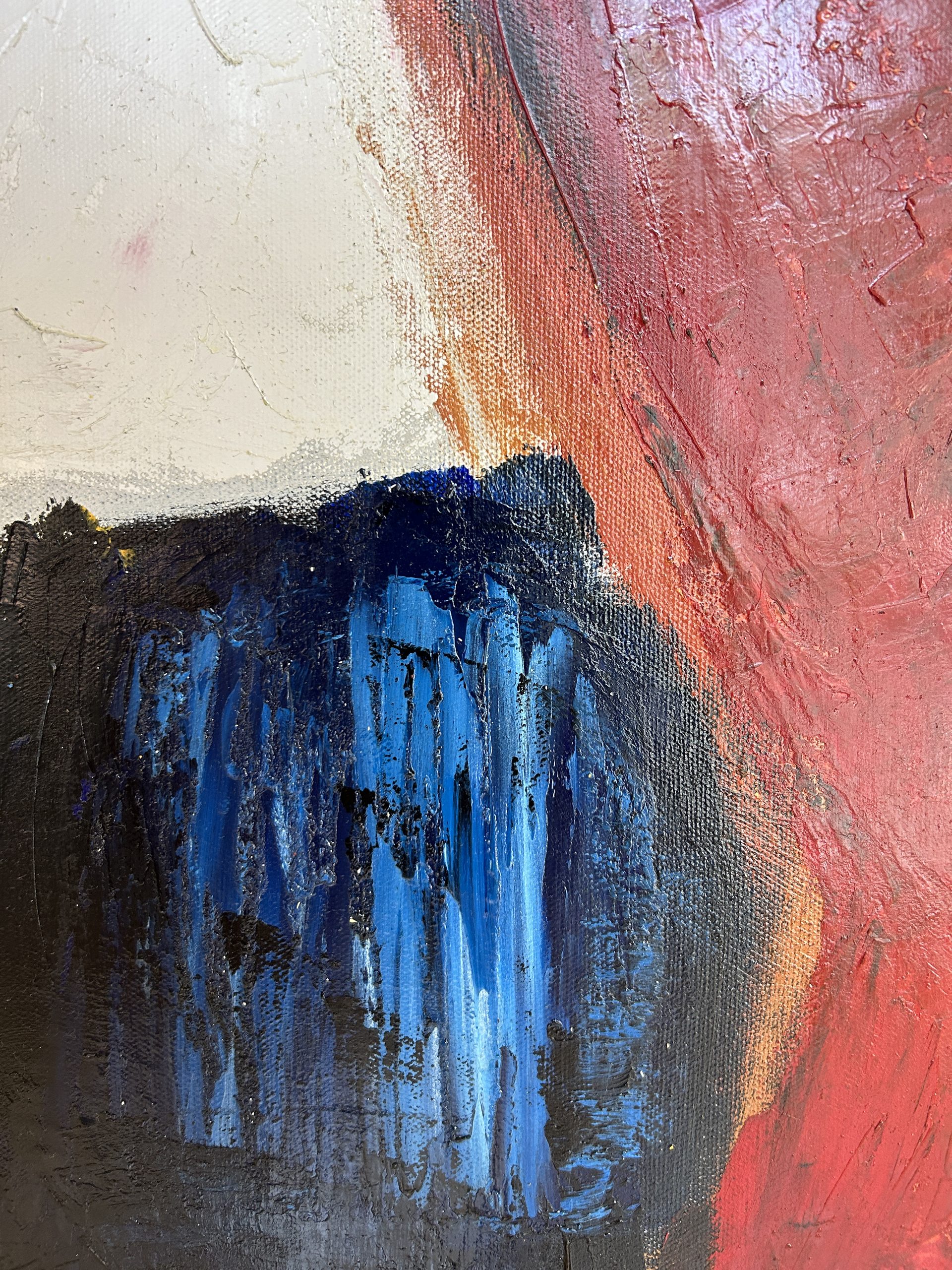
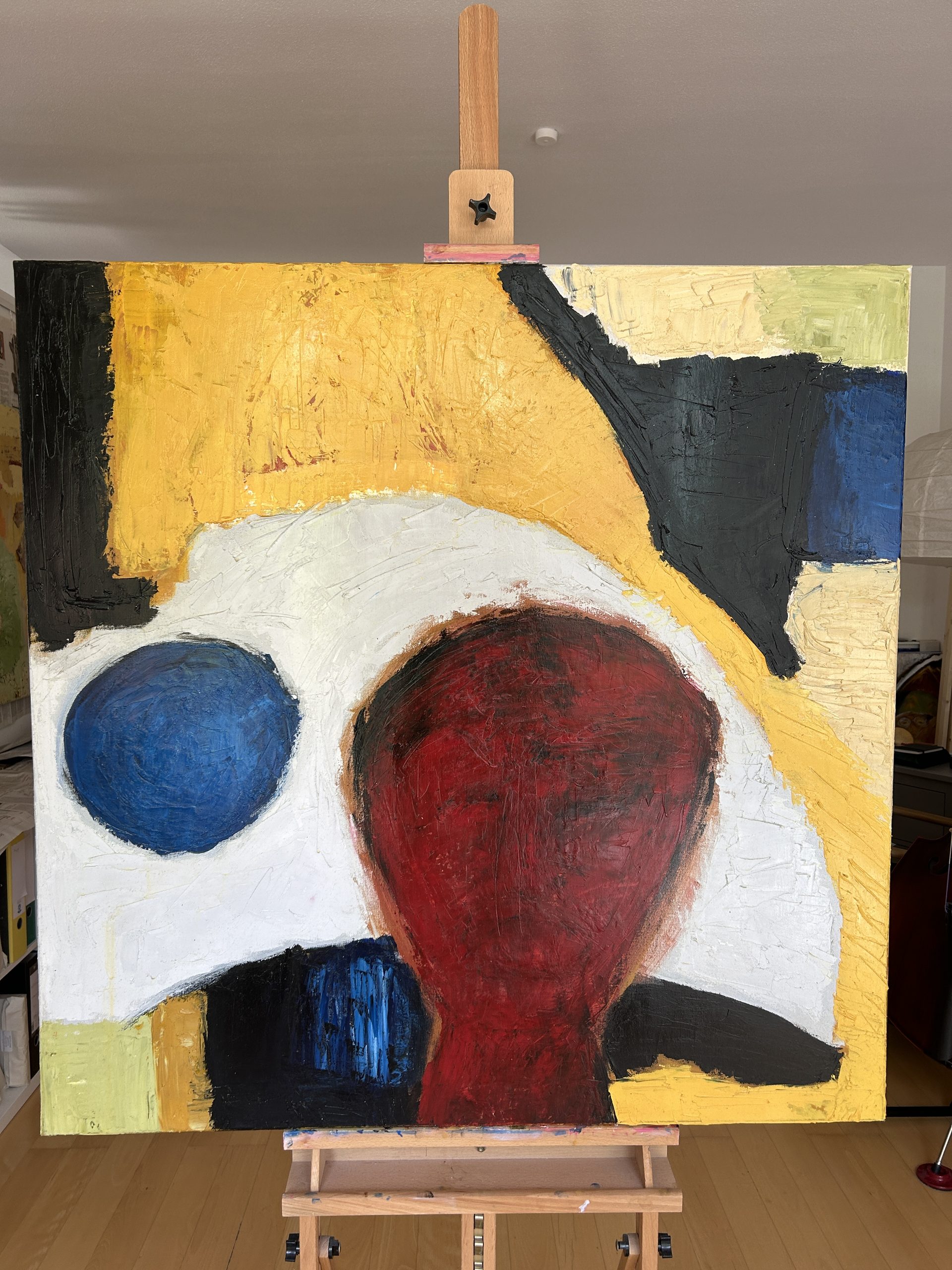
    Burri’s oil painting titled “Die Welt auf meinem Kopfkissen” presents a semi-figurative, abstract composition organized around organic and geometric forms. The center is dominated by an expansive, soft white shape evoking a pillow, upon which rest two distinct biomorphic forms: a large, dark crimson head-like shape and a solid blue sphere. Surrounding this central arrangement are fields of saturated cadmium yellow, deep black, and muted beige-green, framed by thick, dark structural lines.

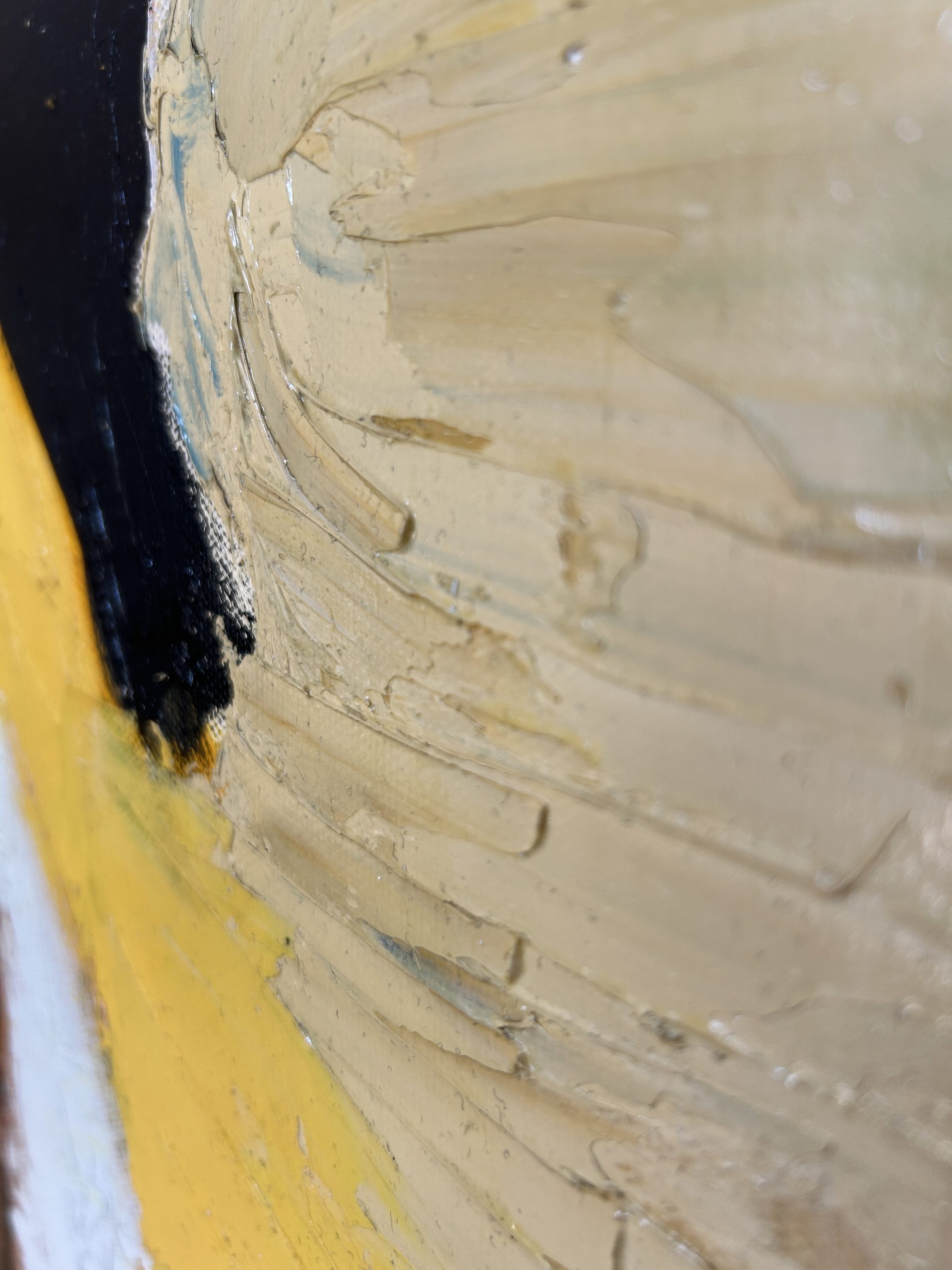
    Compositionally, the work plays with spatial placement, anchoring rounded organic shapes against a segmented, angular background. The paint is applied densely, showing tactile brushwork and impasto textures across the surface, particularly within the red head-form and the surrounding yellow zones. Stylistically drawing from mid-century European Primitivism, CoBrA, and figurative abstraction, the work focuses on elemental forms, color contrast, and material density. Materially, the painting is executed in oil on a pure cotton canvas, stretched over a pine wood support frame with dimensions of 100 x 100 x 2 cm.

    Deutsche Version

    Burris Ölgemälde mit dem Titel „Die Welt auf meinem Kopfkissen“ zeigt eine halbfigurative, abstrakte Komposition, die um organische und geometrische Grundformen herum aufgebaut ist. Das Zentrum wird von einer großflächigen, hellen Weißform dominiert, die an ein Kissen erinnert. Darauf ruhen zwei prägnante biomorphe Elemente: eine große, dunkelrote, kopfähnliche Form sowie ein gesättigter blauer Kreis. Dieses zentrale Arrangement wird von Feldern in Kadmiumgelb, tiefem Schwarz und gedämpftem Beige-Grün umrahmt und durch schwere, dunkle Konturlinien strukturiert.

    Kompositorisch nutzt das Werk das Spannungsverhältnis zwischen organisch gerundeten Formen und einem rechtwinklig segmentierten Hintergrund. Der Farbauftrag ist dicht ausgeführt und weist eine haptische Textur auf, die besonders in der roten Kopfform und den umgebenden gelben Farbzonen durch sichtbare Spachtel- und Pinselspuren hervortritt. Stilistisch nimmt die Arbeit Anleihen beim europäischen Primitivismus, der CoBrA-Gruppe und der figurativen Abstraktion, wobei der Schwerpunkt auf elementaren Formen, Farbkontrasten und materieller Dichte liegt. Materialtechnisch ist das Werk rein in Öl auf reiner Baumwollleinwand ausgeführt, die auf einen Kiefernholz-Keilrahmen mit den Abmessungen 100 × 100 × 2 cm gespannt ist.


    Title / Titel: The World on My Pillow / Die Welt auf meinem Kopfkissen
    Year / Jahr: 2024
    Medium / Technik: Oil on canvas / Öl auf Leinwand
    Dimensions / Maße: 100 × 100 × 2 cm
    Status: Available / Verfügbar
    Sammler in Deutschland: Im Shop mirandolo.de erwerben
    International Collectors: Available via saatchiart

  • Tears at the Brenner | Tränen am Brenner

    Tears at the Brenner | Tränen am Brenner

    Tears at the Brenner | Tränen am Brenner

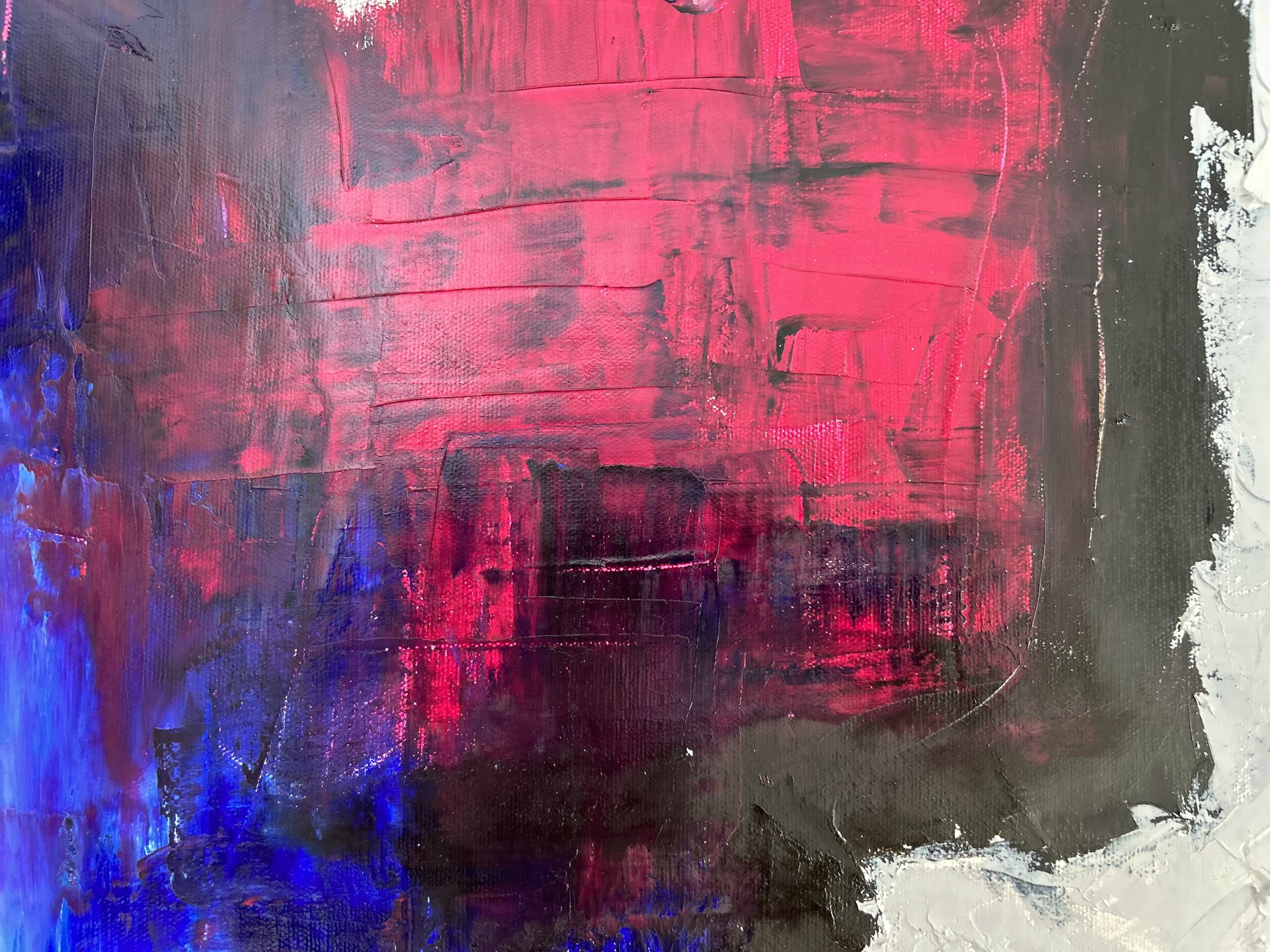
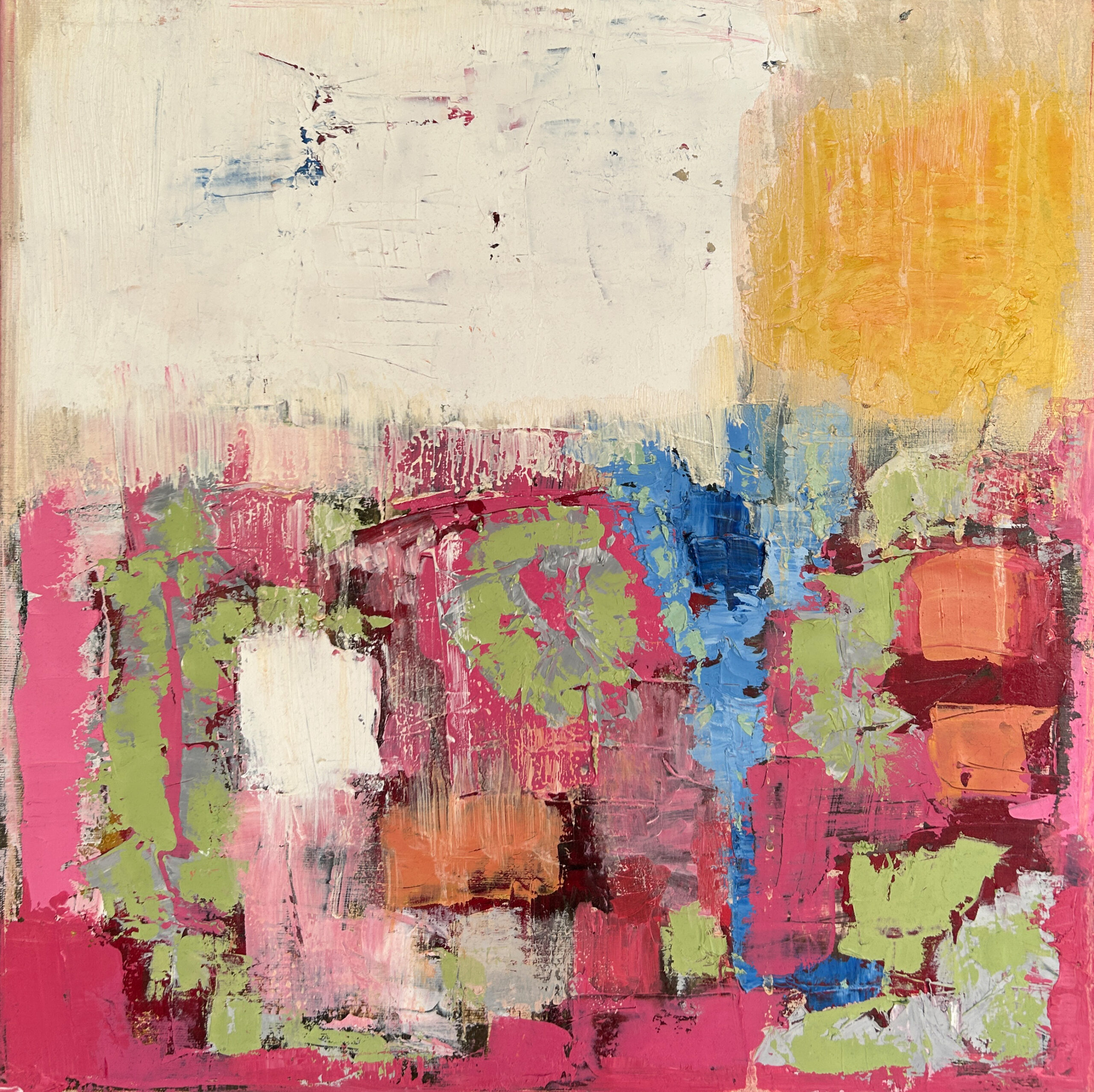
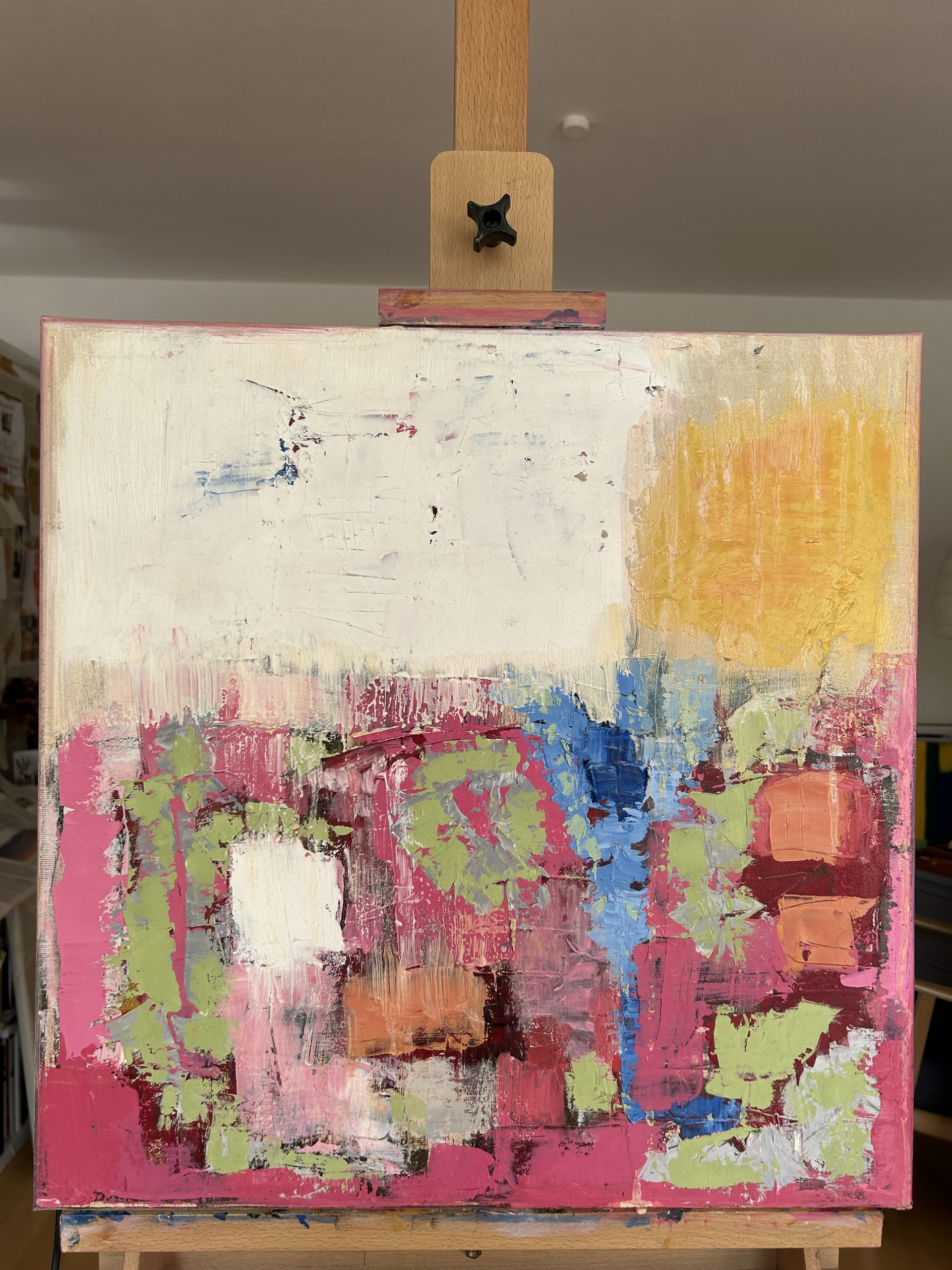
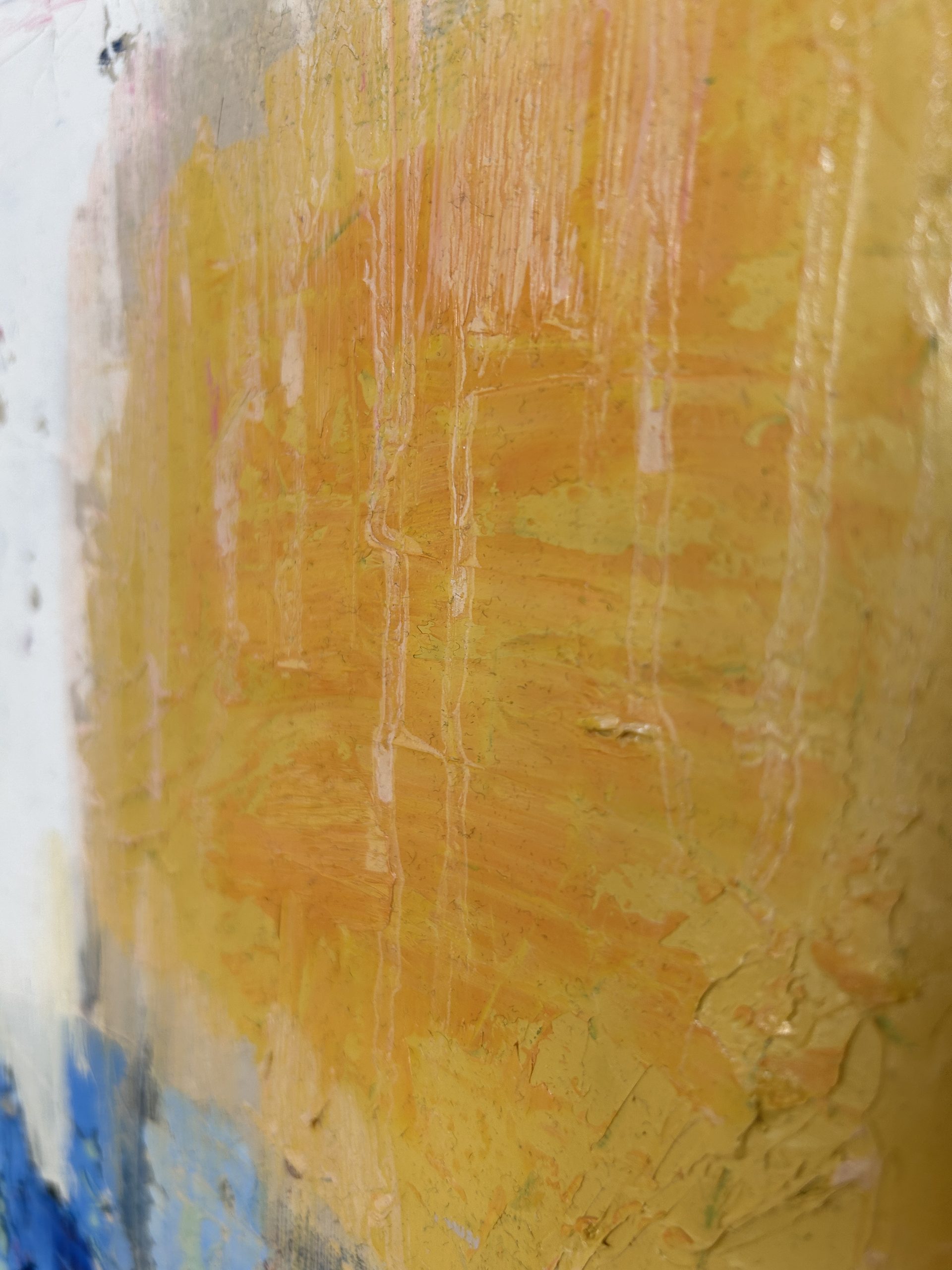
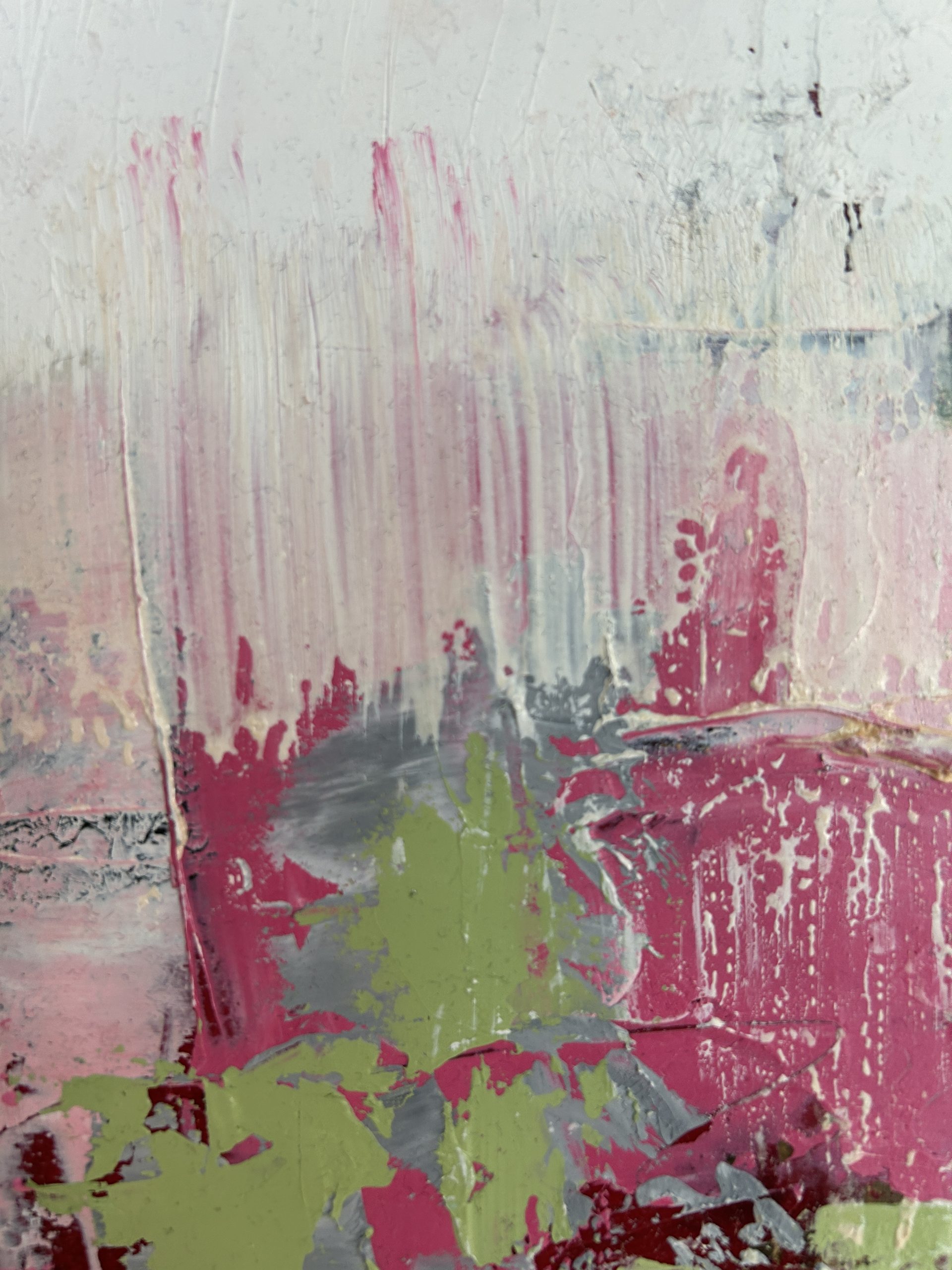
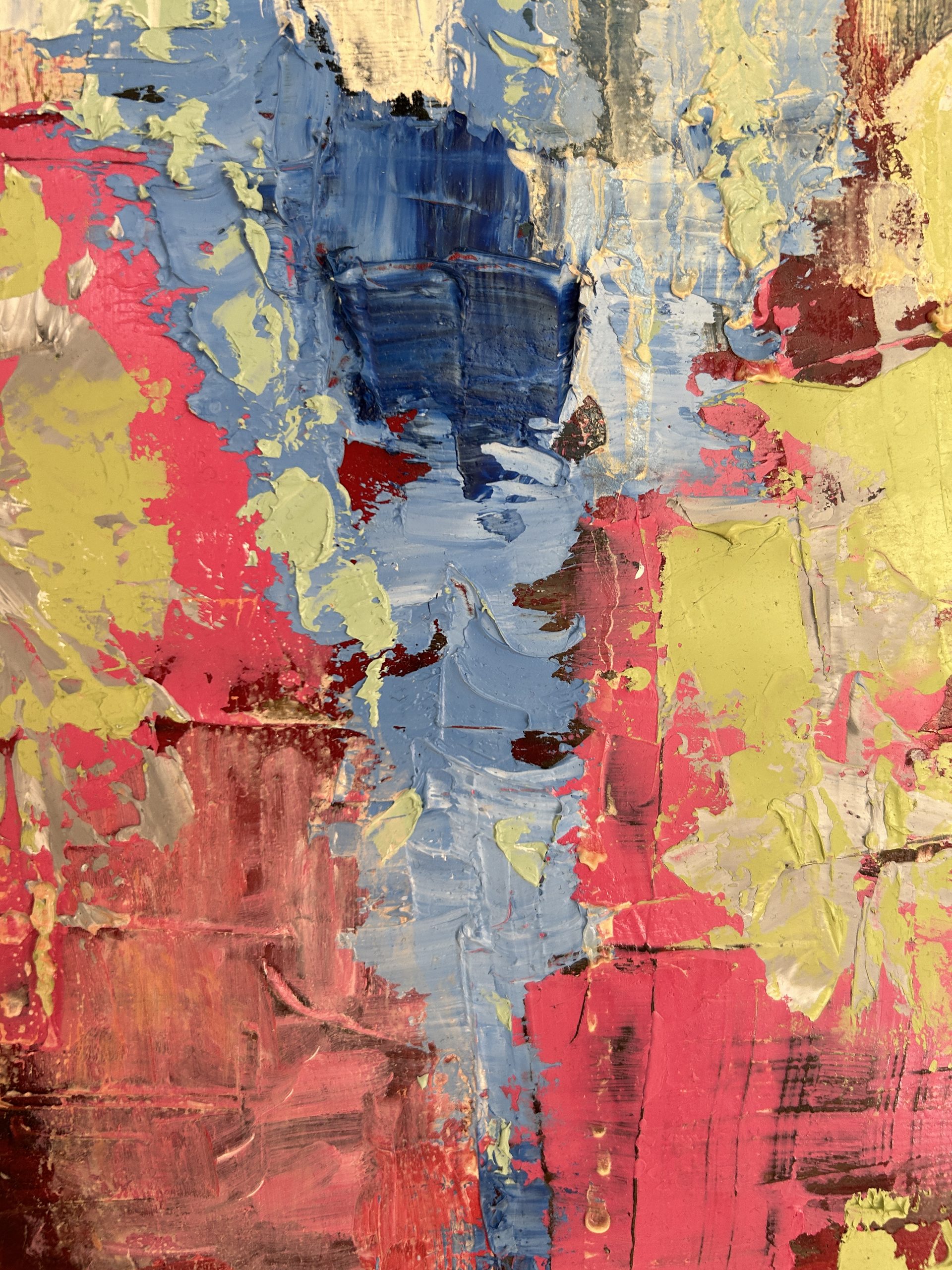
    Burri’s oil painting titled “Tränen am Brenner” presents an abstract, highly textured composition divided into two distinct horizontal zones. The upper region is dominated by an expansive, pale off-white color field, anchored in the top-right corner by a vibrant yellow block. The lower half features a highly saturated, dominant pink and magenta foundation, densely layered with contrasting accents of olive green, bright blue, orange, and deep red.

    Compositionally, the work contrasts the quiet, spacious surface of the upper white area with the complex, tactile density of the lower pink field. The paint application varies from broad, smooth passages to heavily scraped, impasto-laden textures that expose underlying layers and structural grid-like forms. Stylistically aligned with European Art Informel and Color Field Painting, the focus rests on material presence, horizontal spatial division, and dynamic color interaction. Materially, the painting is executed in oil on a pure cotton canvas, stretched over a pine wood support frame with dimensions of 50 x 50 x 2 cm.

    Deutsche Version

    Burris Ölgemälde mit dem Titel „Tränen am Brenner“ zeigt eine abstrakte, stark strukturierte Komposition, die in zwei prägnante horizontale Zonen unterteilt ist. Der obere Bildbereich wird von einer großflächigen, dominanten cremeweißen Fläche bestimmt, die in der rechten oberen Ecke von einem leuchtend gelben Block verankert wird. Die untere Bildhälfte basiert auf einem gesättigten, feldprägenden Pink- und Magentaton, der von vielschichtigen Akzenten in Olivgrün, leuchtendem Blau, Orange und tiefem Rot durchsetzt ist.

    Kompositorisch stellt das Werk die ruhige, offene Wirkung der oberen Weißfläche der haptischen und komplexen Dichte der unteren Pinkzone gegenüber. Der Farbauftrag variiert zwischen glatten, flächigen Passagen und stark gespachtelten, dichten Impasto-Strukturen, die darunterliegende Farbschichten und rasterartige Formen freilegen. In formaler Anlehnung an das europäische Informel und die Farbfeldmalerei liegt der Schwerpunkt auf materieller Präsenz, horizontaler Raumgliederung und dynamischer Farbinteraktion. Materialtechnisch ist das Werk rein in Öl auf reiner Baumwollleinwand ausgeführt, die auf einen Kiefernholz-Keilrahmen mit den Abmessungen 50 × 50 × 2 cm gespannt ist.

    Title / Titel: Tears at the Brenner / Tränen am Brenner
    Year / Jahr: 2023
    Medium / Technik: Oil on canvas / Öl auf Leinwand
    Dimensions / Maße: 50 × 50 × 2 cm
    Status: In Privatbesitz | Privately Held
    Art prints available upon request | Kunstdrucke auf Anfrage bei mirandolo.de
  • Ship’s Lot and Flames | Schiffslot und Flammen

    Ship’s Lot and Flames | Schiffslot und Flammen

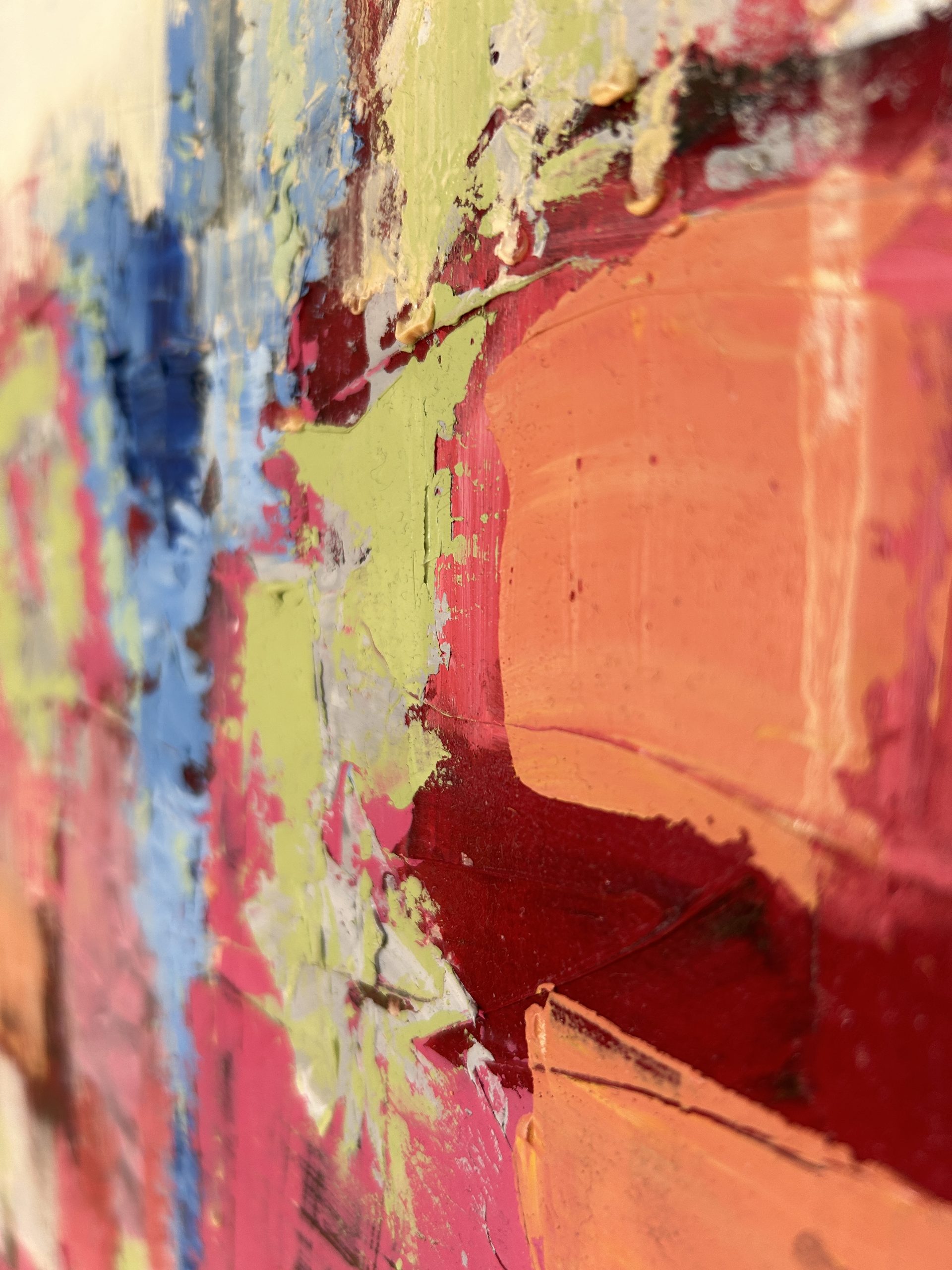
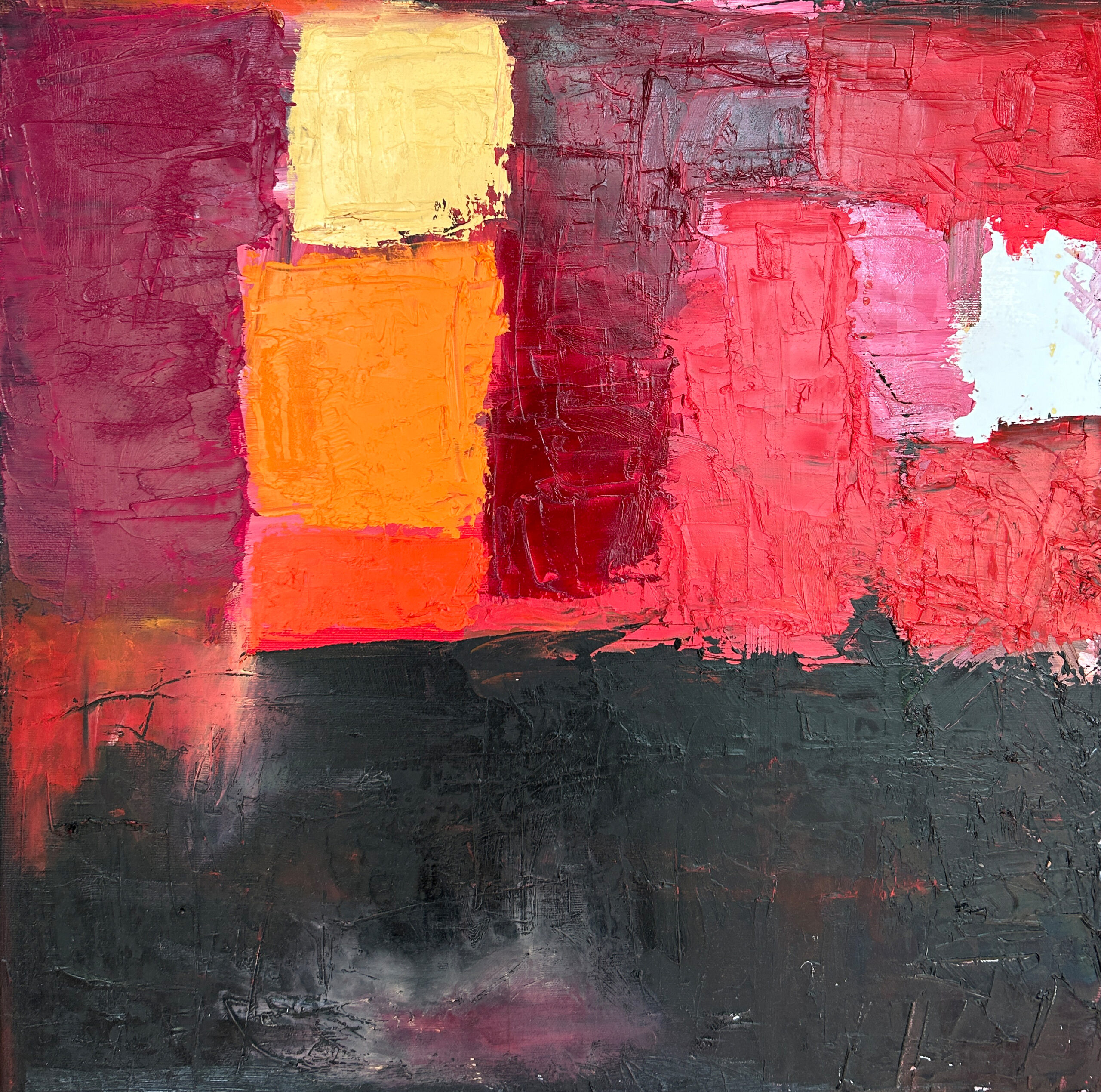
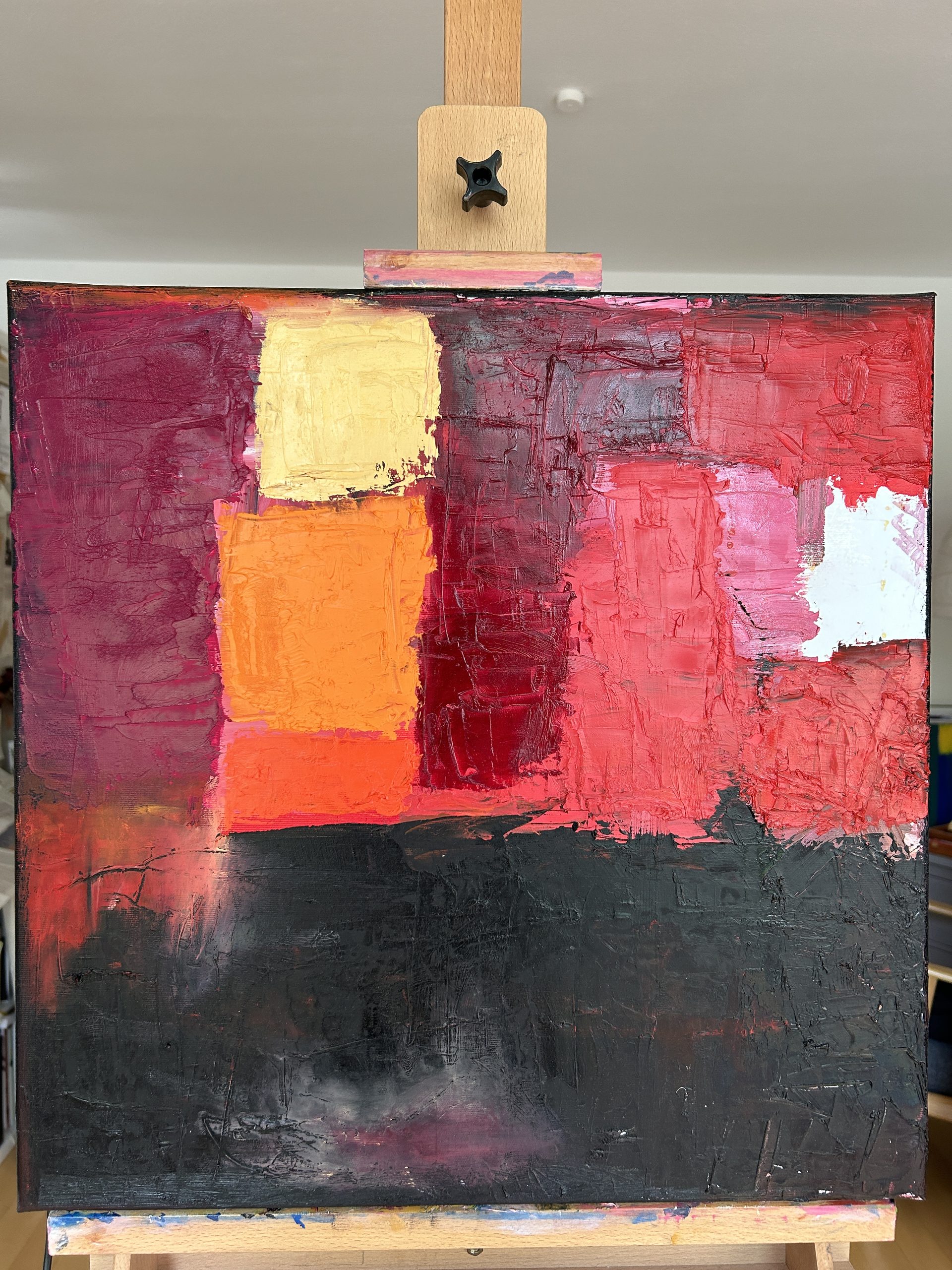
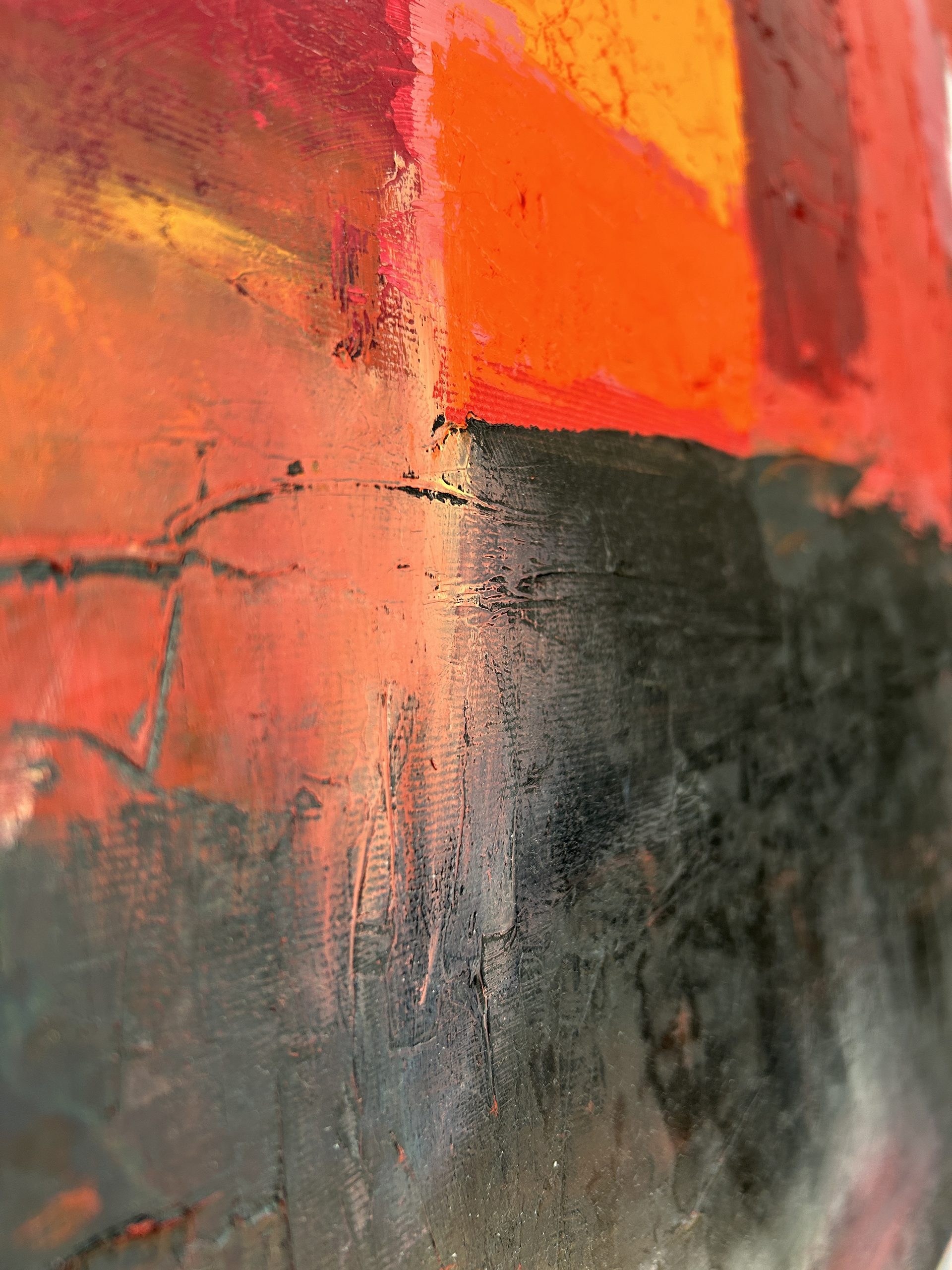
    Schiffslot und Flammen von Martin Burri | Ölgemälde

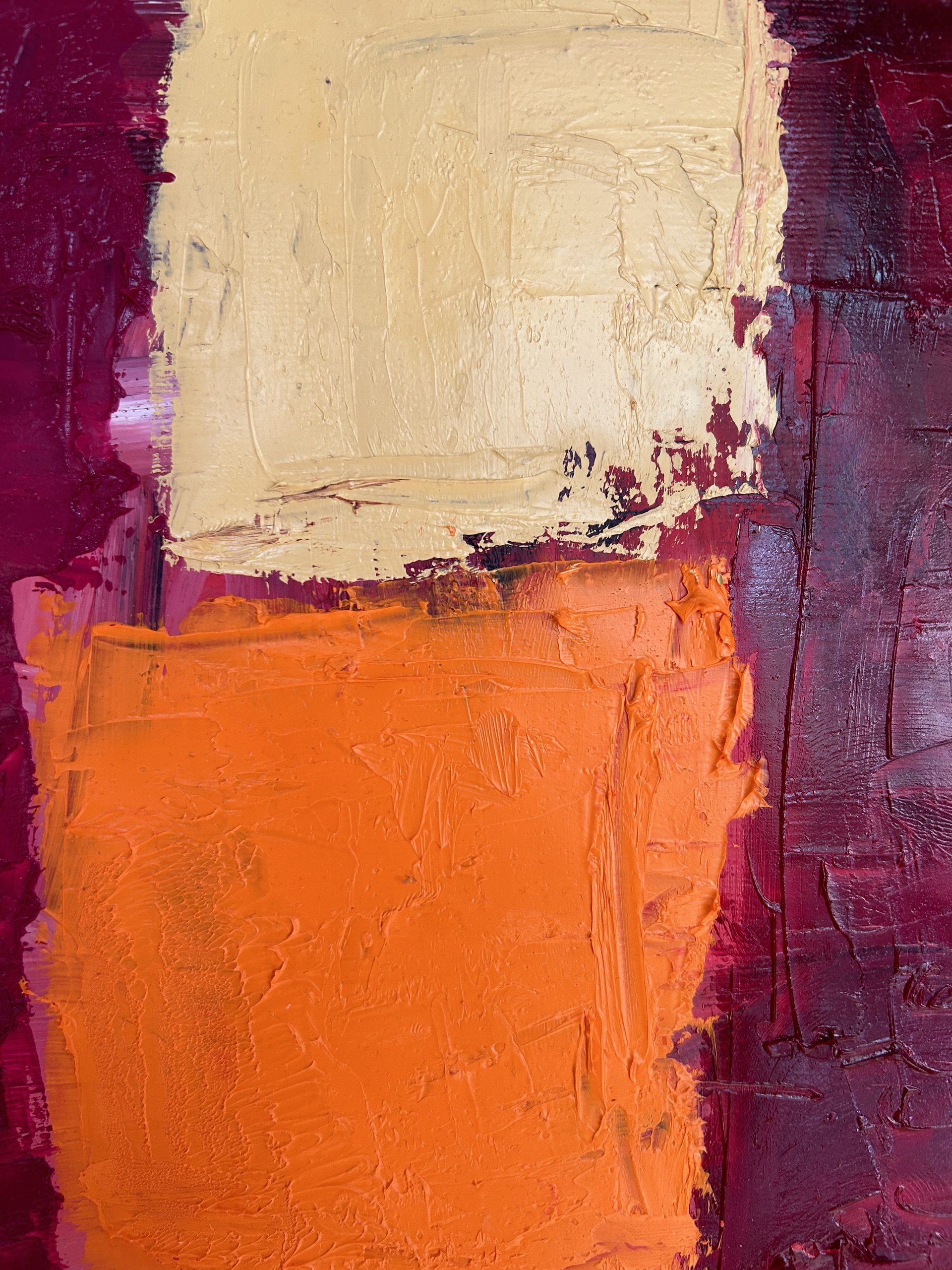
    Burri’s oil painting titled “Ship’s Lot and Flames” presents an abstract, highly textured composition dominated by horizontal color zones and geometric blocks. The lower third of the canvas is defined by a dense, dark base of black and deep charcoal tones, establishing a heavy foundation. Above this dark passage, the upper two-thirds feature an intense chromatic arrangement of red hues—ranging from deep crimson and magenta to bright coral—interspersed with structured rectangular blocks of saturated orange, yellow, and a small field of white at the upper right edge.

    Compositionally, the work contrasts the dark horizontal band at the bottom with vertically stacked, rectilinear color fields above. The surface shows a heavy, impasto paint application with visible palette-knife traces and scraped textures across all zones. Stylistically aligned with Color Field Painting and Art Informel, the focus rests on material density and geometric segmentations. Materially, the painting is executed in oil on a pure cotton canvas, stretched over a pine wood support frame with dimensions of 50 x 50 x 2 cm.

    Deutsche Version

    Burris Ölgemälde mit dem Titel „Schiffslot und Flammen“ zeigt eine abstrakte, stark strukturierte Komposition, die durch horizontale Farbzonen und geometrische Blockformen gegliedert wird. Das untere Drittel der Bildfläche wird von einer dichten, dunklen Basis aus Schwarz- und kühlen Kohletönen beherrscht, die ein hohes optisches Gewicht bildet. Darüber entfaltet sich in den oberen zwei Dritteln ein intensiver Farbraum aus gestaffelten Rottönen – von tiefem Karmin und Magenta bis hin zu leuchtendem Korallenrot –, der von rechteckigen Feldern in gesättigtem Orange, Hellgelb und einer kleinen weißen Fläche am rechten oberen Bildrand durchbrochen wird.

    Kompositorisch stellt das Werk das dunkle Band im Sockelbereich den vertikal geschichteten, rechtwinkligen Farbfeldern der oberen Zone gegenüber. Die Oberfläche weist einen dichten, pastosen Farbauftrag mit sichtbaren Spachtelspuren und Einkerbungen auf. In formaler Anlehnung an die Farbfeldmalerei und das Informel liegt der Schwerpunkt auf materieller Dichte und geometrischer Segmentierung. Materialtechnisch ist das Werk rein in Öl auf reiner Baumwollleinwand ausgeführt, die auf einen Kiefernholz-Keilrahmen mit den Abmessungen 50 x 50 x 2 cm gespannt ist.

    Title / Titel: Ship’s Lot and Flames / Schiffslot und Flammen
    Year / Jahr: 2023
    Medium / Technik: Oil on canvas / Öl auf Leinwand
    Dimensions / Maße: 50 × 50 × 2 cm
    Status: Available / Verfügbar
    Sammler in Deutschland: Im Shop mirandolo.de erwerben
    International Collectors: Available via saatchiart

  • A History of Violence | Eine Geschichte der Gewalt

    A History of Violence | Eine Geschichte der Gewalt

    A History of Violence | Eine Geschichte der Gewalt

    Burri’s mixed-media painting titled “A History of Violence” examines structural conflict, aggression, and historical continuity through a figurative narrative composition. The pictorial space presents stylized figures positioned within a fragmented environment. The color scheme is dominated by low-saturation dark tones, muted grays, and stark black contours, contrasted by targeted applications of intense red.

    Compositionally, the work utilizes abrupt spatial breaks and heavy, linear framing to divide the visual fields. Stylistically referencing Neo-Expressionism and historical narrative painting, the composition focuses on formal reduction rather than descriptive detail. Materially, the work incorporates organic plant matter, specifically dried blossoms, alongside graphite elements directly into the paint layer to create a physical, tactile surface texture. The painting is executed in oil and mixed media on a pure cotton canvas, stretched over a pine wood support frame with dimensions of 100 x 100 x 2 cm.

    Deutsche Version

    Burris Mixed-Media-Gemälde mit dem Titel „A History of Violence“ thematisiert strukturelle Konflikte, Aggression und historische Kontinuität in einer figurativ-narrativen Anordnung. Der Bildraum zeigt stilisierte Figuren innerhalb einer fragmentierten Umgebung. Das Farbschema wird von schwach gesättigten dunklen Tönen, gedämpften Graustufen und dichten schwarzen Konturen dominiert, die von gezielt gesetzten, intensiven Rotzonen unterbrochen werden.

    Kompositorisch nutzt die Arbeit unvermittelte raumgliedernde Brüche und schwere, lineare Rahmungen zur Segmentierung der Bildebenen. In formaler Anlehnung an den Neoexpressionismus und die historische Historienmalerei liegt der Schwerpunkt auf figürlicher Reduktion statt deskriptiver Detailzeichnung. Materialtechnisch erweitert das Werk den malerischen Farbauftrag durch die direkte Integration organischer Substanzen wie getrockneter Blüten sowie Graphitkomponenten in die Farbschicht, wodurch eine haptische Oberflächenstruktur entsteht. Das Unikat ist in Öl und Mischtechnik auf reiner Baumwollleinwand ausgeführt, die auf einen Kiefernholz-Keilrahmen mit den Abmessungen 100 × 100 × 2 cm gespannt ist.

    Title / Titel: A History of Violence / Eine Geschichte der Gewalt
    Year / Jahr: 2022
    Medium / Technik: Oil and mixed media on canvas / Öl und Mischtechnik auf Leinwand
    Dimensions / Maße: 100 × 100 × 2 cm
    Status: Available / Verfügbar
    Sammler in Deutschland: Im Shop mirandolo.de erwerben
    International Collectors: Available via saatchiart

  • The Human, the Suffering, the War, and the Death | Der Mensch, das Leid, der Krieg und der Tod

    The Human, the Suffering, the War, and the Death | Der Mensch, das Leid, der Krieg und der Tod

    The Human, the Suffering, the War, and the Death | Der Mensch, das Leid, der Krieg und der Tod

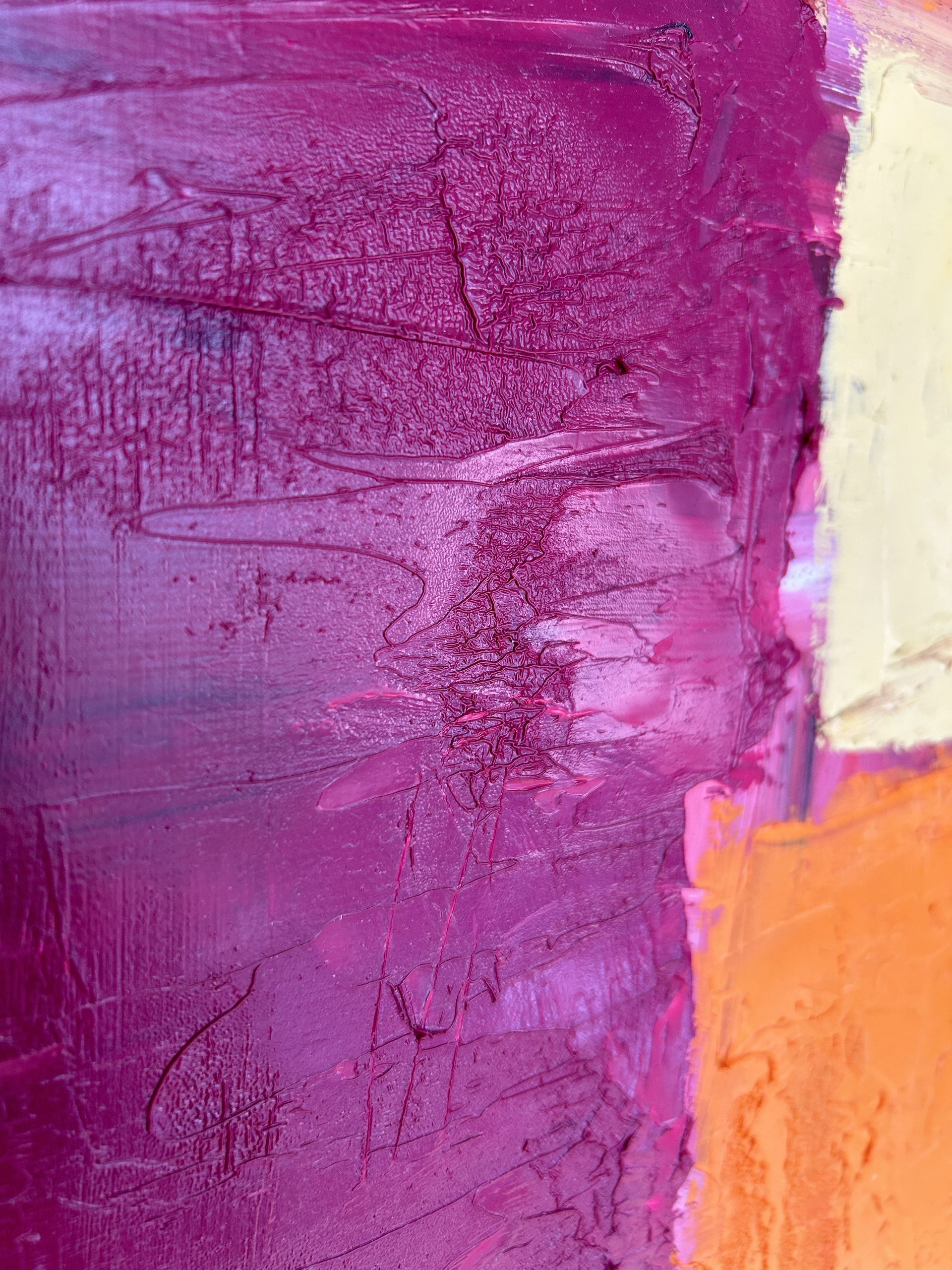
    Burri’s oil painting titled “Der Mensch, das Leid, der Krieg und der Tod” addresses existential themes of human vulnerability, conflict, and mortality through a figurative narrative structure. The composition displays stylized figures interacting within a segmented pictorial space. The color palette relies on low-saturation earth tones, grays, and black contours, interrupted by targeted red color fields.

    Compositionally, the work employs dense paint application and sharp structural divisions to organize the visual fields. Stylistically aligned with European Expressionism and mid-century figurative painting, the work focuses on structural reduction and non-idealized representation. Materially, the work expands traditional paint application by incorporating organic plant matter, specifically dried blossoms, alongside graphite elements directly into the paint layer. Materially, the painting is executed in oil and mixed media on a pure cotton canvas, stretched over a pine wood support frame with dimensions of 100 x 100 x 2 cm.

    Deutsche Version

    Burris Ölgemälde mit dem Titel „Der Mensch, das Leid, der Krieg und der Tod“ behandelt Themen wie menschliche Verletzlichkeit, Konflikt und Sterblichkeit in einer figurativ-narrativen Anordnung. Die Bildfläche zeigt stilisierte Figuren innerhalb eines strukturierten Bildraums. Die Farbgebung basiert auf schwach gesättigten Erdtönen, Graustufen und schwarzen Konturlinien, die von gezielt gesetzten roten Farbzonen unterbrochen werden.

    Kompositorisch nutzt die Arbeit einen dichten Farbauftrag und klare Segmentierungen zur Gliederung der Bildebenen. In der Tradition des europäischen Expressionismus und der figurativen Malerei der Nachkriegszeit liegt der Schwerpunkt auf formeller Reduktion und einer nicht-idealisierenden Darstellungsweise. Materialtechnisch erweitert das Werk den klassisch-malerischen Farbauftrag durch die Integration organischer Substanzen wie getrockneter Blüten sowie Graphitkomponenten direkt in die Farbschicht. Das Unikat ist in Öl und Mischtechnik auf reiner Baumwollleinwand ausgeführt, die auf einen Kiefernholz-Keilrahmen mit den Abmessungen 100 × 100 × 2 cm gespannt ist.

    Title / Titel: The Human, the Suffering, the War, and the Death / Der Mensch, das Leid, der Krieg und der Tod
    Year / Jahr: 2022
    Medium / Technik: Oil and mixed media on canvas / Öl und Mischtechnik auf Leinwand
    Dimensions / Maße: 100 × 100 × 2 cm
    Status: Available / Verfügbar
    Sammler in Deutschland: Im Shop mirandolo.de erwerben
    International Collectors: Available via saatchiart

  • The Last Generation | Die letzte Generation

    The Last Generation | Die letzte Generation

    The Last Generation | The Last Generation

    Burri’s painting titled “The Last Generation” presents a provocative narrative composition addressing contemporary socio-political themes, environmental urgency, and generational tension. The canvas features expressive, stylized figures set against a textured, dynamic background, conveying a heightened sense of movement, vulnerability, and collective crisis. The chromatic spectrum pairs earthy, grounded tones with stark, contrasting accents, underscoring the urgency of the subject matter through raw visual energy.

    Compositionally, the work balances figurative elements with gestural abstraction, employing dense brushwork and heavy contours to heighten the emotional weight of the scene. Stylistically drawing from Neo-Expressionism and contemporary protest art, the painting serves as a visual meditation on climate activism, collective responsibility, and the uncertain future of upcoming generations. Materially, the work is executed in oil on a pure cotton canvas, stretched over a pine wood support frame with dimensions of 50 x 50 x 2 cm.

    Deutsche Version

    Burris Gemälde mit dem Titel „Die letzte Generation“ zeigt eine prägnante narrativ-expressive Komposition, die sich mit zeitgenössischen gesellschaftspolitischen Themen, ökologischer Dringlichkeit und generationalen Spannungen auseinandersetzt. Die Bildfläche wird von stilisierten, gestischen Figuren beherrscht, die vor einem dynamisch strukturierten Hintergrund agieren und ein Gefühl von Bewegung, Verletzlichkeit und kollektiver Krise vermitteln. Die Farbpalette kombiniert erdig-gedämpfte Passagen mit zielgerichteten, kontrastreichen Akzenten, die die Thematik visuell verdichten.

    Kompositorisch balanciert das Werk figurativen Ausdruck und gestische Abstraktion aus. Durch dichten Farbauftrag und kraftvolle Konturen wird die narrative Dringlichkeit des Motivs unterstrichen. Stilistisch nimmt die Arbeit Anleihen beim Neoexpressionismus sowie bei Formen zeitgenössischer Protestkunst auf und reflektiert Themen wie Klimaverantwortung, zivilen Diskurs und die Ungewissheit künftiger Generationen. Materialtechnisch ist das Werk in Öl auf reiner Baumwollleinwand ausgeführt, die auf einen Kiefernholz-Keilrahmen mit den Abmessungen 50 x 50 x 2 cm gespannt ist.

    Title / Titel: The Last Generation / Die letzte Generation
    Year / Jahr: 2023
    Medium / Technik: Oil on canvas / Öl auf Leinwand
    Dimensions / Maße: 50 x 50 x 2 cm
    Status: Available / Verfügbar
    Sammler in Deutschland: Im Shop mirandolo.de erwerben
    International Collectors: Available via saatchiart

  • The Hotel Garden | Der Garten des Hotels

    The Hotel Garden | Der Garten des Hotels

    The Hotel Garden | Der Garten des Hotels

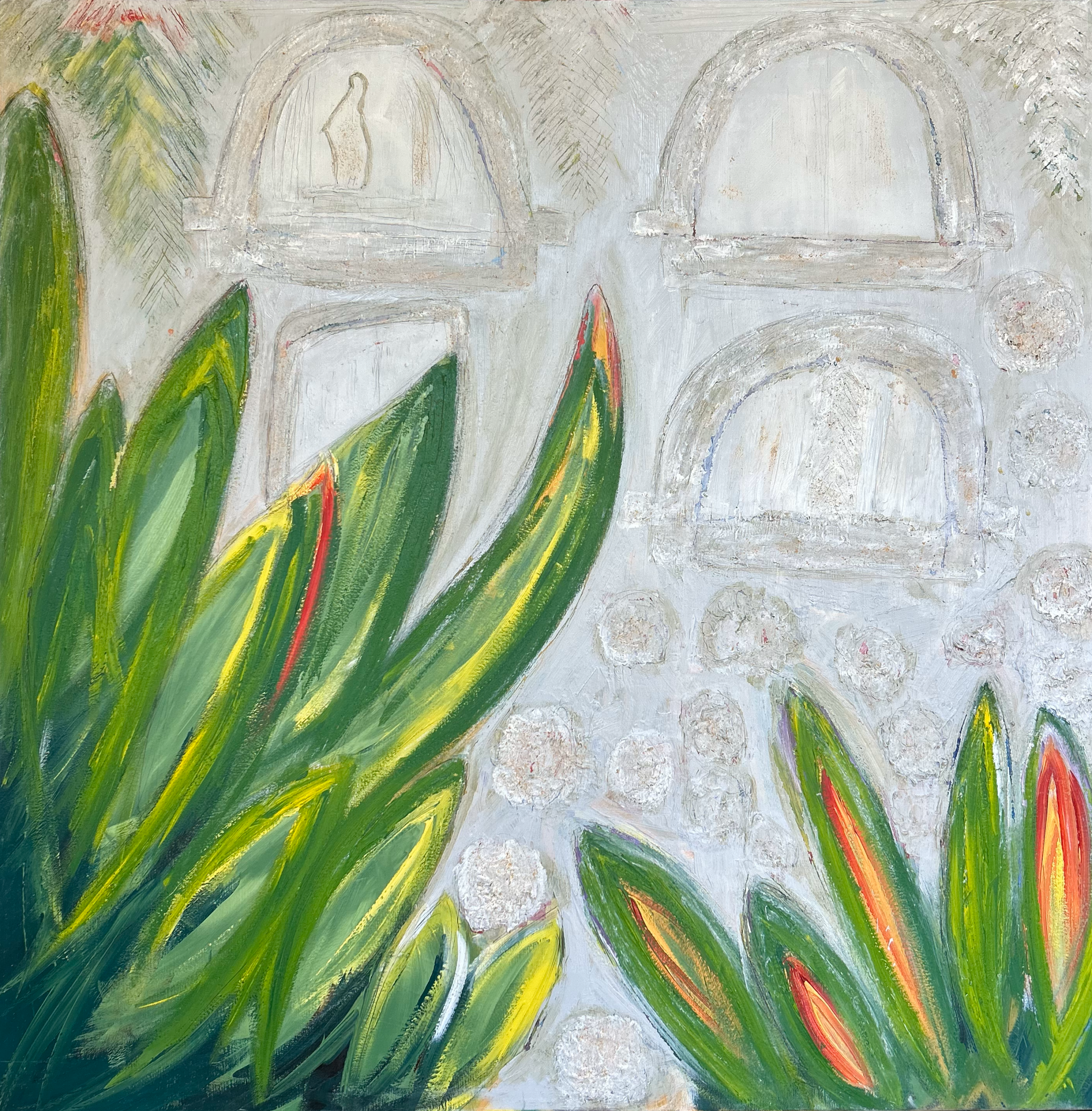
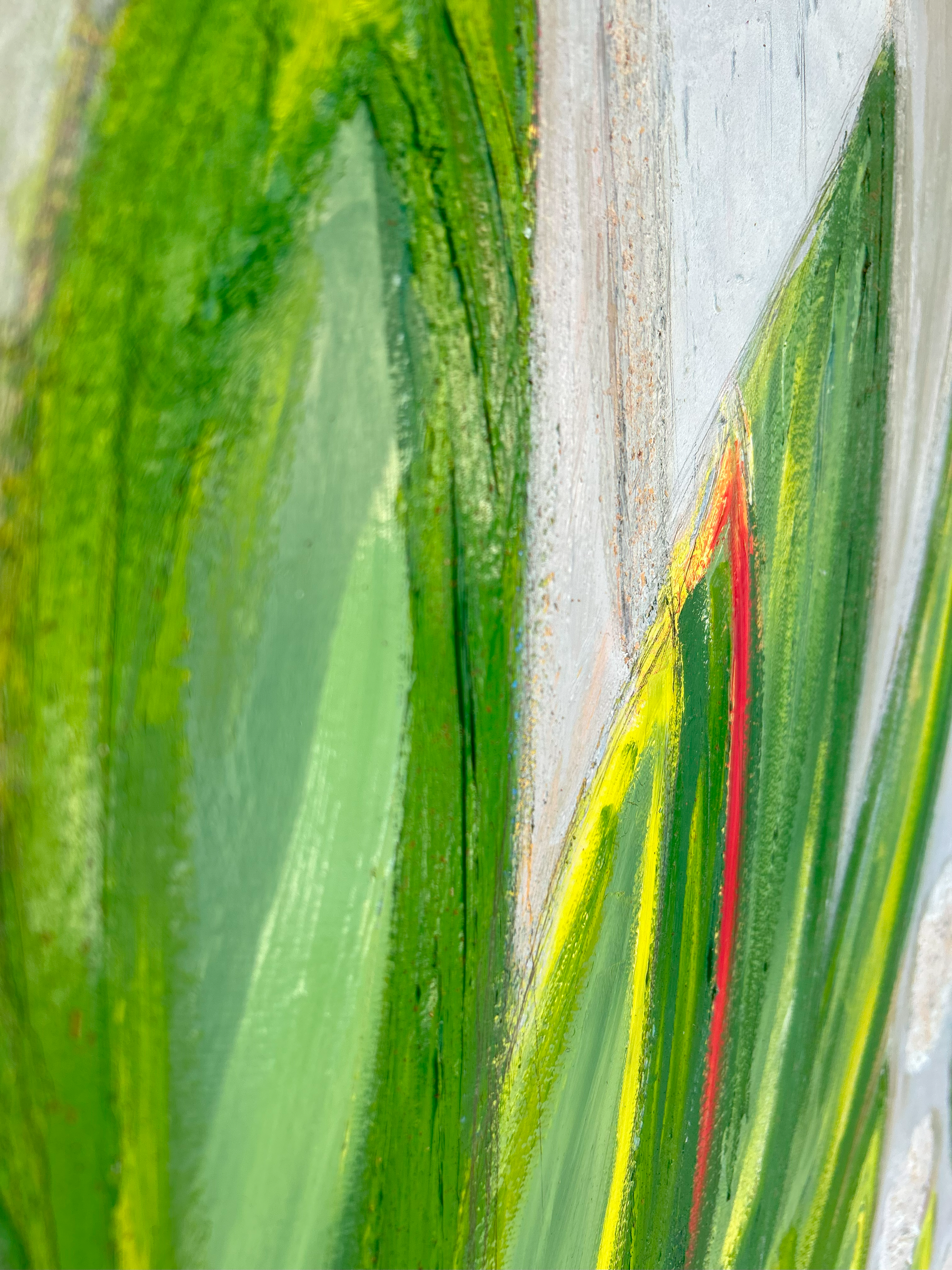
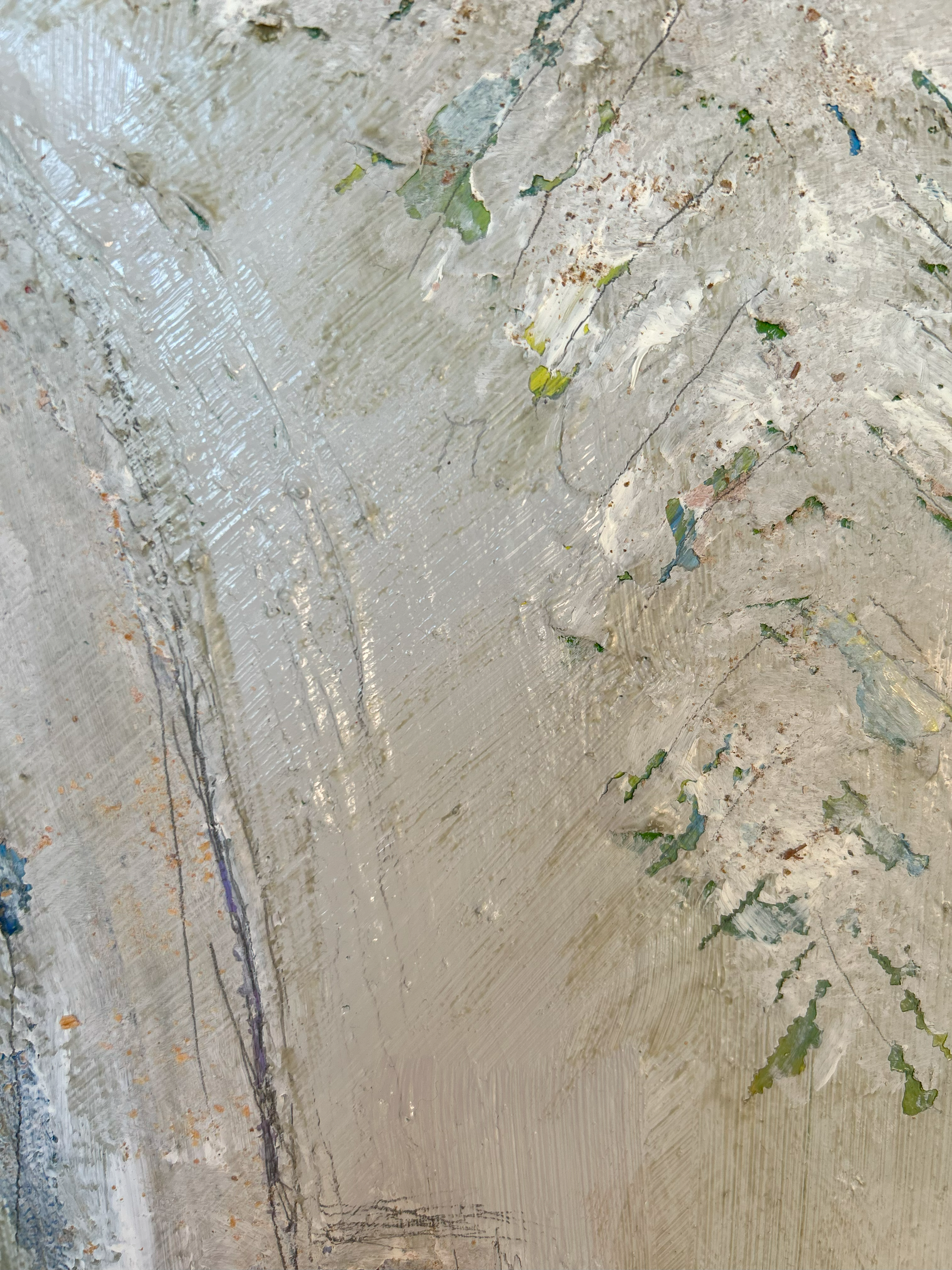
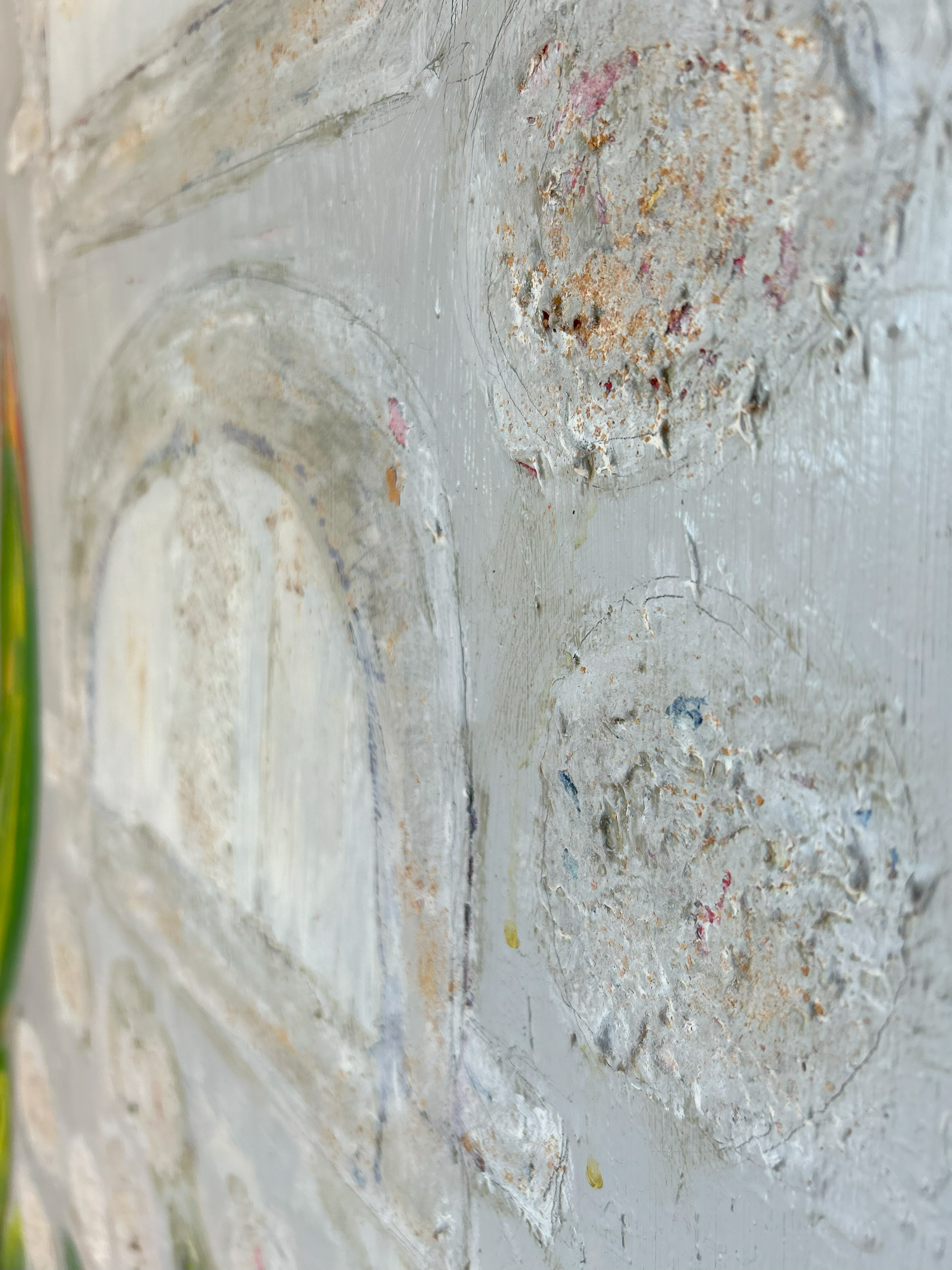
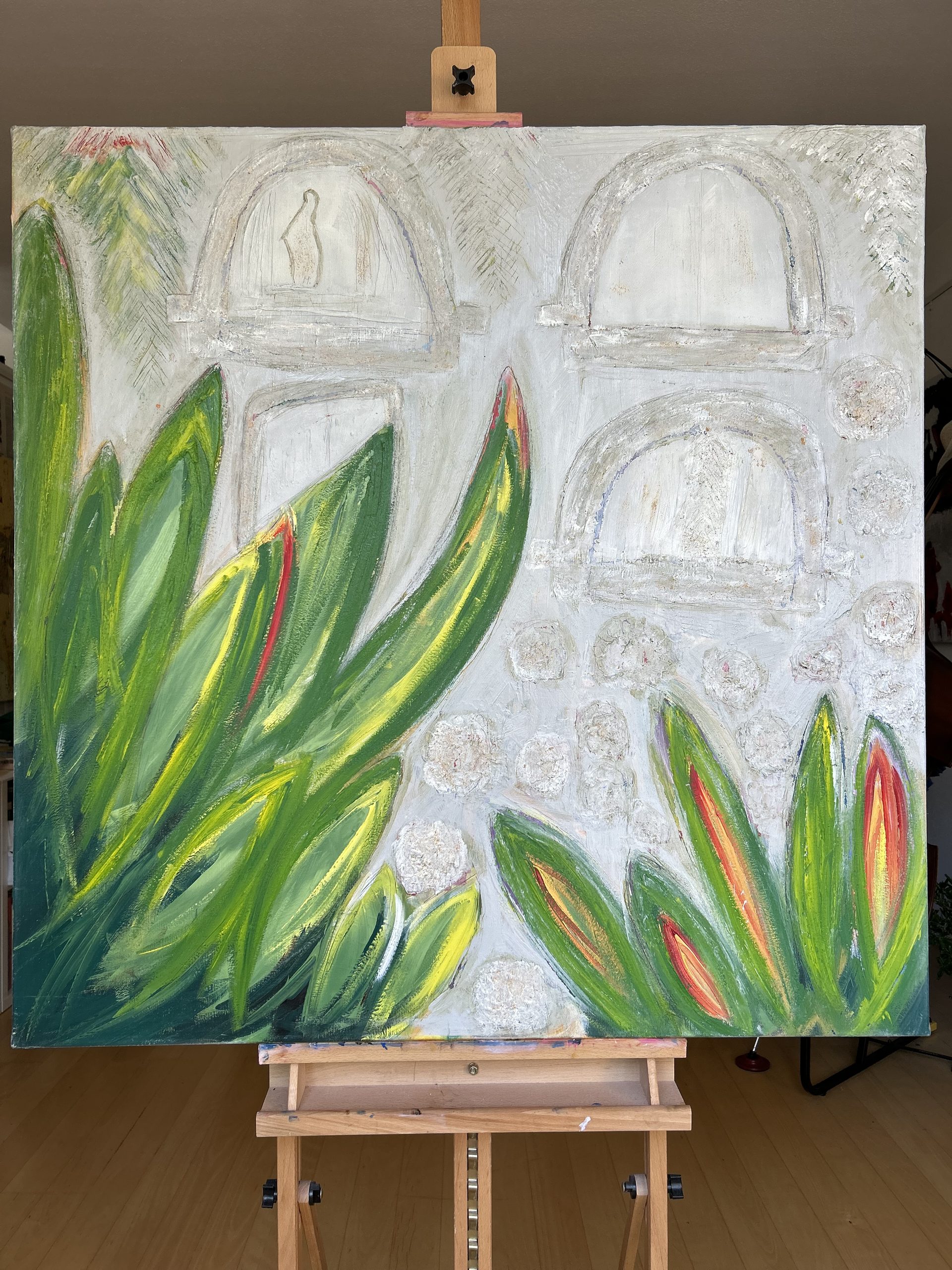
    Burri’s abstract oil painting titled “Der Garten des Hotels” presents a vivid, multi-layered visual narrative evoking a lush, cultivated environment framed by architectural motifs. The composition incorporates gestural representations of botanical life—flowers and foliage—interspersed with structured, repeating archways and window-like frames that suggest the surrounding hotel architecture. The chromatic spectrum features a dynamic contrast of vibrant primary and secondary hues, where brilliant yellows, rich reds, and luminous greens interact with grounding whites and deep grays.

    Compositionally, the work captures a dialogue between natural spontaneity and constructed space. Stylistically referencing impressionistic garden scenes—recalling Claude Monet’s compositions at Giverny—as well as the expressive color intensity of Henri Matisse and Abstract Expressionism, the painting balances loose, energetic brushwork with rhythmic structural elements. Materially, the work is executed in oil on a pure cotton canvas, stretched over a pine wood support frame with dimensions of 100 x 100 x 2 cm.

    Deutsche Version

    Burris abstraktes Ölgemälde mit dem Titel „Der Garten des Hotels“ zeigt eine lebendige, mehrschichtige Komposition, die eine üppige, kultivierte Naturlandschaft in Kombination mit architektonischen Motiven heraufbeschwört. Die Bildfläche vereint gestische Darstellungen pflanzlicher Formen – Blumen und Blätterwerk – mit strukturierten, wiederkehrenden Bogen- und Fensterformen, die das umgebende Gebäude andeuten. Das Farbspektrum zeichnet sich durch ein dynamisches Zusammenspiel leuchtender Primär- und Sekundärtöne aus, bei dem strahlendes Gelb, kräftiges Rot und frisches Grün von ausgleichenden Weiß- und Grautönen durchbrochen werden.

    Kompositorisch thematisiert das Werk das Spannungsfeld zwischen organischer Entfaltung und gebauter Struktur. Stilistisch nimmt die Arbeit Bezüge zu impressionistischen Gartenszenen im Stile von Claude Monets Garten in Giverny sowie zur intensiven Farbpoesie von Henri Matisse und dem abstrakten Expressionismus auf. Dabei verbindet der Künstler einen dichten, dynamischen Farbauftrag mit rhythmisch gliedernden Formelementen. Materialtechnisch ist das Werk in Öl auf reiner Baumwollleinwand ausgeführt, die auf einen Kiefernholz-Keilrahmen mit den Abmessungen 100 × 100 × 2 cm gespannt ist.


    Title / Titel: The Hotel Garden / Der Garten des Hotels
    Year / Jahr: 2022
    Medium / Technik: Oil and mixed media on canvas / Öl und Mischtechnik auf Leinwand
    Dimensions / Maße: 100 × 100 × 2 cm
    Status: Available / Verfügbar
    Sammler in Deutschland: Im Shop mirandolo.de erwerben
    International Collectors: Available via saatchiart

  • The Lost River of Life | Der verlorene Fluss des Lebens

    The Lost River of Life | Der verlorene Fluss des Lebens

    The Lost River of Life | Der verlorene Fluss des Lebens

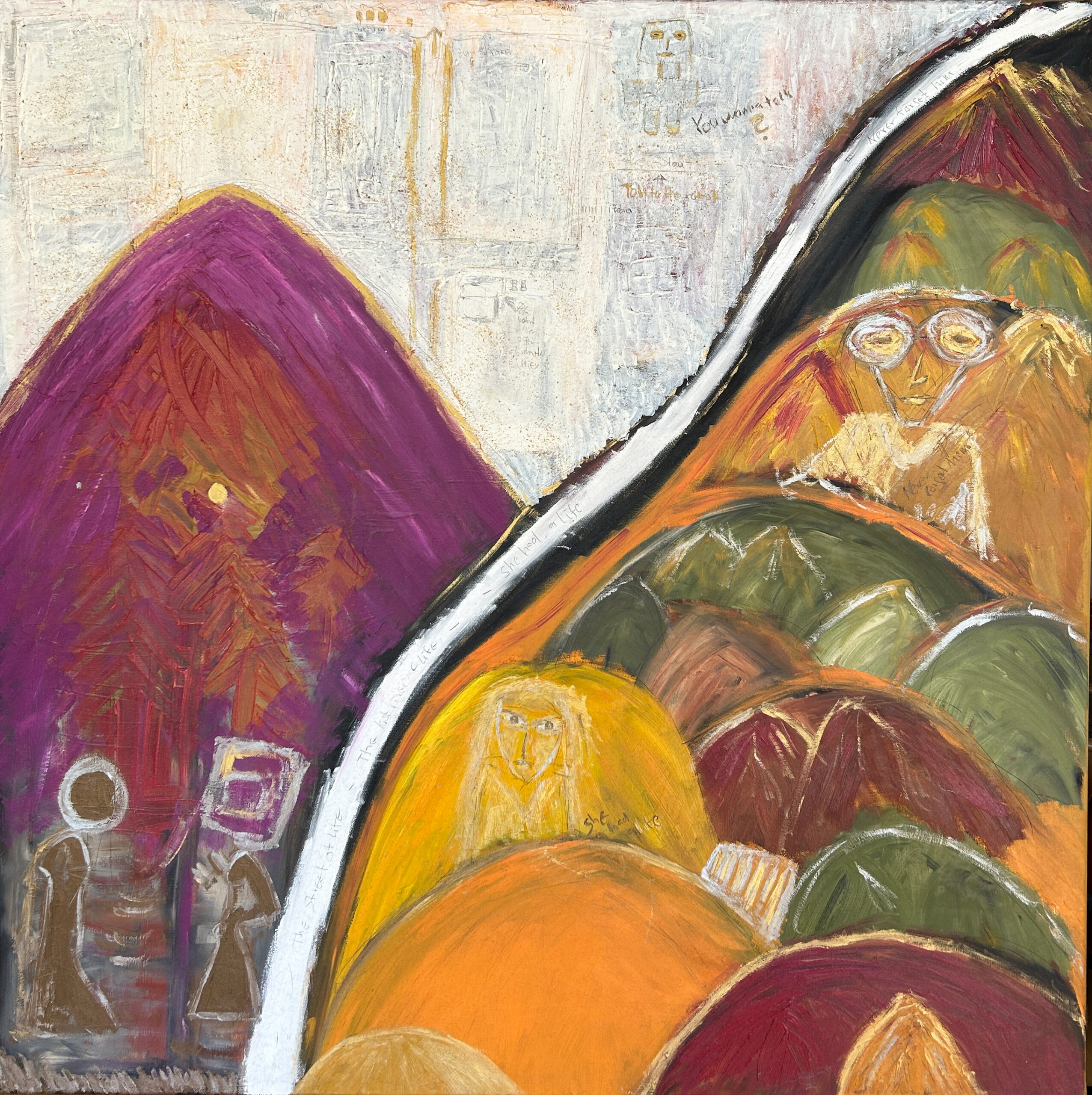
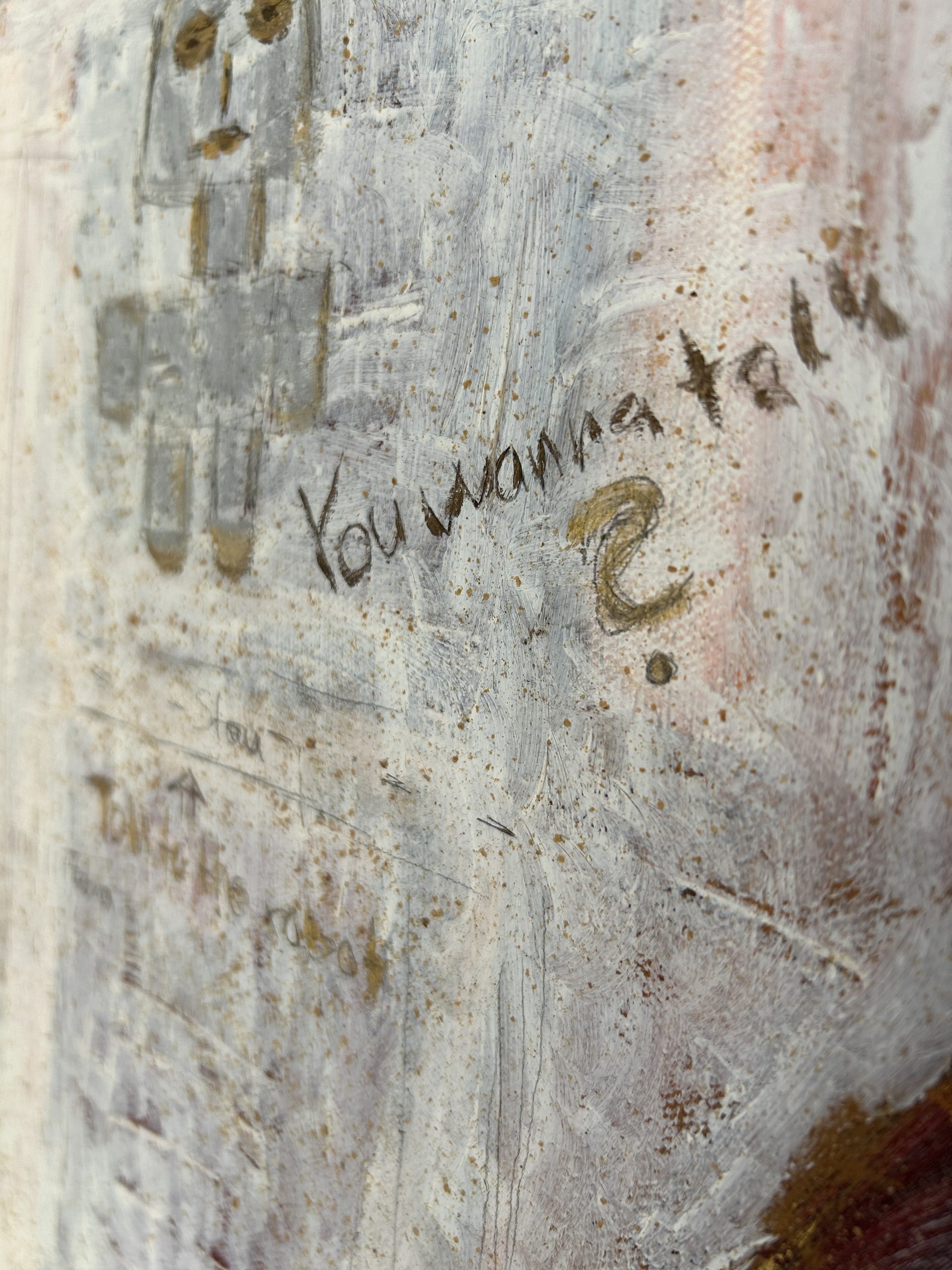
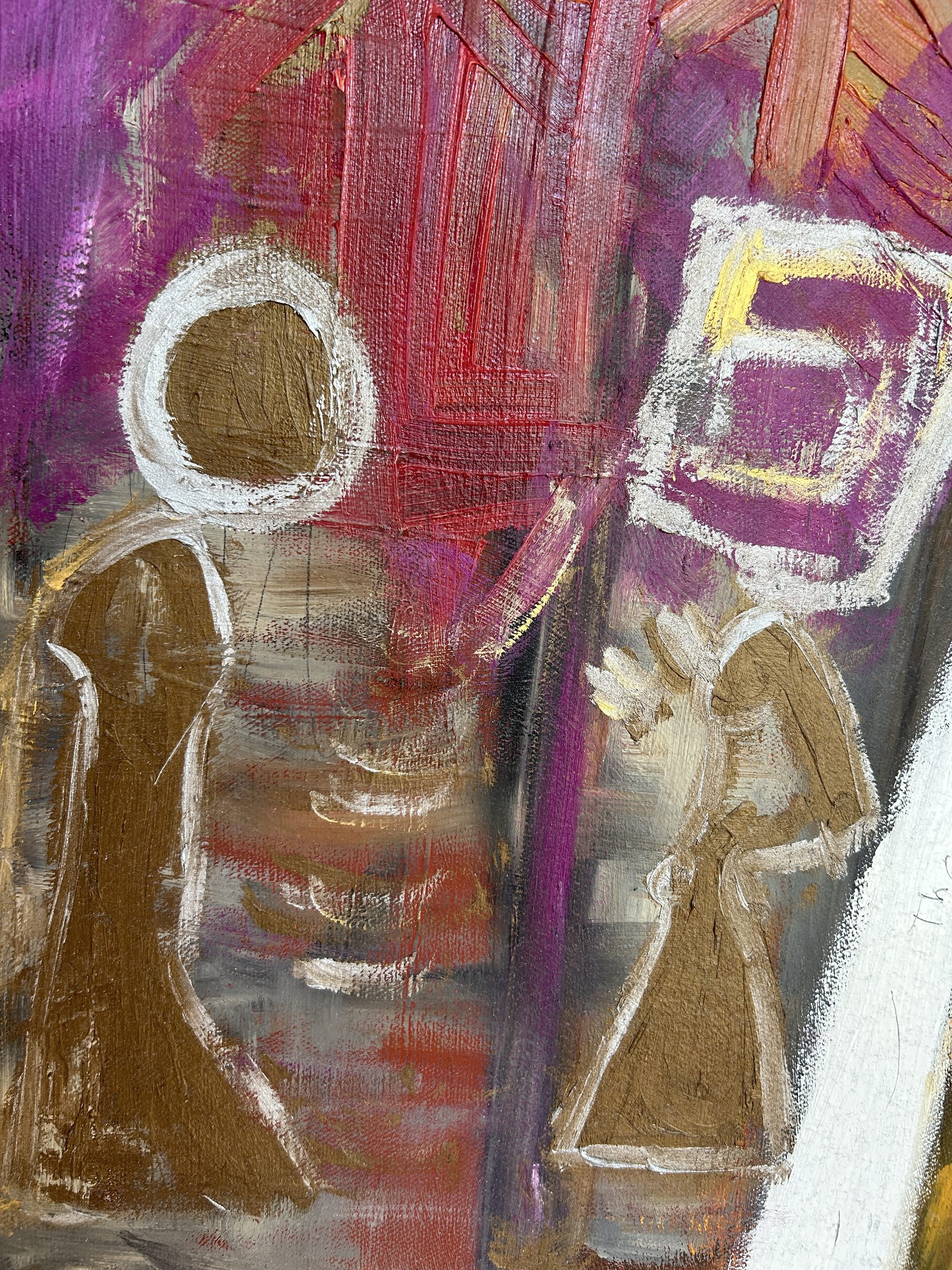
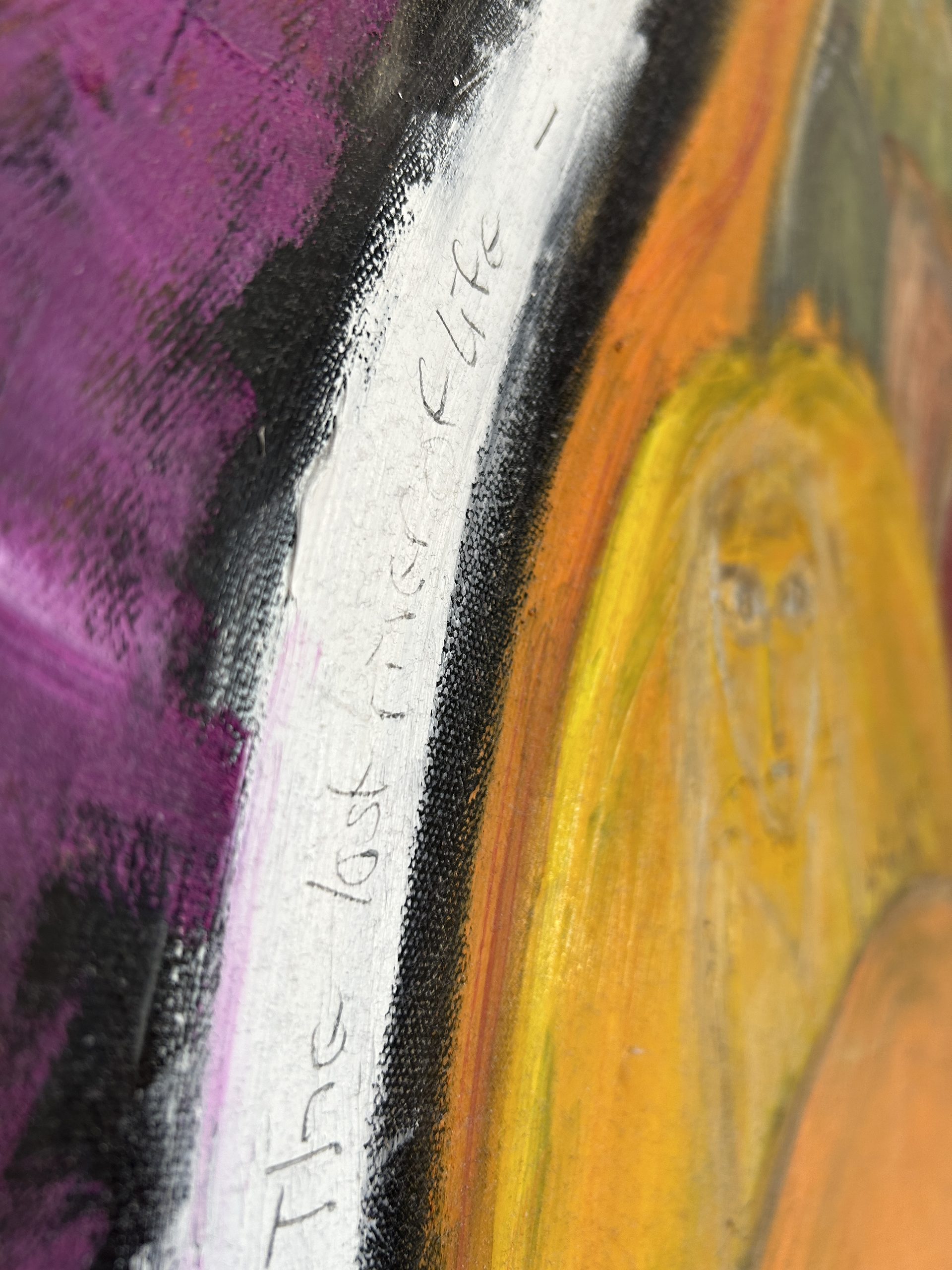
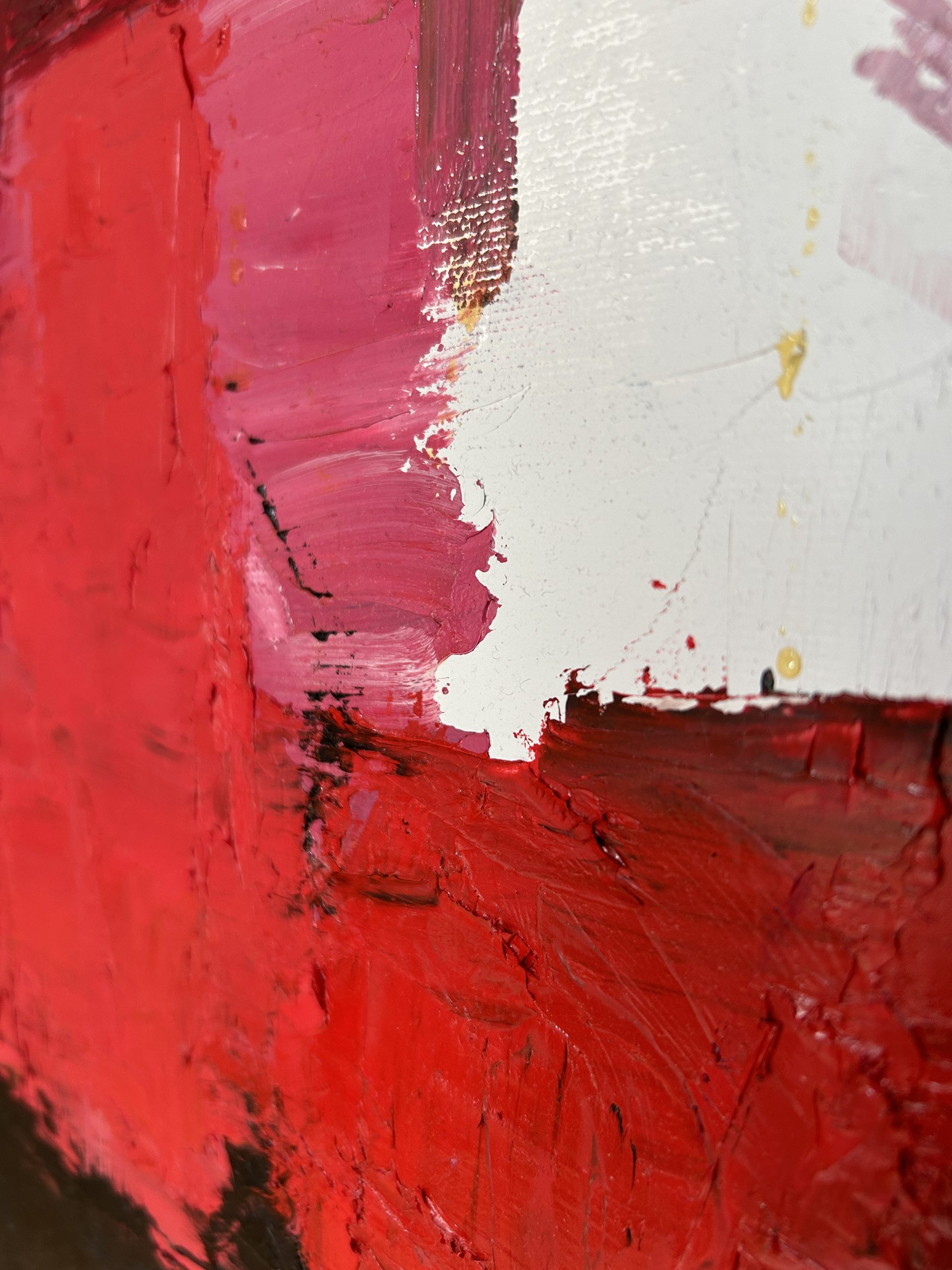
    Burri’s narrative mixed-media painting titled “Der verlorene Fluss des Lebens” presents a complex allegorical composition divided horizontally into two distinct thematic zones by a central river. The left section is dominated by a purple mountain structure housing a golden heart overlaid with gold leaf—a symbolic representation of value, material wealth, or consumerist excess. At the base of this structure, two figures engage in a bitter conflict. Conversely, the right section features rolling hills in earthy textures, interspersed with abstract portraits, textual fragments recalling memorial cards, and faint cartographic outlines leading toward a coastline, evoking themes of loss, memory, and spatial transit.

    Compositionally, the painting balances Expressionist color choices with Surrealist iconography, constructing a multi-layered narrative field. The work incorporates diverse tactile media alongside traditional oil paint—including flower seeds, as well as dried and ground leaves—creating a rich, physical surface structure. Materially, the work is executed in oil and mixed media on a pure cotton canvas, stretched over a pine wood support frame with dimensions of 100 x 100 x 2 cm.

    Deutsche Version

    Burris vielschichtiges Mixed-Media-Gemälde mit dem Titel „Der verlorene Fluss des Lebens“ zeigt eine allegorische Komposition, die durch einen zentralen Flusslauf in zwei thematische Bereiche gegliedert wird. Die linke Zone wird von einem violetten Berg dominiert, der ein mit Blattgold überzogenes goldenes Herz beheimatet – ein Symbol für materiellen Wert, Konsumüberschwang oder verdrängte Essenz. Am Fuß des Berges stehen sich zwei Figuren in einer konfliktgeladenen Auseinandersetzung gegenüber. Der rechte Bereich hingegen zeigt Hügelketten in erdigen Tönen, durchsetzt mit abstrakten Porträts, textilen Fragmenten im Stile von Gedenkkarten sowie zarten Kartografielinien, die auf Motive von Erinnerung, Spurensuche und Verlust verweisen.

    Kompositorisch verbindet das Werk die emotionale Farbdynamik des Expressionismus mit der traumartigen Symbolik des Surrealismus zu einem narrativen Bildraum. Neben klassischer Ölfarbe erweitert der Künstler die materielle Oberfläche durch den Einsatz organischer Stoffe wie Blütensamen sowie getrockneter und gemahlener Blätter zu einer haptischen Textur. Materialtechnisch ist das Unikat in Öl und Mischtechnik auf reiner Baumwollleinwand ausgeführt, die auf einen Kiefernholz-Keilrahmen mit den Abmessungen 100 × 100 × 2 cm gespannt ist.


    Title / Titel: The Lost River of Life / Der verlorene Fluss des Lebens
    Year / Jahr: 2021
    Medium / Technik: Oil and mixed media on canvas / Öl und Mischtechnik auf Leinwand
    Dimensions / Maße: 100 × 100 × 2 cm
    Status: Available / Verfügbar
    Sammler in Deutschland: Im Shop mirandolo.de erwerben
    International Collectors: Available via saatchiart