Schlagwort: Neoexpressionismus

  • Man, War, Suffering, and Death | Mensch, Krieg, Leiden und Tod

    Man, War, Suffering, and Death | Mensch, Krieg, Leiden und Tod

    Man, War, Suffering, and Death | Mensch, Krieg, Leiden und Tod
    Man, War, Suffering, and Death | Mensch, Krieg, Leiden und Tod

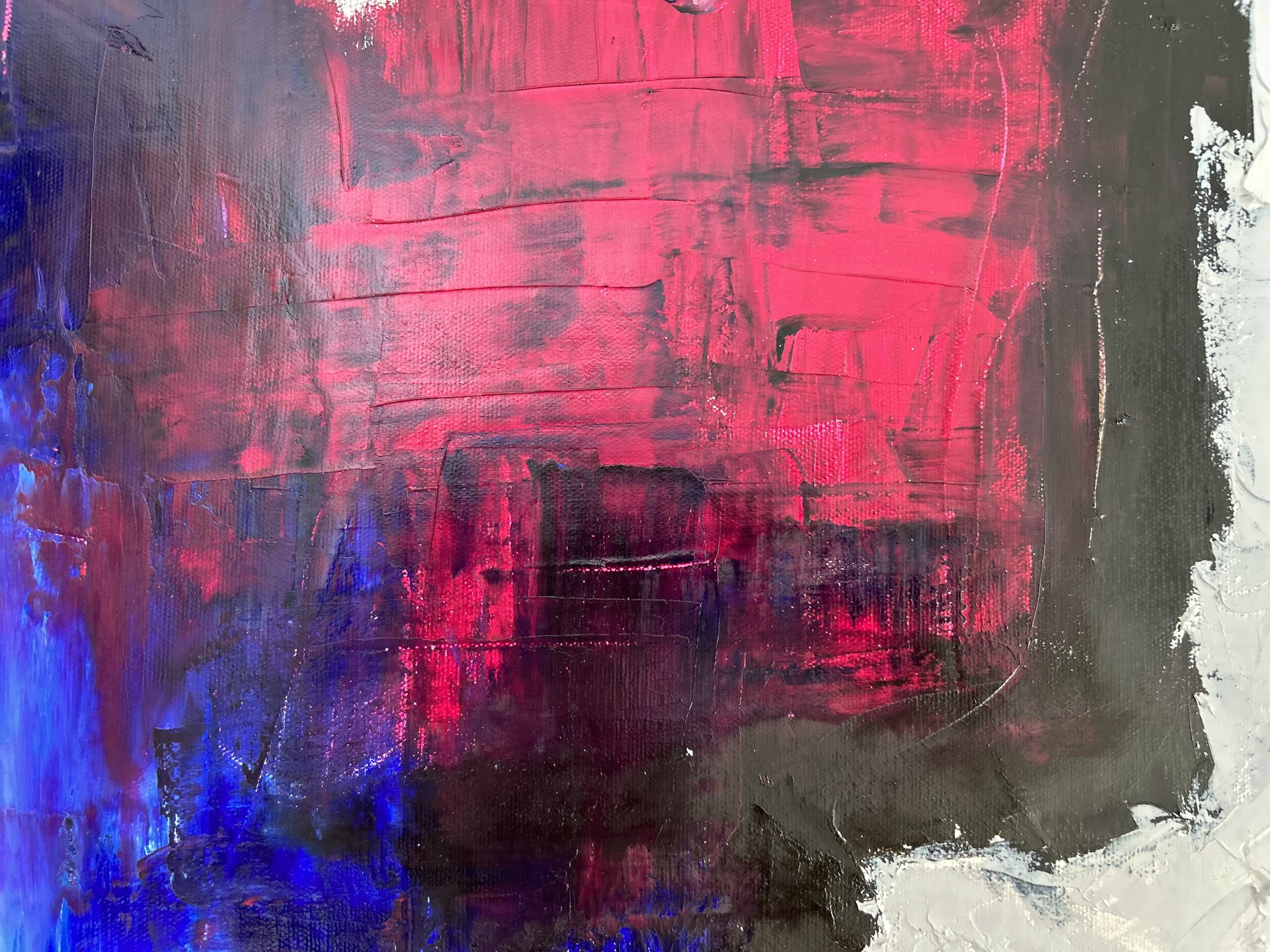
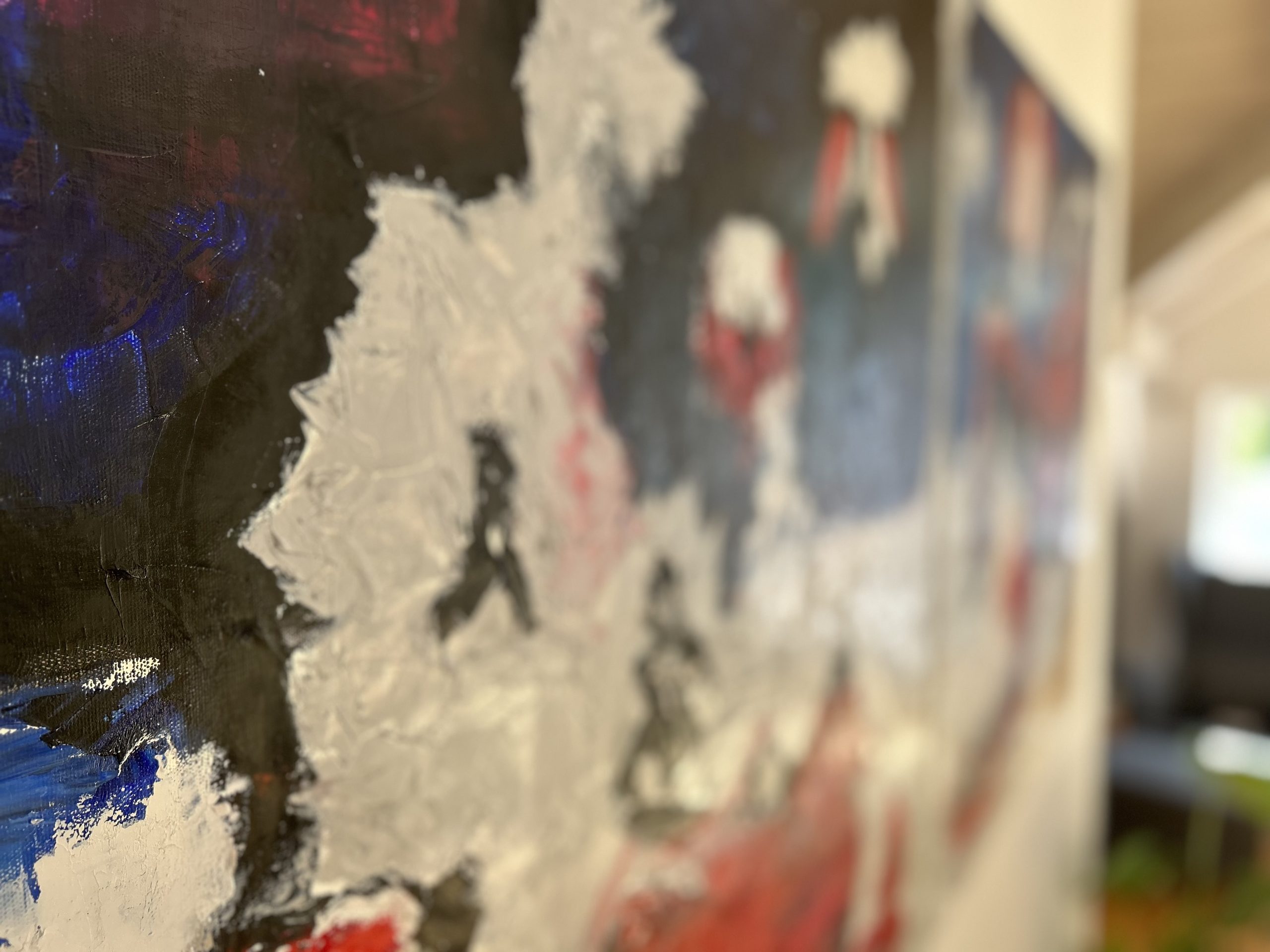
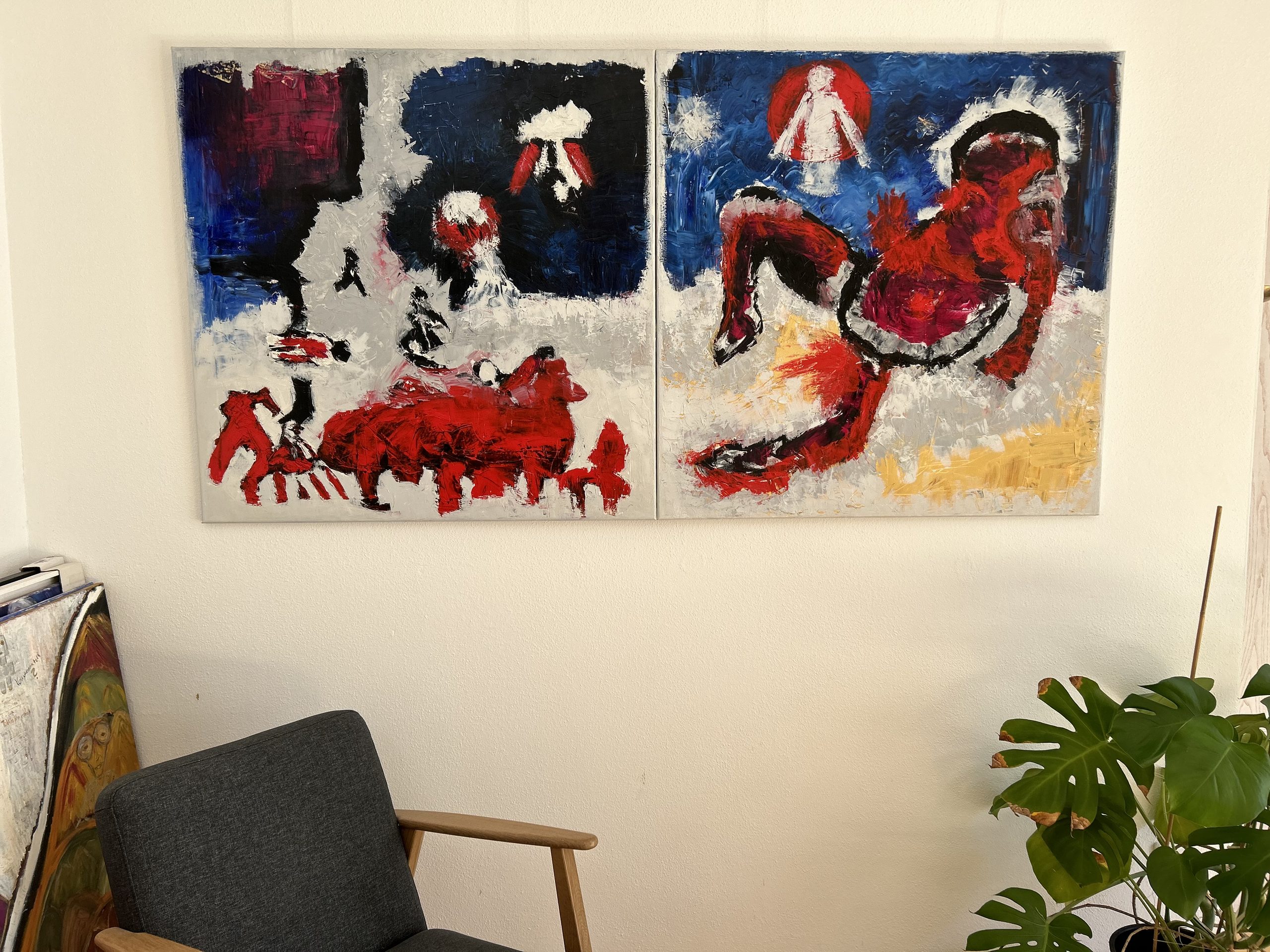
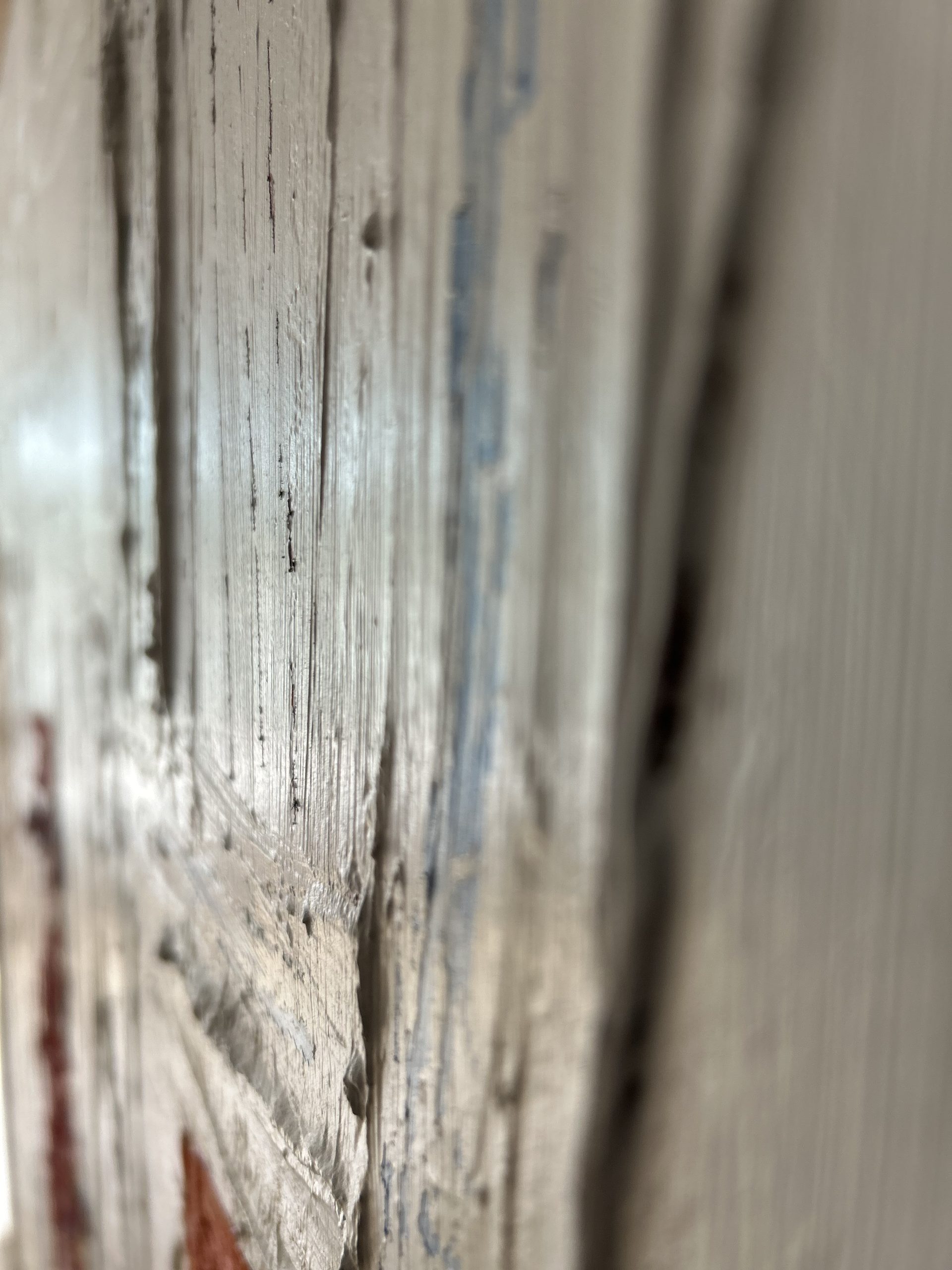
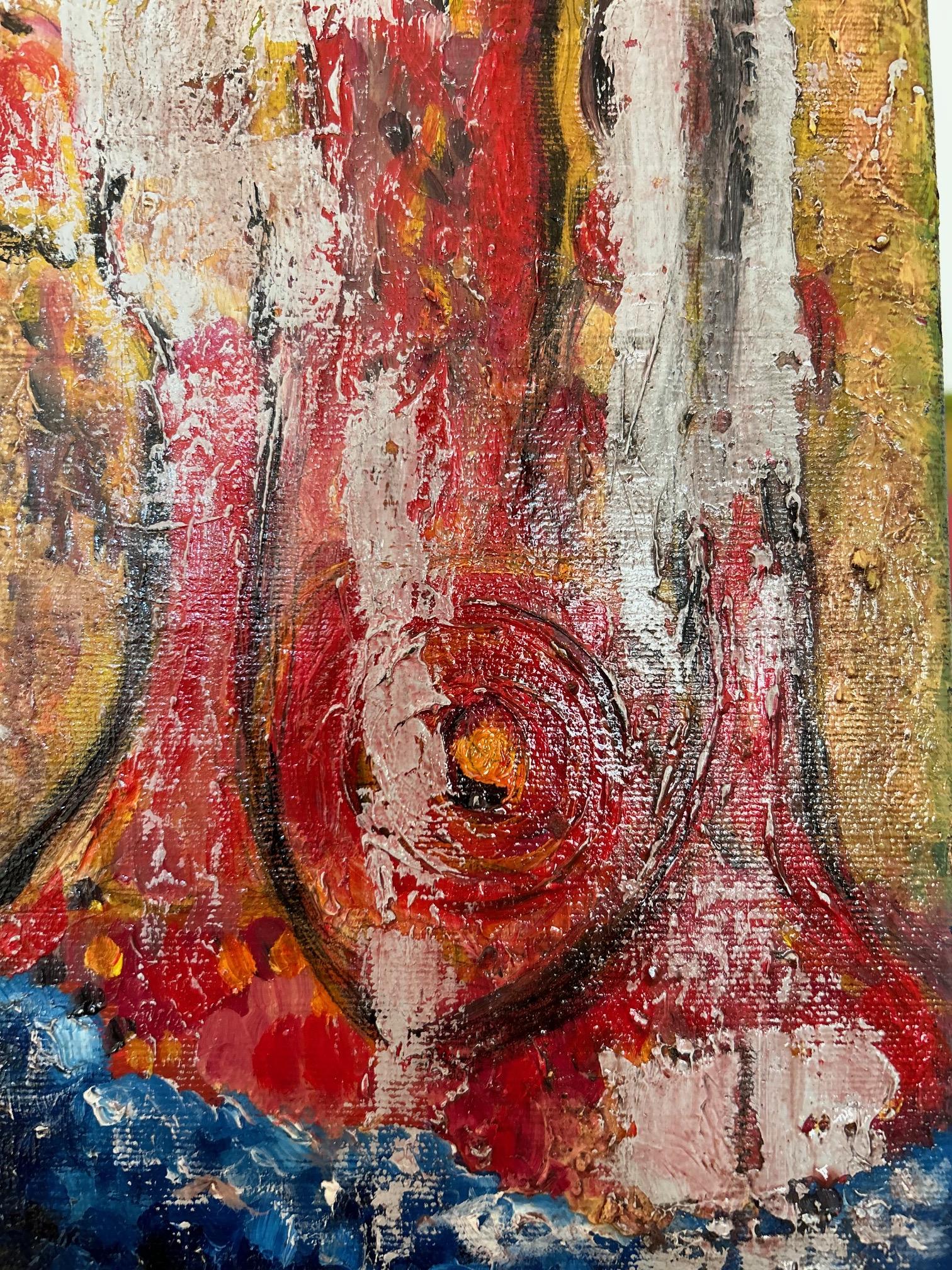
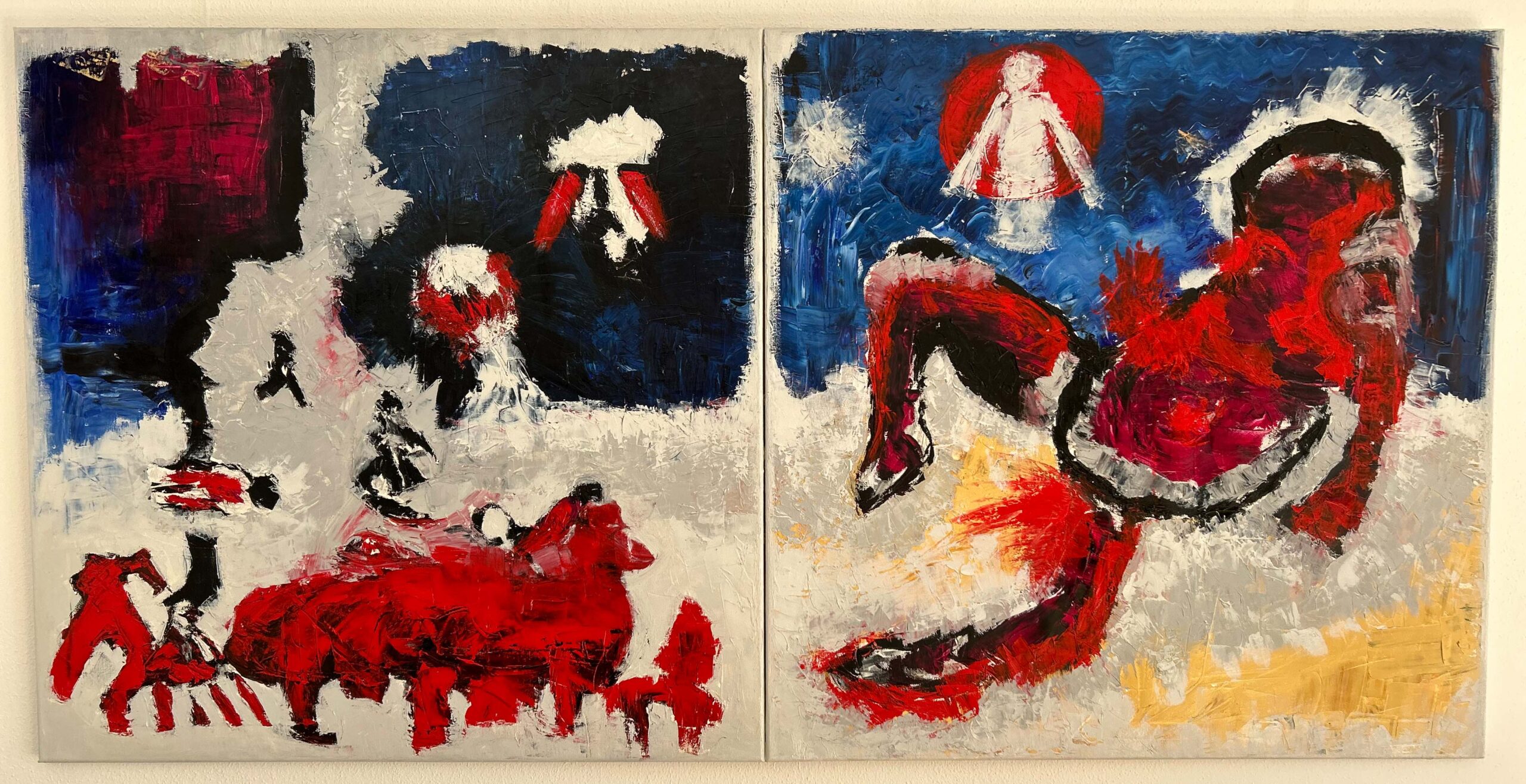
    Burri’s oil painting titled “Man, War, Suffering, and Death” presents a large-scale diptych composed of two adjoining square canvases. The narrative composition features highly stylized, distorted human and animalistic figures distributed across both panels against a background of cool grays, deep blues, and stark blacks. Saturated crimson red dominates the principal figures, establishing an immediate visual emphasis on the lower left structures and the reclining, contorted figure on the right panel.

    Compositionally, the work establishes a dual-panel dialogue. The left canvas combines dark rectangular structures at the top with grounded, reddish forms and fragmented white silhouettes in a central dark field. The right canvas depicts a prominent, sprawling red figure set against a blue upper zone, which contains a smaller white icon framed by a red disc. The paint application is dense and tactile, utilizing thick impasto and expressive brushwork alongside dark outlines. Stylistically referencing Neo-Expressionism and mid-century figurative drama, the work focuses on structural narrative, color contrast, and physical surface texture. Materially, the work is executed in oil on a pure cotton canvas, stretched over a pine wood support frame with overall dimensions of 200 x 100 x 2 cm.

    Deutsche Version

    Burris Ölgemälde mit dem Titel „Mensch, Krieg, Leiden und Tod“ zeigt ein großformatiges Diptychon, das aus zwei nebeneinander gefügten quadratischen Leinwänden besteht. Die narrative Komposition verteilt stark stilisierte, verzerrte menschliche und tierähnliche Figuren über beide Bildhälften vor einem Hintergrund aus kühlem Grau, tiefem Blau und dichtem Schwarz. Ein hochgesättigtes Karminrot dominiert die Hauptfiguren und setzt prägnante optische Schwerpunkte auf den liegenden Formen der linken Tafel sowie der verdrehten, gestreckten Figur auf dem rechten Panel.

    Kompositorisch baut das Werk einen zweiteiligen Dialog auf. Die linke Leinwand kombiniert dunkle rechtwinklige Blöcke im oberen Bereich mit bodennahen roten Formen und schemenhaften weißen Silhouetten vor dunklem Grund. Die rechte Bildseite zeigt eine ausladende, dynamisch gelagerte rote Figur unter einer blauen Himmelszone, in der eine kleine weiße Schemenfigur vor einer roten Sonnenscheibe steht. Der Farbauftrag ist pastos und haptisch, geprägt von dichtem Pinselduktus und kräftigen Konturen. In formaler Anlehnung an den Neoexpressionismus liegt der Schwerpunkt auf narrativer Struktur, starkem Farbkontrast und materieller Oberflächenpräsenz. Materialtechnisch ist das zweiteilige Werk in Öl auf reiner Baumwollleinwand ausgeführt, die auf zwei Kiefernholz-Keilrahmen gespannt ist (Gesamtmaß: 200 × 100 × 2 cm).

    Title / Titel: Man, War, Suffering, and Death / Mensch, Krieg, Leiden und Tod
    Year / Jahr: 2023
    Medium / Technik: Oil on canvas (Diptych) / Öl auf Leinwand (Diptychon)
    Dimensions / Maße: 200 × 100 × 2 cm (2 pcs. 100 × 100 cm)
    Status: Available / Verfügbar
    Sammler in Deutschland: Im Shop mirandolo.de erwerben
    International Collectors: Available via saatchiart

  • A History of Violence | Eine Geschichte der Gewalt

    A History of Violence | Eine Geschichte der Gewalt

    A History of Violence | Eine Geschichte der Gewalt

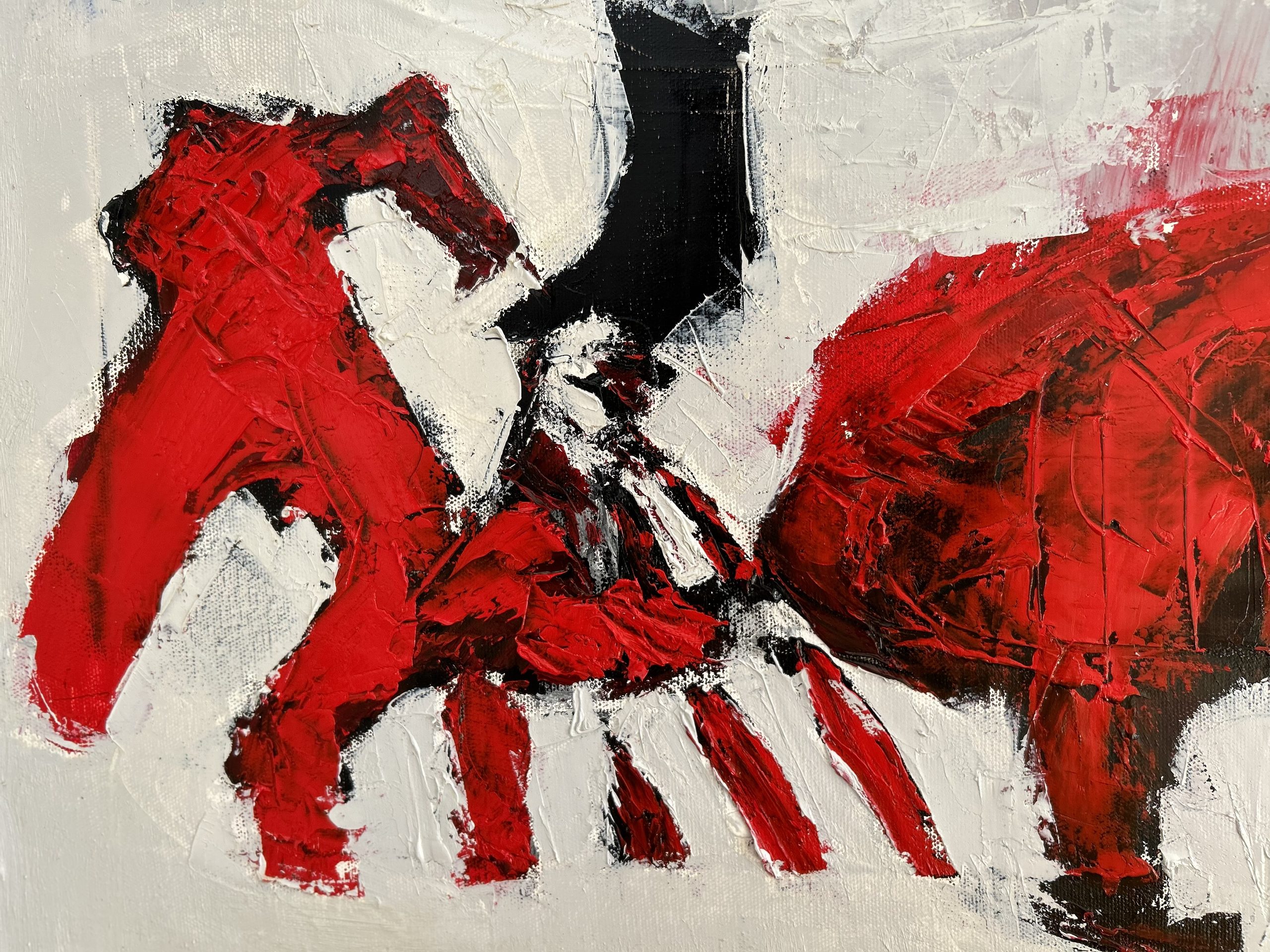
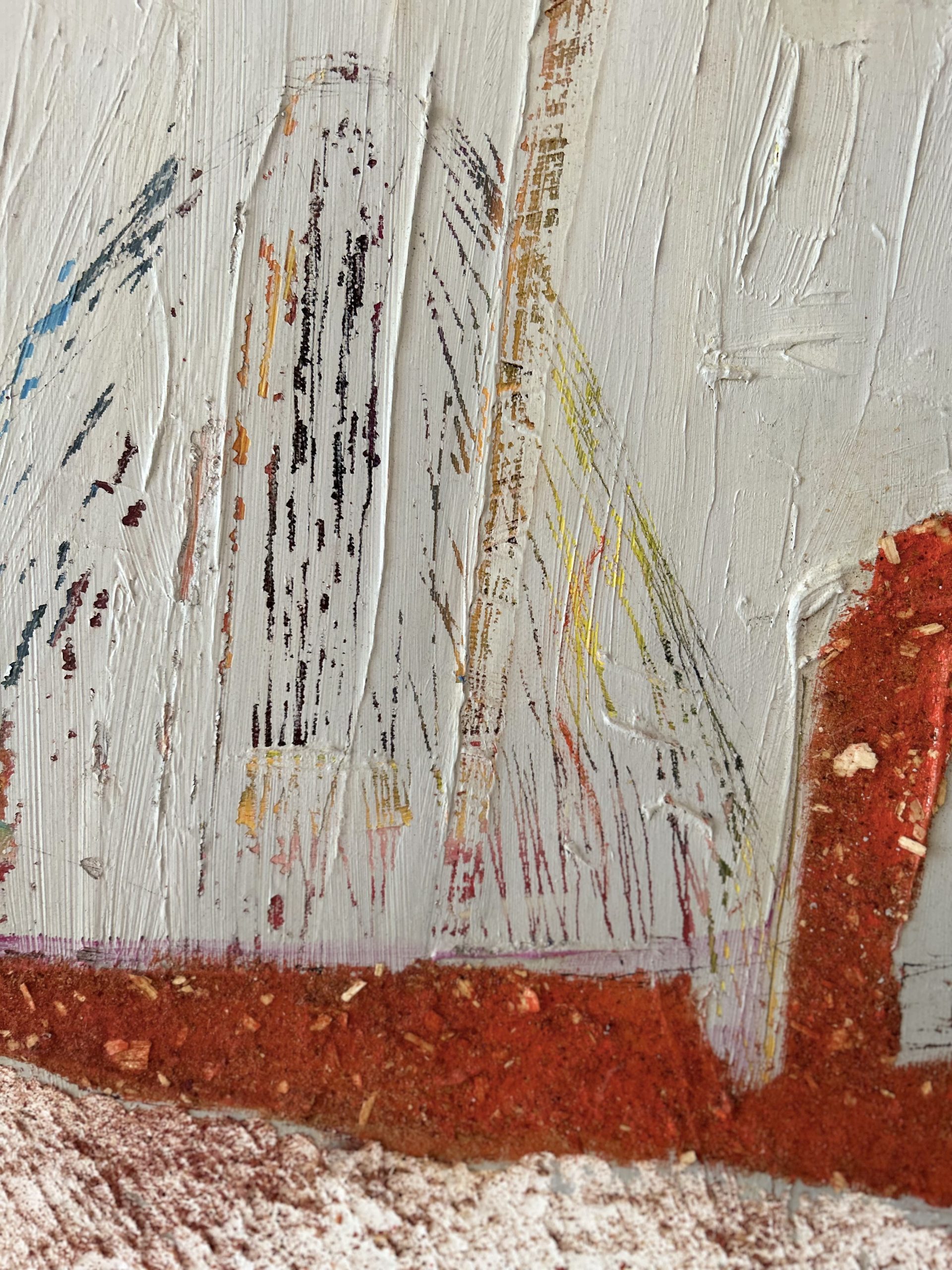
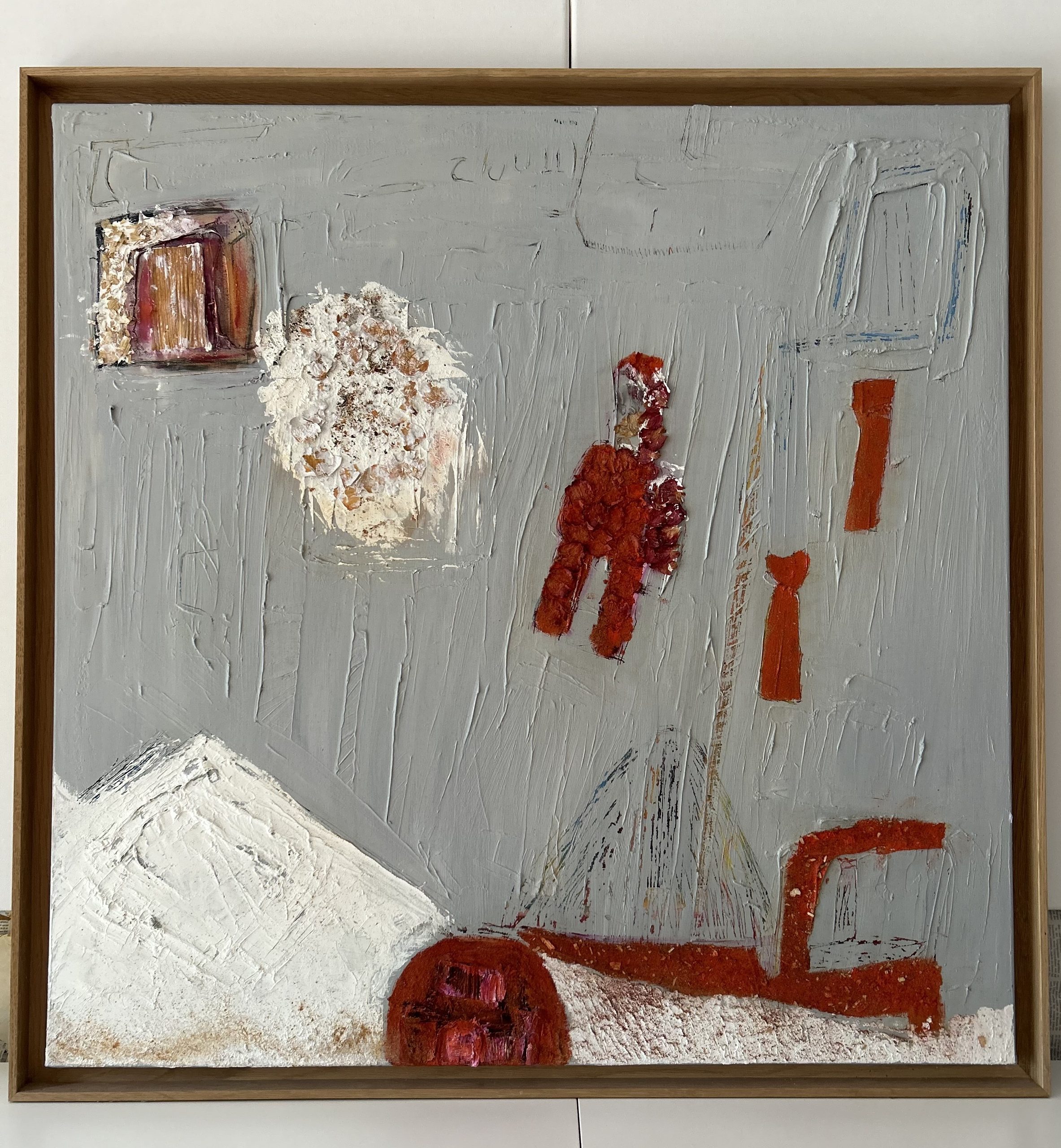
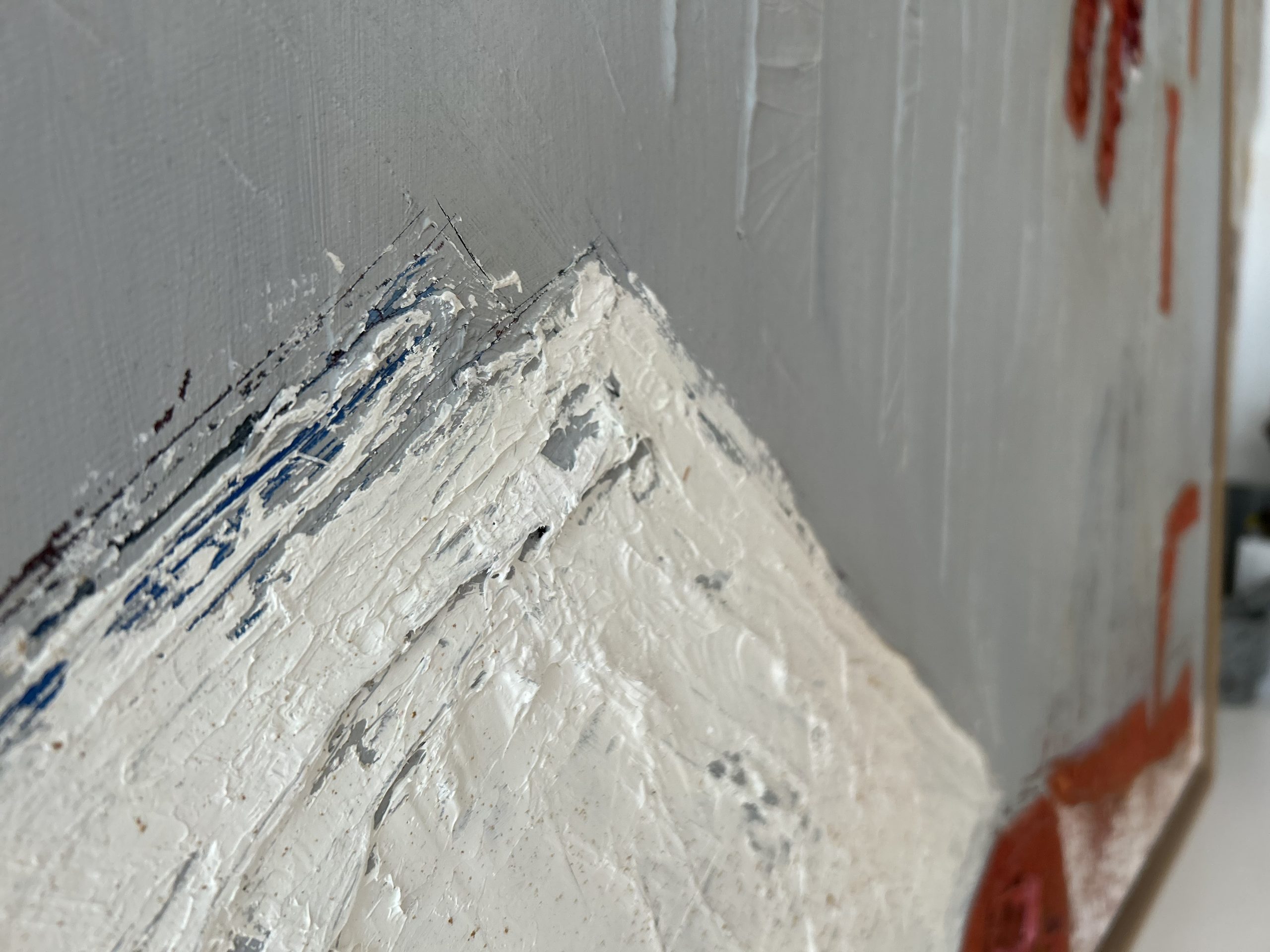
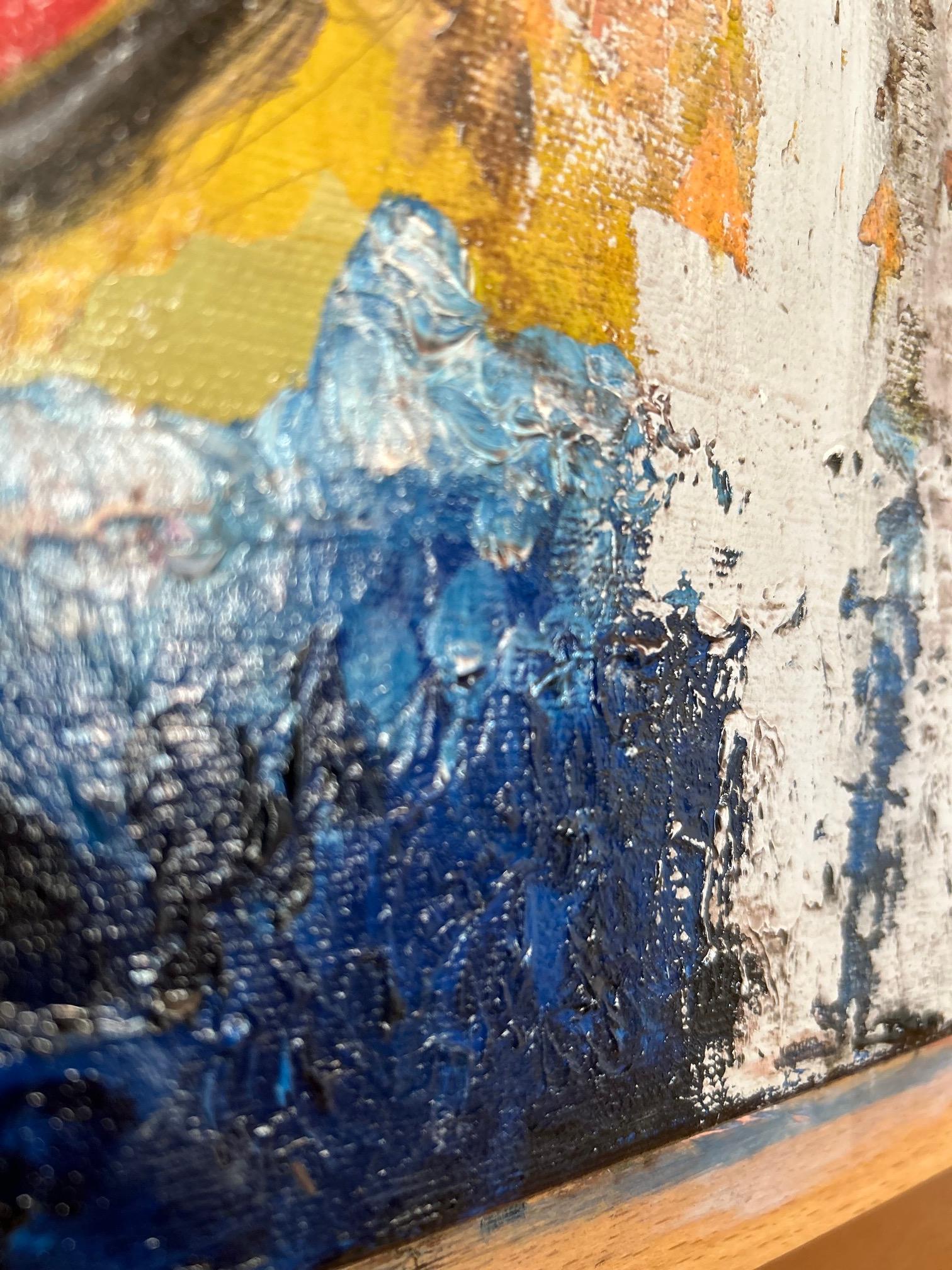
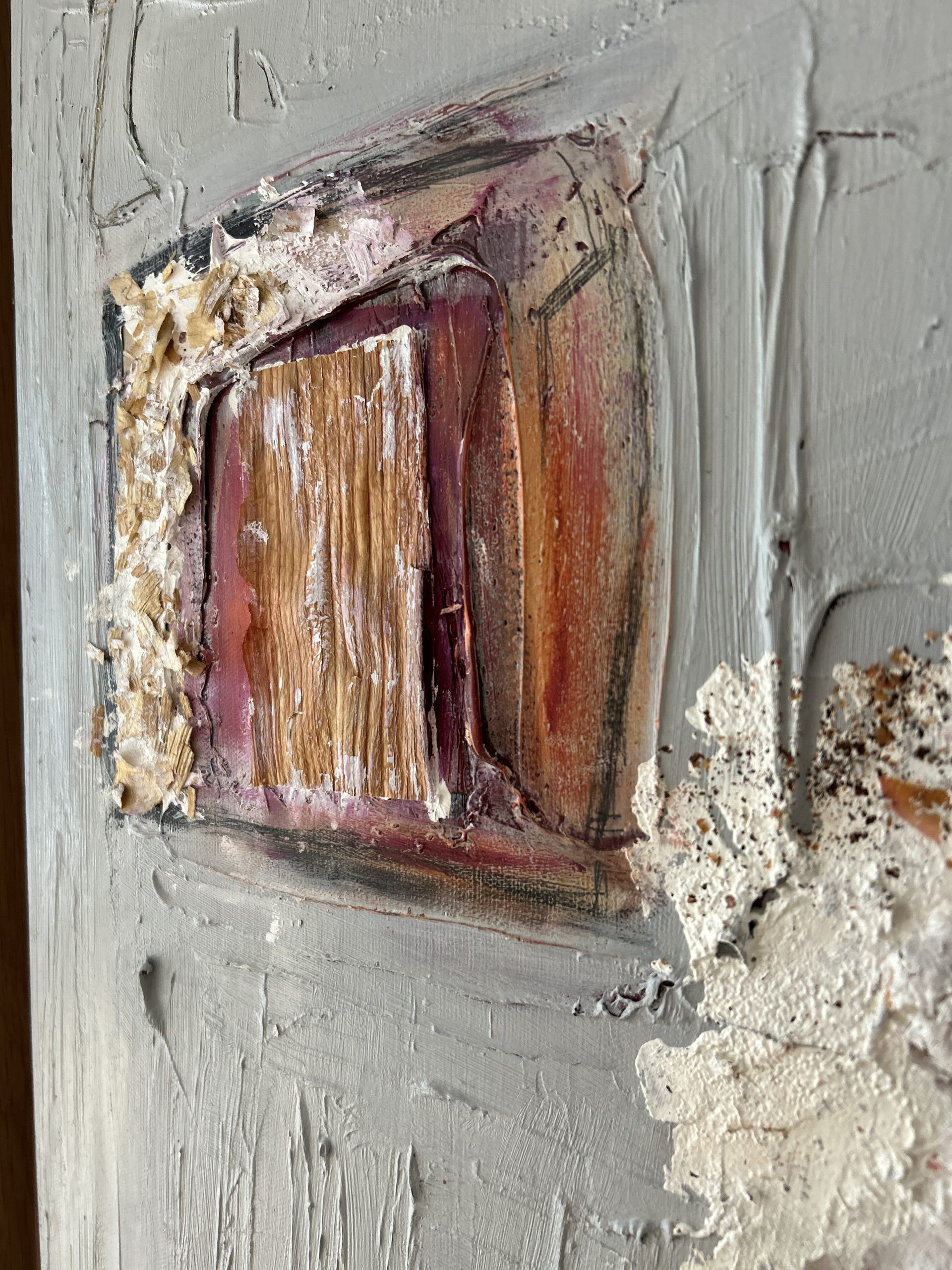
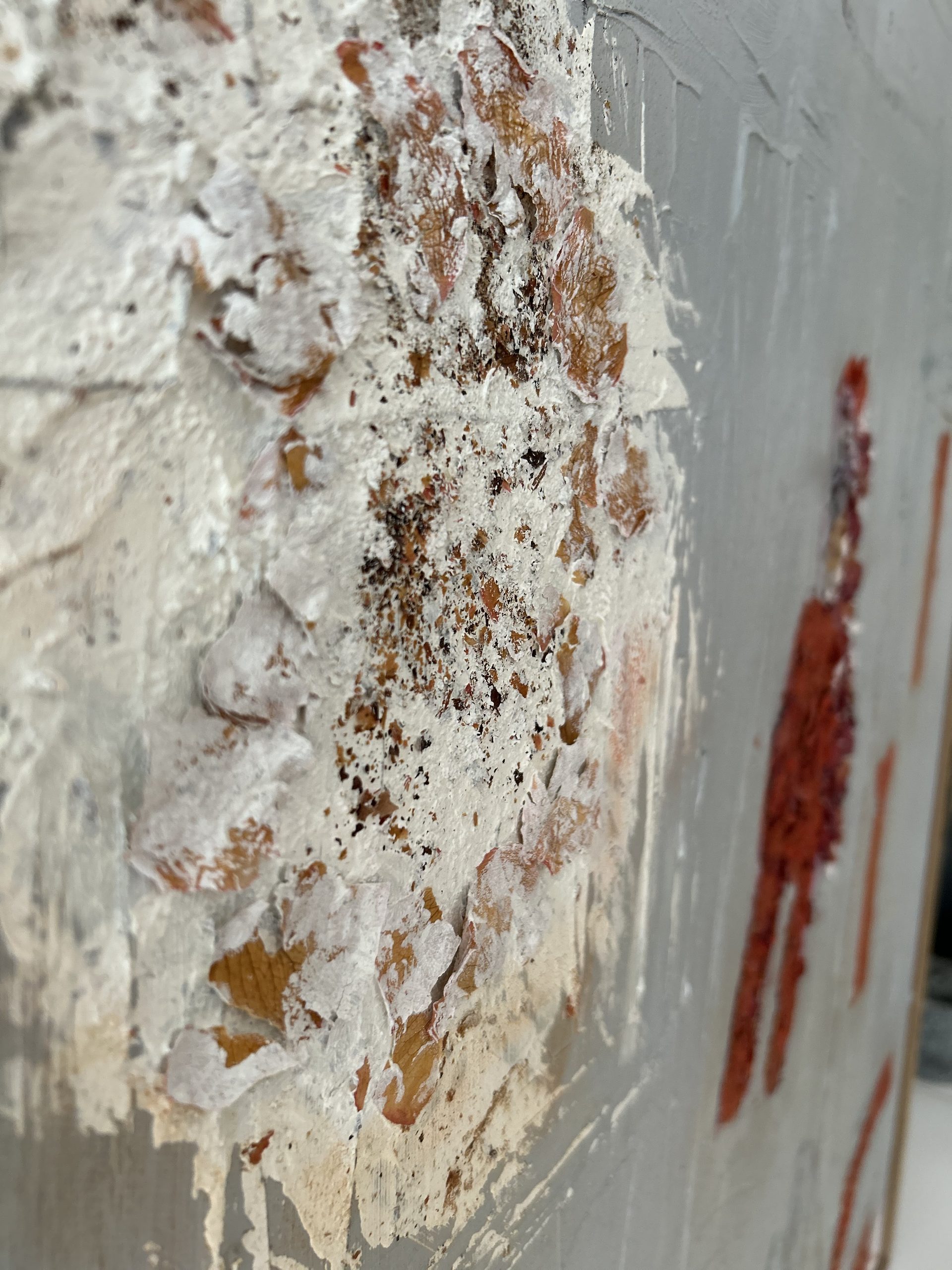
    Burri’s mixed-media painting titled “A History of Violence” examines structural conflict, aggression, and historical continuity through a figurative narrative composition. The pictorial space presents stylized figures positioned within a fragmented environment. The color scheme is dominated by low-saturation dark tones, muted grays, and stark black contours, contrasted by targeted applications of intense red.

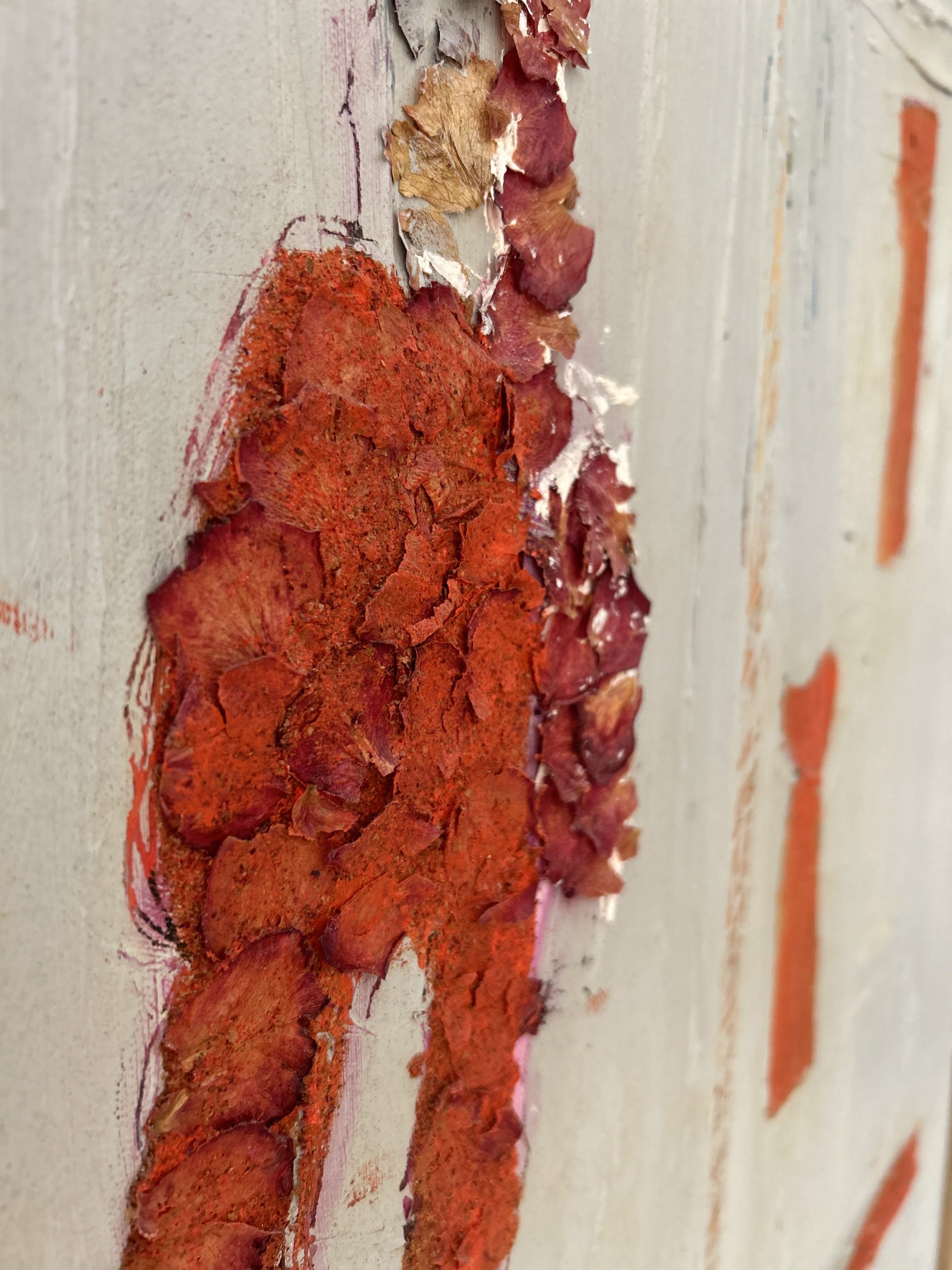
    Compositionally, the work utilizes abrupt spatial breaks and heavy, linear framing to divide the visual fields. Stylistically referencing Neo-Expressionism and historical narrative painting, the composition focuses on formal reduction rather than descriptive detail. Materially, the work incorporates organic plant matter, specifically dried blossoms, alongside graphite elements directly into the paint layer to create a physical, tactile surface texture. The painting is executed in oil and mixed media on a pure cotton canvas, stretched over a pine wood support frame with dimensions of 100 x 100 x 2 cm.

    Deutsche Version

    Burris Mixed-Media-Gemälde mit dem Titel „A History of Violence“ thematisiert strukturelle Konflikte, Aggression und historische Kontinuität in einer figurativ-narrativen Anordnung. Der Bildraum zeigt stilisierte Figuren innerhalb einer fragmentierten Umgebung. Das Farbschema wird von schwach gesättigten dunklen Tönen, gedämpften Graustufen und dichten schwarzen Konturen dominiert, die von gezielt gesetzten, intensiven Rotzonen unterbrochen werden.

    Kompositorisch nutzt die Arbeit unvermittelte raumgliedernde Brüche und schwere, lineare Rahmungen zur Segmentierung der Bildebenen. In formaler Anlehnung an den Neoexpressionismus und die historische Historienmalerei liegt der Schwerpunkt auf figürlicher Reduktion statt deskriptiver Detailzeichnung. Materialtechnisch erweitert das Werk den malerischen Farbauftrag durch die direkte Integration organischer Substanzen wie getrockneter Blüten sowie Graphitkomponenten in die Farbschicht, wodurch eine haptische Oberflächenstruktur entsteht. Das Unikat ist in Öl und Mischtechnik auf reiner Baumwollleinwand ausgeführt, die auf einen Kiefernholz-Keilrahmen mit den Abmessungen 100 × 100 × 2 cm gespannt ist.

    Title / Titel: A History of Violence / Eine Geschichte der Gewalt
    Year / Jahr: 2022
    Medium / Technik: Oil and mixed media on canvas / Öl und Mischtechnik auf Leinwand
    Dimensions / Maße: 100 × 100 × 2 cm
    Status: Available / Verfügbar
    Sammler in Deutschland: Im Shop mirandolo.de erwerben
    International Collectors: Available via saatchiart
  • The Last Generation | Die letzte Generation

    The Last Generation | Die letzte Generation

    The Last Generation | The Last Generation

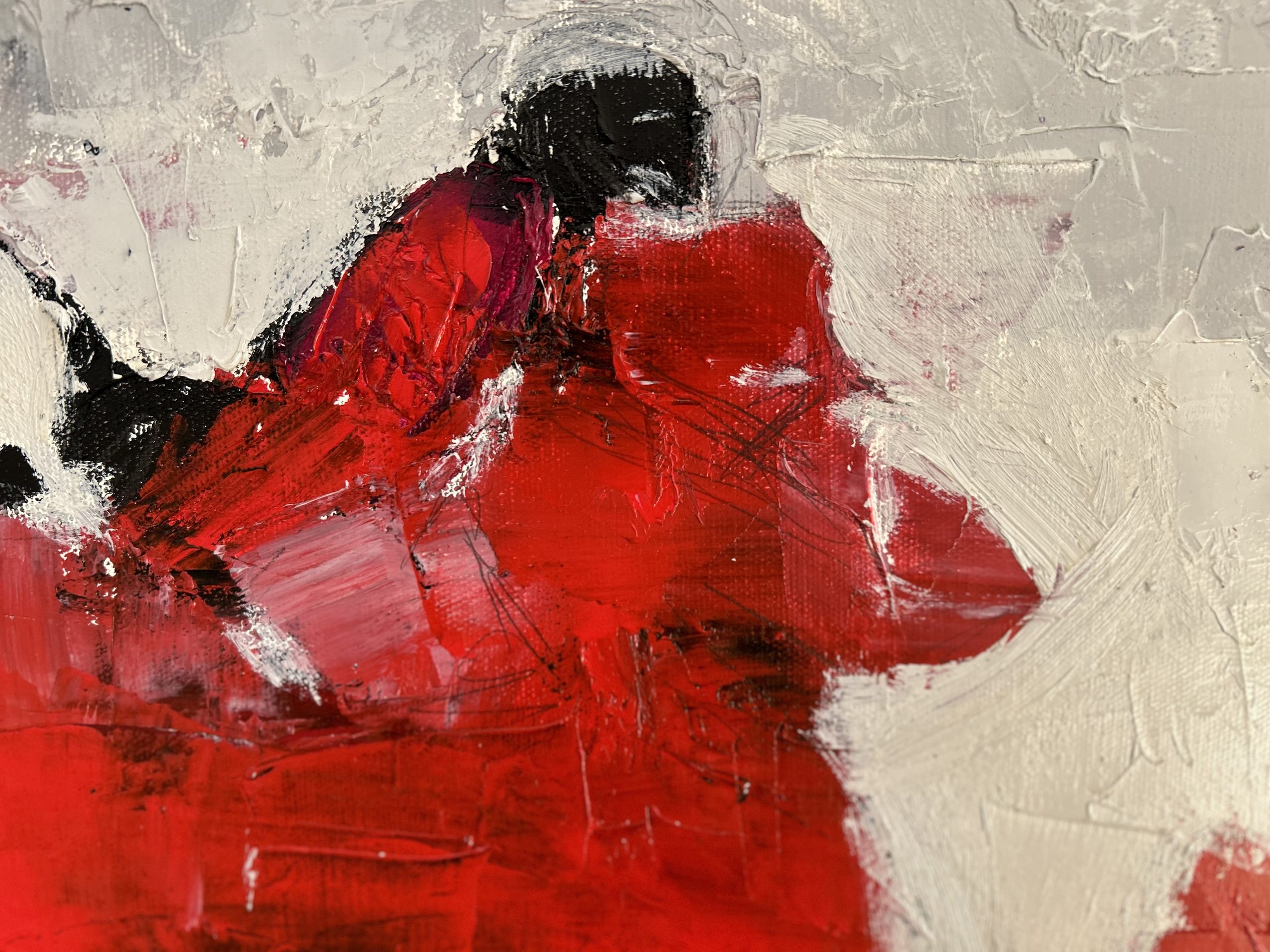
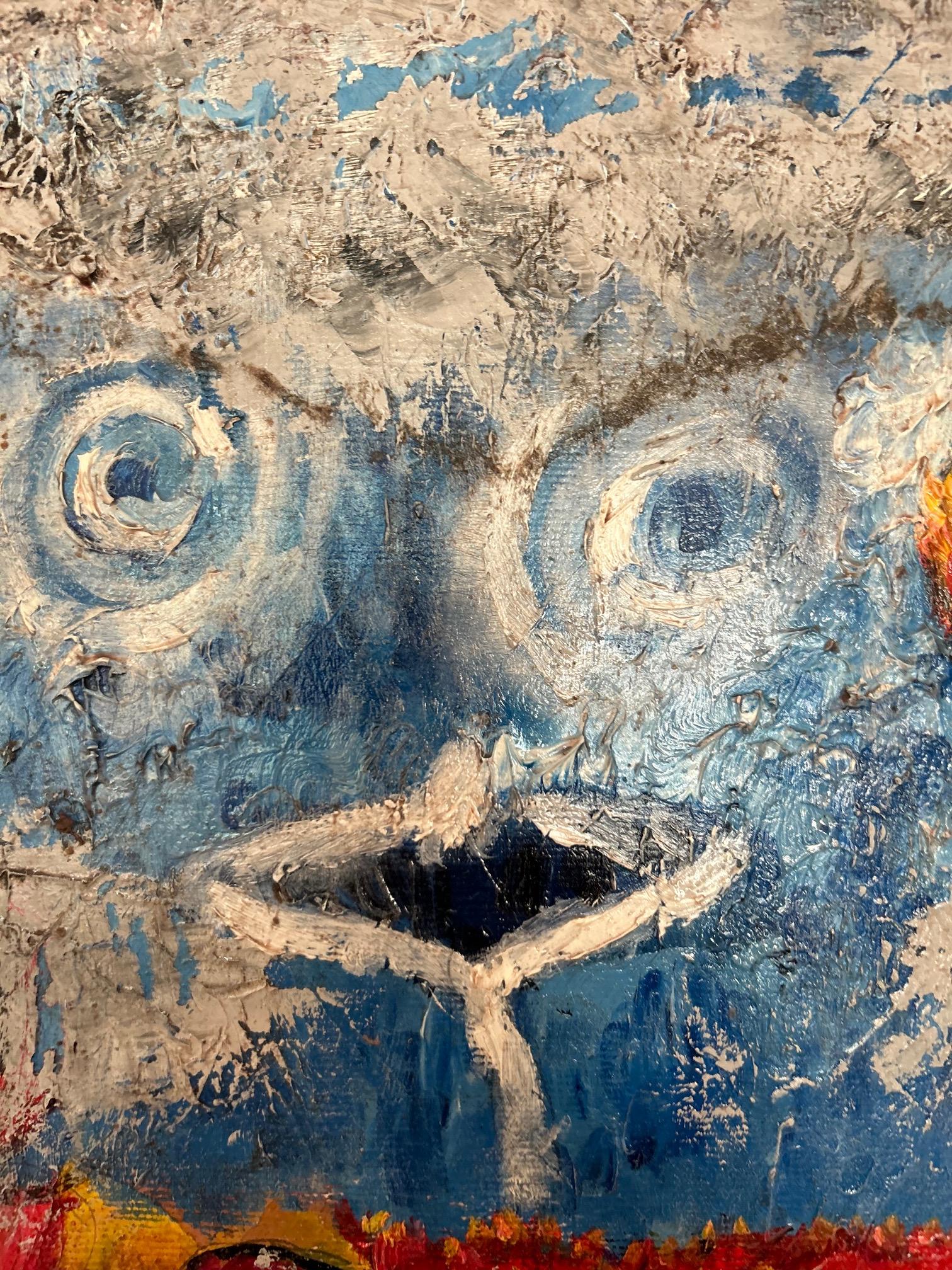
    Burri’s painting titled “The Last Generation” presents a provocative narrative composition addressing contemporary socio-political themes, environmental urgency, and generational tension. The canvas features expressive, stylized figures set against a textured, dynamic background, conveying a heightened sense of movement, vulnerability, and collective crisis. The chromatic spectrum pairs earthy, grounded tones with stark, contrasting accents, underscoring the urgency of the subject matter through raw visual energy.

    Compositionally, the work balances figurative elements with gestural abstraction, employing dense brushwork and heavy contours to heighten the emotional weight of the scene. Stylistically drawing from Neo-Expressionism and contemporary protest art, the painting serves as a visual meditation on climate activism, collective responsibility, and the uncertain future of upcoming generations. Materially, the work is executed in oil on a pure cotton canvas, stretched over a support frame with dimensions of 50 x 50 x 2 cm.

    Deutsche Version

    Burris Gemälde mit dem Titel „Die letzte Generation“ zeigt eine prägnante narrativ-expressive Komposition, die sich mit zeitgenössischen gesellschaftspolitischen Themen, ökologischer Dringlichkeit und generationalen Spannungen auseinandersetzt. Die Bildfläche wird von stilisierten, gestischen Figuren beherrscht, die vor einem dynamisch strukturierten Hintergrund agieren und ein Gefühl von Bewegung, Verletzlichkeit und kollektiver Krise vermitteln. Die Farbpalette kombiniert erdig-gedämpfte Passagen mit zielgerichteten, kontrastreichen Akzenten, die die Thematik visuell verdichten.

    Kompositorisch balanciert das Werk figurativen Ausdruck und gestische Abstraktion aus. Durch dichten Farbauftrag und kraftvolle Konturen wird die narrative Dringlichkeit des Motivs unterstrichen. Stilistisch nimmt die Arbeit Anleihen beim Neoexpressionismus sowie bei Formen zeitgenössischer Protestkunst auf und reflektiert Themen wie Klimaverantwortung, zivilen Diskurs und die Ungewissheit künftiger Generationen. Materialtechnisch ist das Werk in Öl auf reiner Baumwollleinwand ausgeführt, die auf einen Keilrahmen mit den Abmessungen 50 x 50 x 2 cm gespannt ist.

    Title / Titel: The Last Generation / Die letzte Generation
    Year / Jahr: 2023
    Medium / Technik: Oil on canvas / Öl auf Leinwand
    Dimensions / Maße: 50 x 50 x 2 cm
    Status: Available / Verfügbar
    Sammler in Deutschland: Im Shop mirandolo.de erwerben
    International Collectors: Available via saatchiart
  • Habitat | Habitat

    Habitat | Habitat

    Habitat

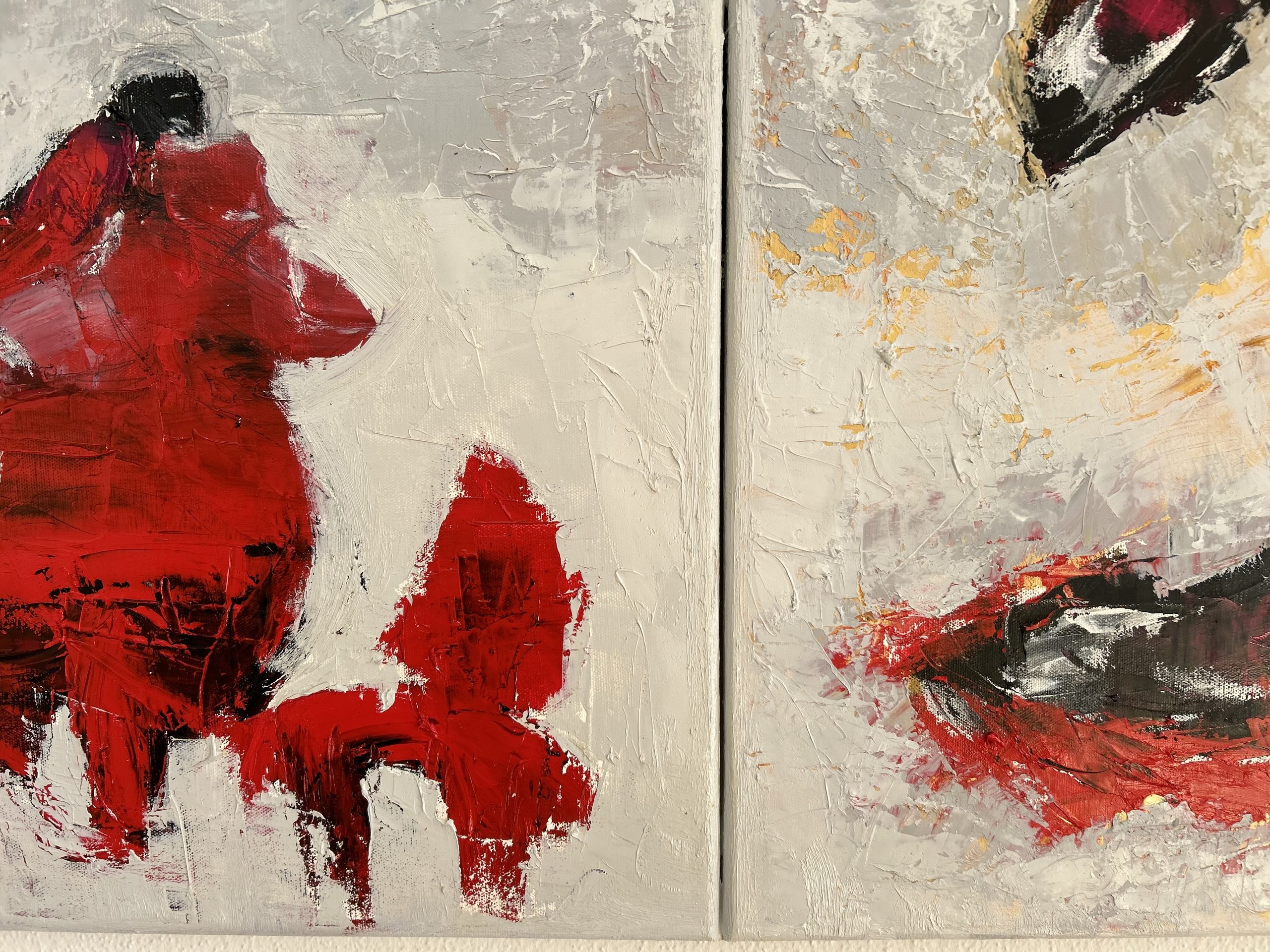
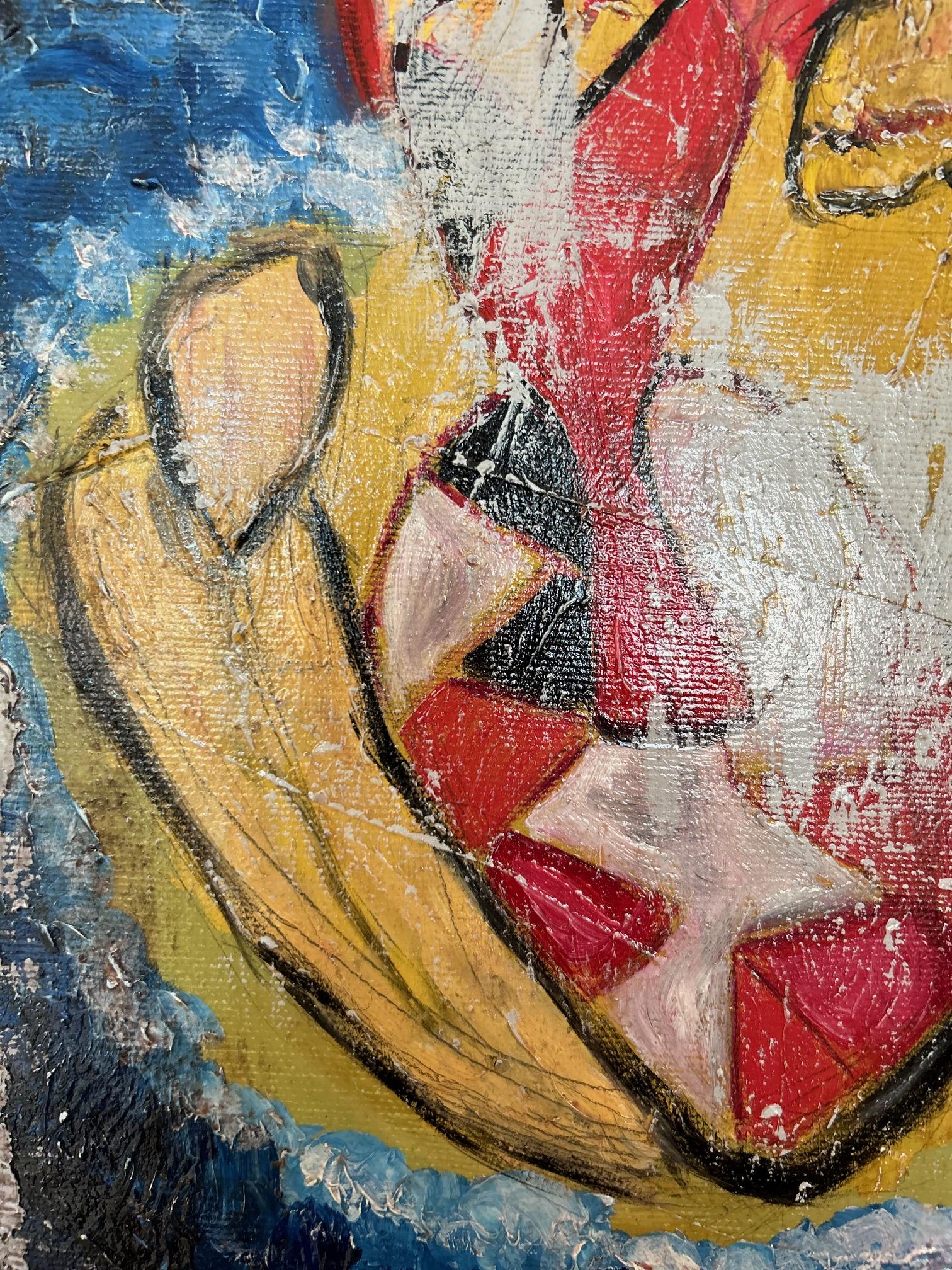
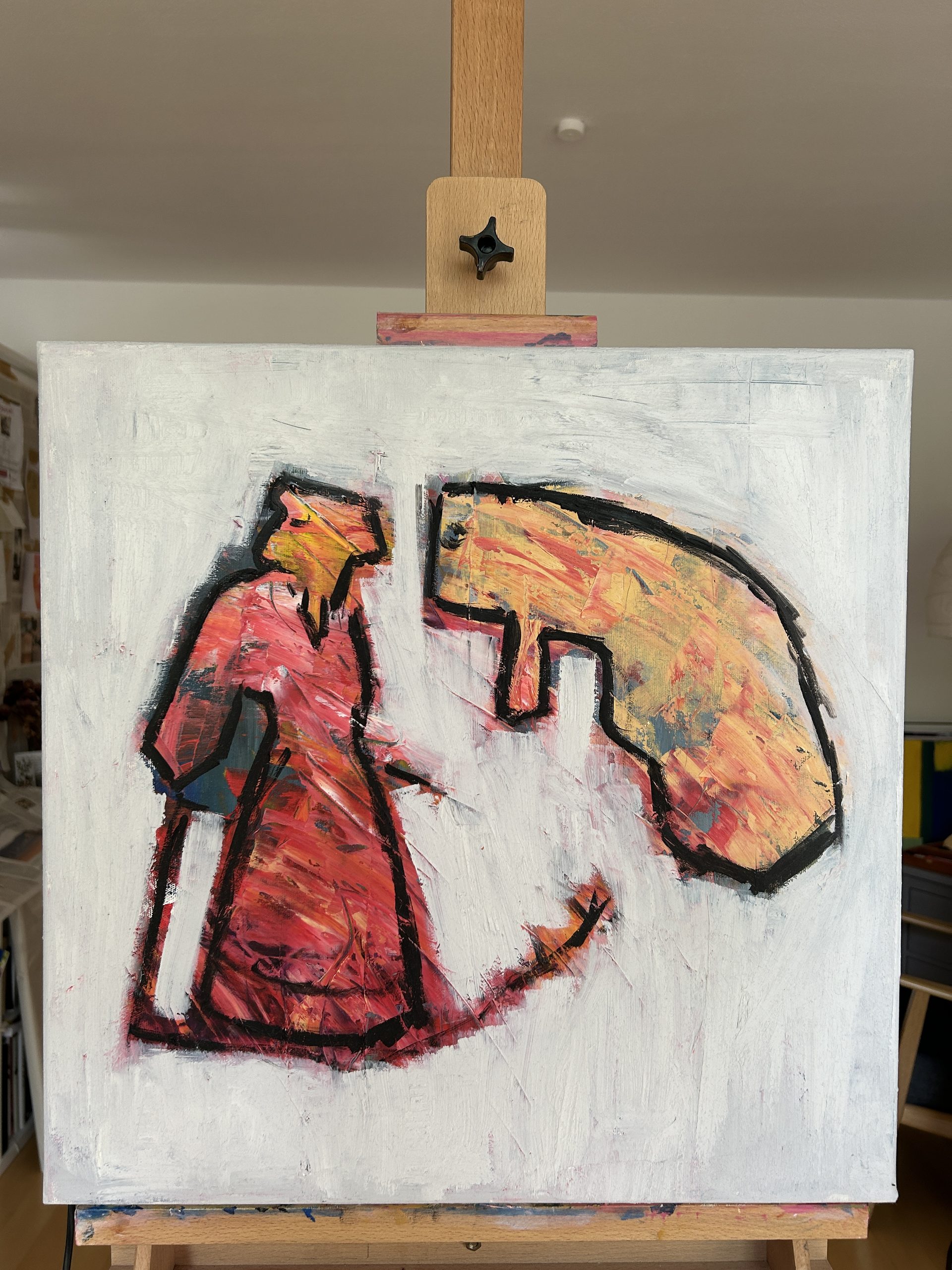
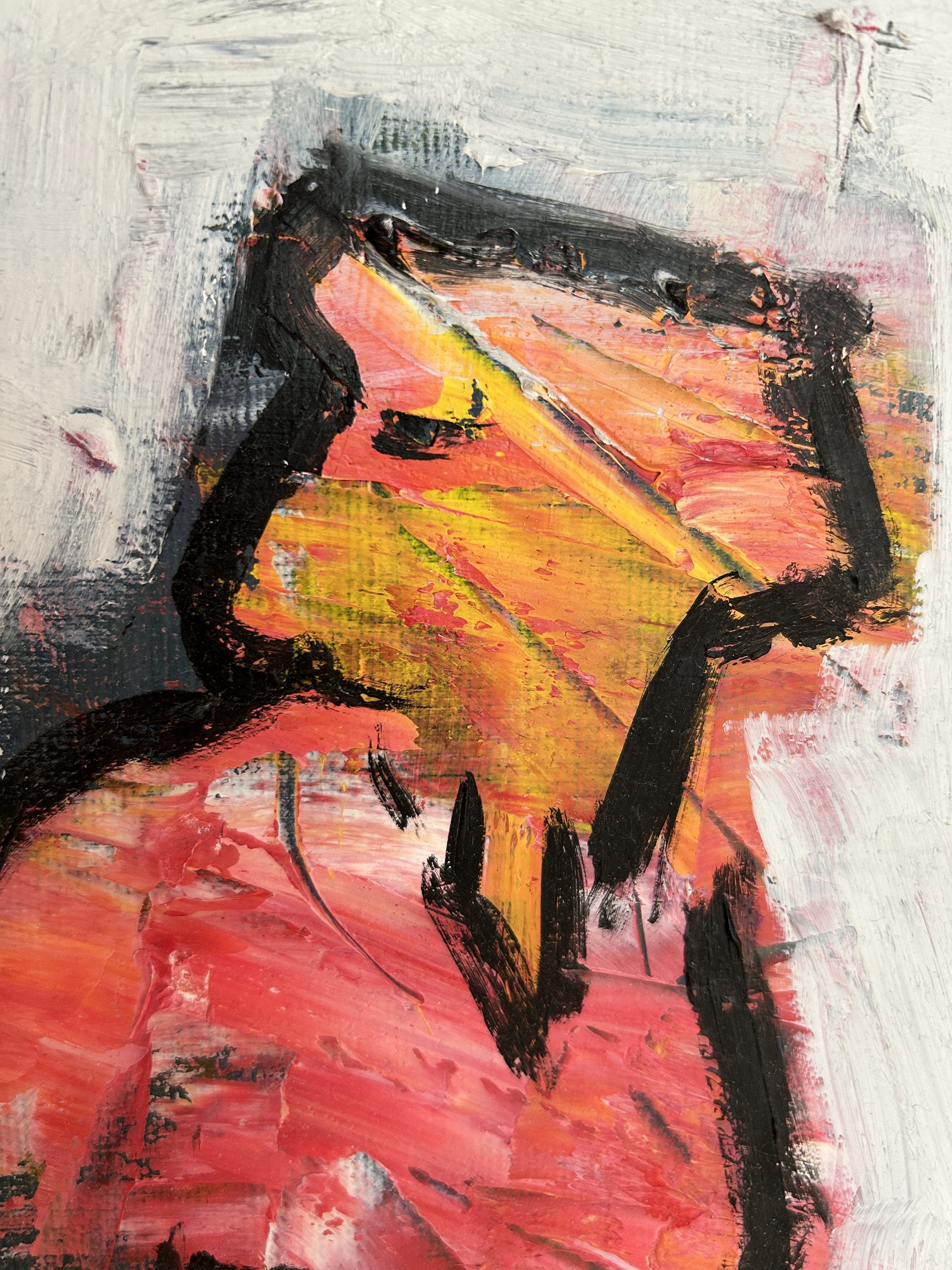
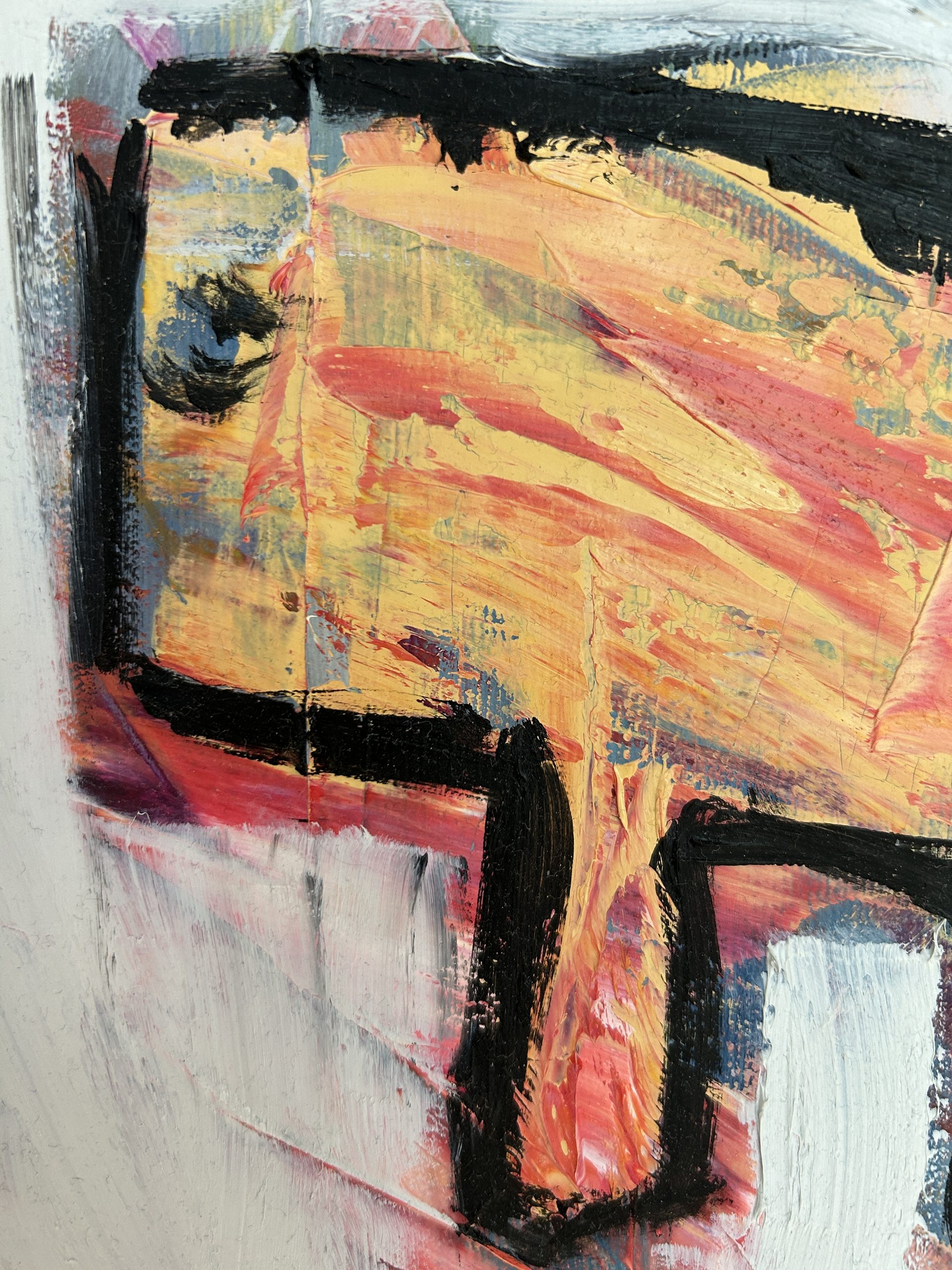
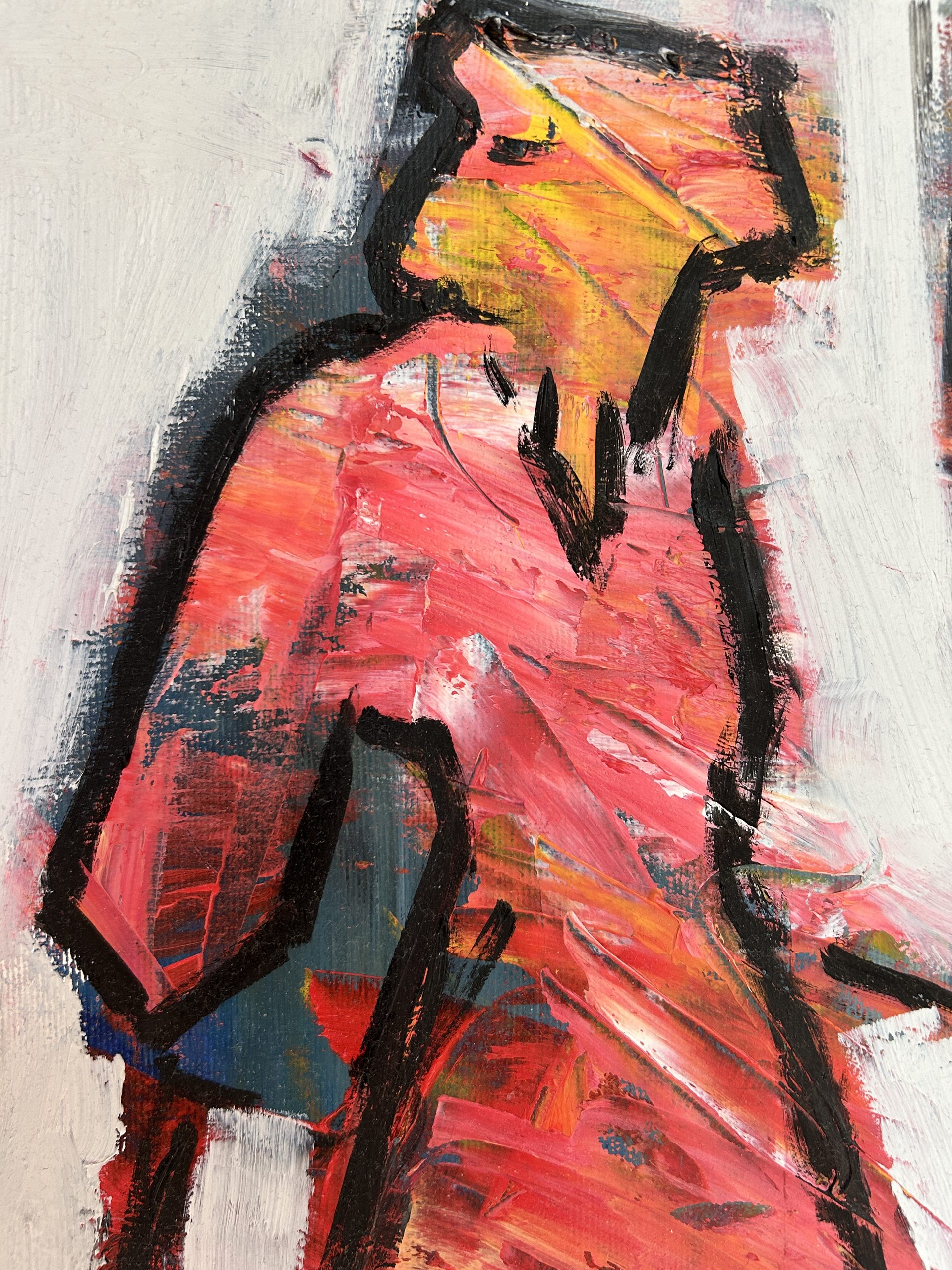
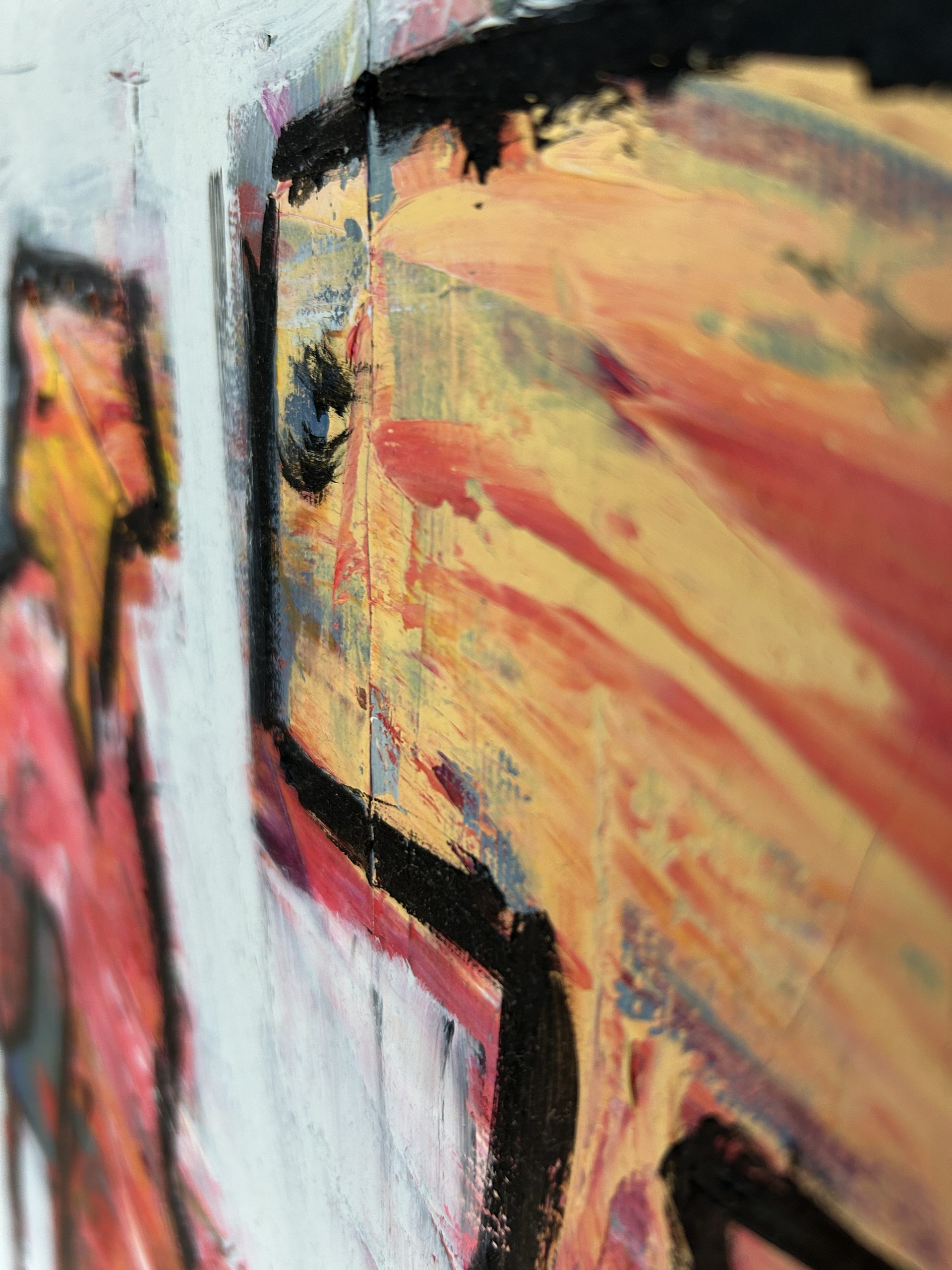
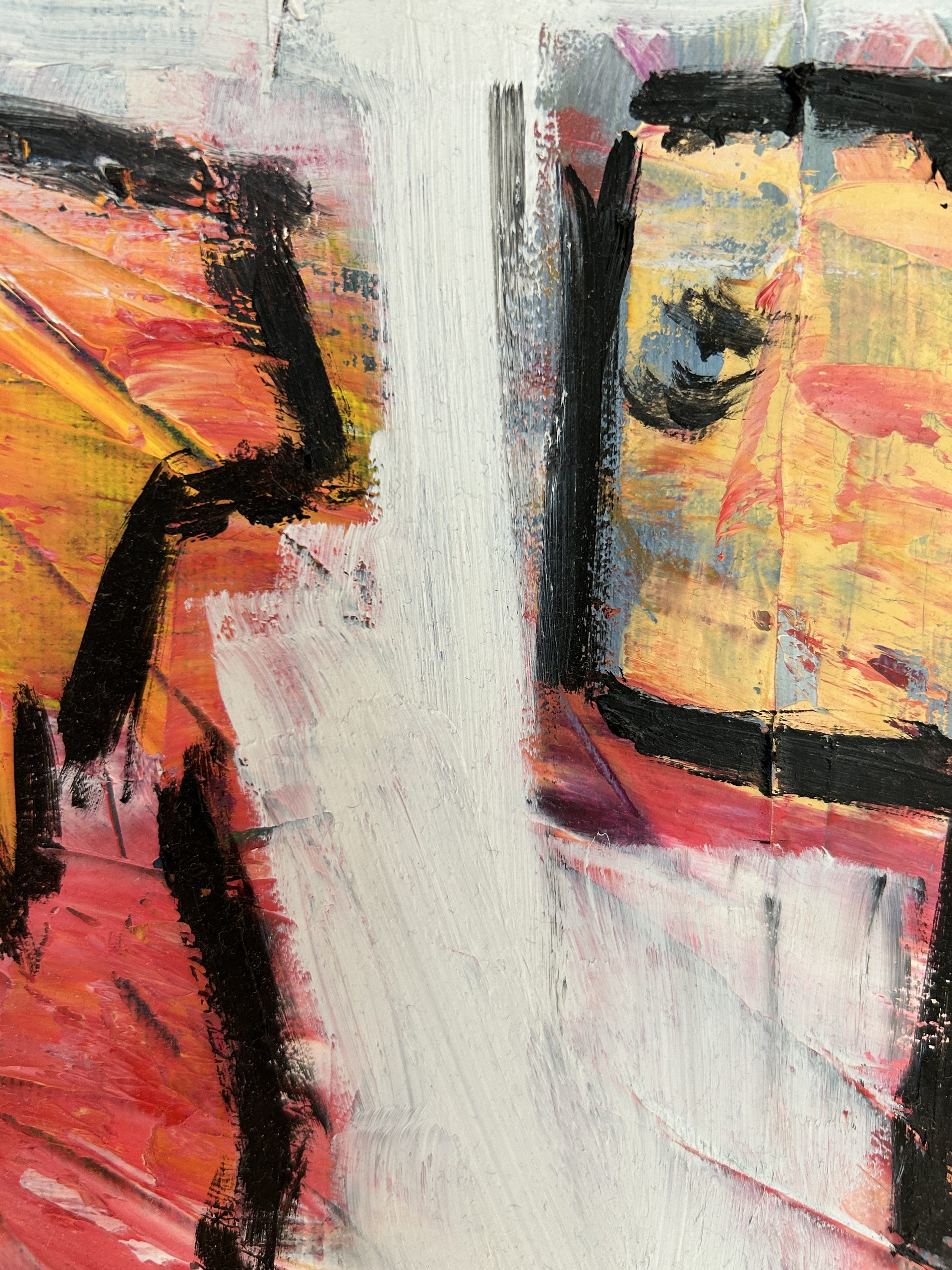
    Burri’s painting titled “Habitat” presents a figurative, expressive composition featuring two distinct central forms set against a stark, off-white background. On the left, a tall, stylized figure reminiscent of a person in a long red robe is rendered with bold black outlines, vibrant pink-red textures, and a yellow-orange head structure. To the right, a curved, arching biomorphic form—evoking an animalistic or shelter-like structure in warm yellow, orange, and red hues—confronts the vertical figure, framing an open central space between them.

    Compositionally, the work establishes a dialogue between human presence and an enclosing environment or creature, translating the concept of a „habitat“ into a relational spatial field. The thick, black linear boundaries contrast sharply with the expressive, impasto-laden interior application of the shapes, while a curved line at the bottom connects the two entities. Stylistically referencing Neo-Expressionism and Primitivism through its raw line work and elemental forms, the painting balances graphic reduction with dynamic, tactile energy. Materially, the work is executed in oil on a pure cotton canvas, stretched over a support frame with dimensions of 50 × 50 × 2 cm.

    Deutsche Version

    Burris Gemälde mit dem Titel „Habitat“ zeigt eine figurativ-expressive Komposition, die zwei charakteristische zentrale Formen vor einem kühlen, hellgrau-weißen Hintergrund isoliert. Auf der linken Seite steht eine stilisierte, aufrechte Figur in einem langen roten Gewand, die durch kräftige schwarze Konturen, eine intensiv gestrukturierte rosa-rote Binnenfläche und eine gelb-orange Kopfpartie definiert wird. Auf der rechten Seite tritt ihr eine gebogene, architektonisch-biomorphe Form in warmen Gelb-, Orange- und Rottönen gegenüber, die an ein Tier oder eine schützende Hülle erinnert und einen offenen Zwischenraum erzeugt.

    Kompositorisch baut das Werk einen Dialog zwischen menschlicher Präsenz und einer umgebenden Struktur auf und übersetzt den Begriff des „Habitats“ in ein relationales Spannungsfeld. Die dicken, schwarzen Umrisslinien kontrastieren stark mit dem expressiven, spachtelartigen Farbauftrag im Inneren der Formen, während eine geschwungene Linie am Boden beide Elemente visuell verbindet. Stilistisch nimmt die Arbeit durch den roh belassenen Strich und die elementare Formensprache Anleihen beim Neoexpressionismus und Primitivismus auf. Materialtechnisch ist das Werk in Öl auf reiner Baumwollleinwand ausgeführt, die auf einen Keilrahmen mit den Abmessungen 50 × 50 × 2 cm gespannt ist.

    Title / Titel: Habitat / Habitat
    Year / Jahr: 2023
    Medium / Technik: Oil on canvas / Öl auf Leinwand
    Dimensions / Maße: 50 × 50 × 2 cm
    Status: Available / Verfügbar
    Sammler in Deutschland: Im Shop mirandolo.de erwerben
    International Collectors: Available via saatchiart